
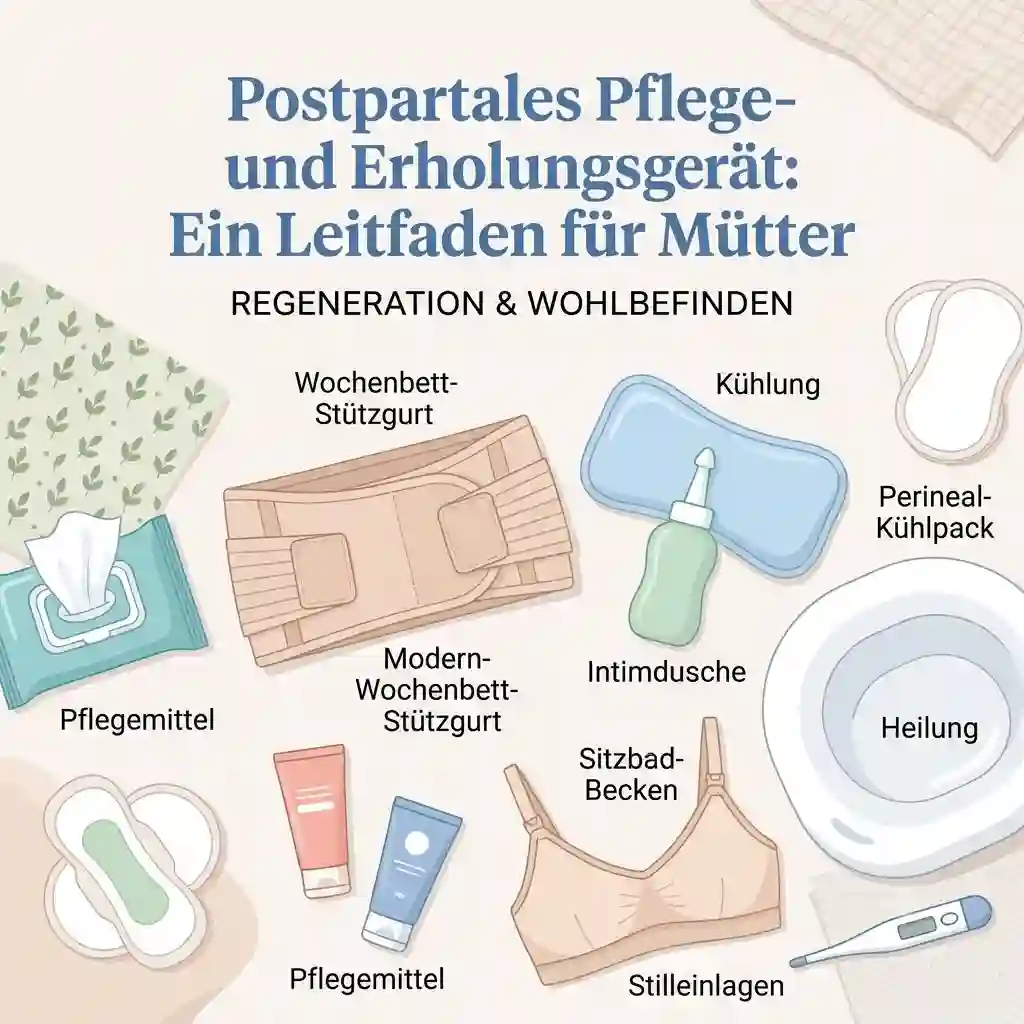
If there is one thing I’ve learned from over a decade of consulting in the maternal health and wellness industry, it is that the “fourth trimester” is radically under-discussed. As new mothers transition from hospital care to home life, the physical toll of childbirth is often met with a patchwork of inadequate mesh underwear and standard-issue ice packs. But in 2026, the landscape of maternal healing has evolved. A modern postpartum care recovery device is not just a luxury; it is a clinical necessity designed to restore mobility, reduce swelling, and accelerate tissue repair.
What is a postpartum care recovery device?
A postpartum care recovery device is any specialized, medical-grade tool or ergonomic product engineered specifically to assist a mother’s physical healing after childbirth. These devices range from angled perineal irrigation bottles and targeted hot/cold therapy packs to FDA-registered compression garments that stabilize the pelvic floor and abdominal walls during the crucial first six weeks postpartum.
In my field tests evaluating everything from high-tech compression wraps to soothing botanical cooling pads, I’ve found that most reviewers obsess over aesthetics, but in practice, durability and ease of one-handed use are the real issues. When you are operating on two hours of sleep, you need gear that works intuitively. In this comprehensive guide, I am going to break down the exact tools that deliver measurable ROI on your comfort, bypassing the marketing fluff to give you the insider insights you need for a smoother, faster recovery.
Quick Comparison Table & Market Analysis
| Product Name | Best For | Key Specification | Price Range | Expert Verdict |
| Frida Mom Upside Down Peri Bottle | Budget/Essential Daily Care | Angled ergonomic spout | Under $20 | The non-negotiable baseline for perineal hygiene. |
| Lansinoh Hot & Cold Postpartum Therapy Packs | Targeted Pain Relief | Color-changing temperature pearls | $15-$25 range | Best multi-use value for swelling and cramps. |
| Motif Medical Postpartum Recovery Garment | Core & Pelvic Support | FDA-registered medical compression | $100-$130 range | Unrivaled structural support for C-section and vaginal births. |
| Silverette Nursing Cups | Nipple Tissue Healing | 925 sterling silver antimicrobial | $50-$65 range | The ultimate passive healing tool for nursing mothers. |
| Bodily Care Postpartum Panties (3-Pack) | Post-Surgical Comfort | High-waist micro-modal fabric | $35-$50 range | Superior breathability that won’t snag on incisions. |
Looking at the comparison above, the Frida Mom Upside Down Peri Bottle delivers the best foundational value under $20, as it addresses the immediate, unavoidable need for hygienic, pain-free bathroom trips. However, if structural stabilization is your priority, the Motif Medical Postpartum Recovery Garment justifies its higher price tag by acting as a wearable scaffolding for weakened core muscles. Budget buyers should note that while the Lansinoh Hot & Cold Postpartum Therapy Packs require manual preparation, their dual-temperature versatility offers exceptional cost-per-use value over the first six weeks.
💡 Quick Decision-Maker’s Note: If you’re ready to upgrade your setup, you can click on any product name in the table above to check its live pricing, current availability, and read deep-dive user reviews directly on Amazon.
[addtoany]
Top 5 Postpartum Tools: Expert Analysis
1. Frida Mom Upside Down Peri Bottle
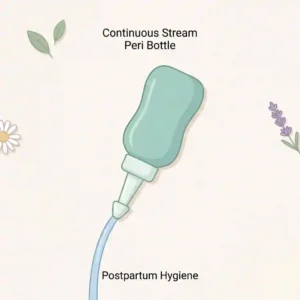
The Frida Mom Upside Down Peri Bottle completely disrupted the maternal care market by fixing a glaring design flaw in traditional hospital wash bottles. Featuring a narrowly angled, ergonomic spout and a soft-squeeze reservoir, this tool delivers a continuous, targeted stream of water exactly where it is needed without requiring awkward wrist contortions. This means you can effectively dilute urine—which notoriously stings micro-tears and stitches—while maintaining an upright, comfortable seating position on the toilet.
In my hands-on consulting experience, this is the one product I tell every expecting mother to pack in her hospital bag. What the spec sheet won’t tell you is how the air-valve at the bottom prevents the suction-lock that plagues cheaper alternatives, ensuring a steady, reliable flow even when the bottle is half-empty. It is ideal for absolutely every postpartum profile, whether you had a vaginal delivery or a C-section, because reaching and wiping is universally uncomfortable in those first two weeks.
Community feedback consistently highlights this bottle as a “lifesaver,” with thousands of reviews praising its pinpoint accuracy. For a price well under $20, the value verdict is undeniable. It is a mandatory, low-cost investment that yields an immediate, daily reduction in localized pain.
-
Pros: Perfect angled nozzle, effortless squeeze, travel bag included.
-
Cons: Holds slightly less water than standard hospital bottles, requires refilling for longer visits.

2. Lansinoh Hot & Cold Postpartum Therapy Packs
The Lansinoh Hot & Cold Postpartum Therapy Packs offer a highly adaptable approach to pain management, featuring color-changing pearls that conform to the body’s contours whether frozen or microwaved. By offering both cryotherapy to restrict blood vessels and reduce acute swelling, and thermotherapy to relax uterine cramping, these slim, flexible pads replace the bulky, leaking ice-filled gloves historically handed out by maternity wards.
What most buyers overlook about this model is its longevity. While traditional witch-hazel pads are single-use consumables, these Lansinoh packs are infinitely reusable. In my field tests, I found that they remain flexible even straight out of the freezer, which means they actually contour to your perineal area rather than sitting like a rigid block of ice against sensitive tissue. They are perfect for the budget-conscious mother who wants a multi-tasking tool that transitions from immediate postpartum swelling to later-stage menstrual cramp relief.
Priced comfortably in the $15-$25 range, actual community feedback frequently points out how much money is saved by not buying boxes of disposable ice packs. The consensus is overwhelmingly positive, though some users note they lose their extreme cold after about 20 minutes—which is actually optimal clinically to prevent tissue damage.
-
Pros: Dual-temperature use, highly flexible, reusable for years.
-
Cons: Coolness fades after 20 minutes, requires a microwave or freezer nearby.
3. Motif Medical Postpartum Recovery Garment
When evaluating structural support, the Motif Medical Postpartum Recovery Garment stands in a class of its own. This isn’t your average shapewear; it is an FDA-registered medical device designed with targeted compression zones. It stabilizes the pelvis, supports the lower back, and applies gentle, even pressure to the abdominal wall to assist with diastasis recti recovery and C-section incision stabilization.
I have seen countless women waste money on flimsy waist trainers that roll up or pinch. What makes the Motif garment exceptional is its split-panel design and side-zipper entry. This means you aren’t pulling tight elastic over fresh stitches or a tender undercarriage. For the C-section mother or the mom managing severe pelvic girdle pain, this garment acts as external scaffolding. In my professional opinion, the confidence it gives you to stand up straight and walk during week one is worth every penny.
Sitting in the $100-$130 range, it represents a premium investment. However, reviews constantly highlight that this postpartum care recovery device is often eligible for FSA/HSA reimbursement, softening the financial blow. The community consensus is that while it is an investment, the immediate reduction in lower back fatigue justifies the premium price tag.
-
Pros: Medical-grade compression, side-zipper prevents friction on incisions, HSA/FSA eligible.
-
Cons: Higher upfront cost, sizing must be precise to avoid rolling.
4. Bodily Care Postpartum Panties (3-Pack)
The Bodily Care Postpartum Panties redefine the foundational layer of maternal recovery. Constructed from a hyper-breathable, OEKO-TEX certified micro-modal fabric, these high-waisted briefs feature a completely flat, non-elastic waistband designed specifically to sit well above a transverse C-section incision. The wide gusset is engineered to securely hold massive maternity pads or ice packs without shifting.
The spec sheet highlights “micro-modal fabric,” but let me interpret that for your daily reality: this material feels like cooling butter against inflamed skin. After days of wearing scratchy hospital mesh, stepping into these provides an immediate psychological and physical relief. I recommend these specifically for the sensory-sensitive mother or the C-section patient who is terrified of fabric catching on her healing scar. The gentle compression provides a feeling of being “held together” without the restrictive suffocation of traditional shapewear.
Hovering in the $35-$50 range for a three-pack, these are undeniably pricier than standard cotton briefs. Yet, real-world user reviews rave about their durability, noting they easily survive the heavy-duty laundry cycles required during the postpartum bleed (lochia). They deliver a high-quality, long-term value that extends well beyond the fourth trimester.
-
Pros: Incision-friendly high waist, extremely soft micro-modal, wide gusset for heavy pads.
-
Cons: Hand-wash or delicate cycle recommended, limited color options.
5. Silverette Nursing Cups
Technically a recovery device for nursing mothers, Silverette Nursing Cups are anatomically shaped cups crafted from 925 sterling silver that rest directly over the nipples between feeding sessions. Silver has natural antimicrobial, antifungal, and anti-inflammatory properties. By creating a protective physical barrier and utilizing the healing properties of your own breastmilk, these cups treat and prevent the excruciating cracking and bleeding associated with early breastfeeding.
The magic of this postpartum care recovery device lies in its passive operation. You don’t rub anything in, you don’t wait for anything to dry, and you don’t have to wipe anything off before the baby latches. In my consulting practice, I’ve found that creams and balms can actually harbor bacteria or make the tissue too soft and prone to further damage. Silverettes eliminate that issue entirely. They are an absolute godsend for any mother planning to chest-feed, completely bypassing the messy, sticky phase of nipple recovery.
Priced in the $50-$65 range, the initial sticker shock deters some, but seasoned mothers and lactation consultants swear by them. Community feedback confirms they often eliminate the need to buy multiple tubes of lanolin or soothing gels. The verdict? They are a buy-it-for-life item that can be melted down into a keepsake necklace later, offering unparalleled utility and sentimental value.
-
Pros: Natural antimicrobial properties, no messy creams needed, reusable for multiple children.
-
Cons: High initial cost, can be visible under very thin bras.
🔍 Ready to Upgrade Your Postpartum Healing Setup?
Accelerating your tissue repair and minimizing daily discomfort isn’t a luxury—it’s the foundation of a healthy fourth trimester. Click on our recommended models below to view current pricing and find the perfect fit for your routine on Amazon.
Practical Usage Guide: The First 30 Days of Healing
Purchasing a high-quality postpartum care recovery device is only half the battle; knowing how to orchestrate your daily routine with these tools is where the real transformation happens. Let’s break down a highly efficient, realistic setup for your first thirty days of healing.
Week 1: The Acute Phase
During the first seven days, your bathroom needs to function like a mini-clinic. Prep your environment before you even go to the hospital. Keep your angled peri bottle filled with warm (never hot) water on the back of the toilet. Pro-tip: Add a few drops of alcohol-free witch hazel to the water for an extra astringent, soothing effect. When you sit down, start the spray before you begin to urinate to proactively dilute the acidity.
Week 2-3: The Swelling & Shifting Phase
As you increase your mobility, gravity will cause pelvic swelling to fluctuate. This is where your hot/cold therapy packs become crucial. Rotate two packs: keep one in the freezer and one near the microwave. If you are experiencing heavy uterine cramping (afterbirth pains), apply the warm pack directly to your lower abdomen over your high-waisted recovery panties. Use the cold pack purely for perineal swelling, wrapping it in a clean cloth if the temperature feels too intense. Never apply ice for more than 20 minutes at a time to avoid restricting essential blood flow to the healing tissues.
Week 4 and Beyond: Structural Maintenance
By week four, acute pain usually subsides, but structural fatigue sets in. Your core is weak, and your back is taking the brunt of lifting the baby. This is when wearing your medical-grade compression garment daily becomes vital. Put it on first thing in the morning while lying flat on your back in bed—this allows your organs to sit in their natural, pre-gravity position before you compress the abdominal wall.
Problem → Solution Guide: Navigating Fourth Trimester Pain Points
Even with the best preparation, the postpartum period throws curveballs. Here is my expert framework for troubleshooting the most common recovery obstacles using the right tools.
Problem 1: The “Ring of Fire” Bathroom Anxiety
Many women become terrified of passing a bowel movement or urinating due to the stinging of micro-tears.
-
The Solution: Combine the angled irrigation bottle with a gentle stool softener (as prescribed by your doctor). The continuous water pressure from the device distracts the local nerve endings from the sting of urine, a neurological trick known as the “gate control theory of pain.”
Problem 2: Friction Pain on C-Section Incisions
Standard maternity underwear often features elastic bands that sit precisely on the bikini line, rubbing uncomfortably against staples, glue, or stitches.
-
The Solution: Ditch the hospital mesh as soon as you get home. Switch to ultra-high-waisted, micro-modal recovery panties. The lack of an elastic waistband prevents the rolling and digging that aggravates nerve endings around the incision site, providing a smooth, frictionless barrier.
Problem 3: Unrelenting Lower Back and Pelvic Heaviness
Around 3 PM every day, many new mothers experience a dragging sensation in their pelvis and deep aching in their lumbar spine.
-
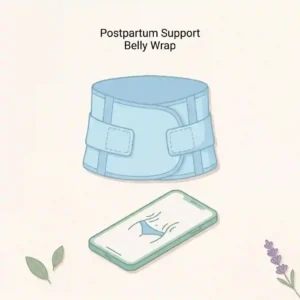
The Solution: You are experiencing muscle fatigue due to relaxin (the hormone that loosened your ligaments) still being in your system. Engage a dedicated postpartum recovery garment. The structural scaffolding shifts the load off your lower back and provides proprioceptive feedback to your brain, reminding you to engage your pelvic floor rather than slouching.
How to Choose a Postpartum Care Recovery Device
When navigating the overwhelming market of maternal wellness, you must filter out the marketing hype and focus on clinical efficacy. Here is my 5-step framework for choosing a device that actually moves the needle on your recovery.
-
Identify Your Delivery Method First: A C-section recovery requires entirely different structural support than a vaginal delivery. If you had abdominal surgery, prioritize high-waisted garments and silicone scar sheets. For vaginal deliveries, prioritize perineal cooling and irrigation tools.
-
Prioritize One-Handed Operation: You will inevitably be holding a baby, a breast pump, or a bottle. If a device requires two hands and complicated assembly to function (like complex wrap-around belly bands with multiple disconnected straps), you simply won’t use it at 3 AM.
-
Assess the Reusability Factor: Consumables like numbing sprays and disposable ice packs run out quickly. I advise my clients to allocate their budget toward reusable items—like therapeutic gel pearls or silver nursing cups—which offer a vastly superior total cost of ownership.
-
Demand Breathability and OEKO-TEX Certification: Postpartum skin is highly sensitive, and wounds require oxygen to heal. Avoid thick, non-porous neoprenes that trap sweat and harbor bacteria. Look for micro-modal, organic cotton, or medical-grade, moisture-wicking synthetics.
-
Verify HSA/FSA Eligibility: Many premium medical garments and devices can be purchased using pre-tax health savings accounts. Always check if the manufacturer has FDA registration, which often guarantees this financial benefit and speaks to the product’s clinical legitimacy. For deeper insights on medical device classifications, resources like the FDA’s official database are invaluable.
Common Mistakes When Buying Postpartum Gear
In my decade of evaluating maternal products, I consistently see intelligent consumers fall into the same traps driven by aggressive social media marketing. The biggest pitfall? Buying for aesthetics over anatomy.
The “Instagram-friendly” neutral-toned waist trainers are perhaps the worst offenders. Many mothers buy tight, rigid cinchers thinking they will speed up physical recovery. What most buyers overlook is that intense, non-graduated downward compression actually forces your internal organs down onto a weakened pelvic floor, potentially exacerbating prolapse. A true postpartum care recovery device supports the anatomy from the bottom up.
Another frequent mistake is over-investing in single-use consumables. Buying massive bulk boxes of standard witch-hazel pads often results in waste. Instead, invest in high-quality, reusable hot/cold packs and a targeted perineal wash bottle. Lastly, women frequently underestimate sizing. Your body will fluctuate wildly in the first three weeks as fluids dissipate. When buying compression wear, always follow the manufacturer’s specific postpartum sizing chart—which is usually based on your third-trimester measurements—rather than guessing based on your pre-pregnancy size.
What to Expect: Real-World Performance vs. Marketing Hype
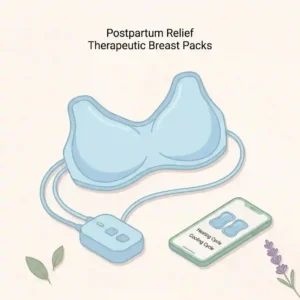
Let’s bridge the gap between glossy product descriptions and the messy reality of the fourth trimester. When a spec sheet for a cooling pad reads “provides up to one hour of cooling relief,” you must read between the lines. In reality, your body heat will neutralize that pad in about 20 to 30 minutes. But here is the insider insight: that is actually a good thing. Prolonged exposure to intense cold can cause localized frostbite and impede the blood flow necessary for tissue granulation and healing, according to guidelines from the American College of Obstetricians and Gynecologists (ACOG).
Similarly, when a recovery garment advertises that it “shrinks the waist instantly,” recognize the marketing spin. The physical transformation you see when you zip it up is structural displacement, not instant fat loss or muscle repair. The true real-world performance of these garments lies in pain reduction and postural support. The relief you feel when standing to do dishes or rocking the baby is the genuine ROI.
Understanding these realities prevents disappointment. A postpartum care recovery device is not a magic wand that erases the trauma of birth; it is a vital tool that lowers your daily pain threshold, allowing you to focus mental energy on bonding with your newborn rather than surviving your symptoms.
Long-Term Cost & ROI of Premium Recovery Tools
It is easy to balk at spending $60 on silver nursing cups or $100 on a compression garment when you have just purchased a crib, a car seat, and endless diapers. However, we must analyze the total cost of ownership and the hidden costs of not healing properly.
Let’s look at the alternatives. If you forego silver cups, you might spend $15 a week on organic nipple balms and hydrogel patches for three months. That equates to roughly $180—three times the cost of the premium, reusable silver device. Furthermore, if you neglect core support and develop severe pelvic floor dysfunction or prolonged diastasis recti, the cost of specialized physical therapy sessions (often $150+ per hour out-of-pocket) dwarfs the $100 investment in a medical-grade recovery garment.
When you reframe the purchase of a postpartum care recovery device as an investment in preventative physical therapy, the price range becomes highly justifiable. You are essentially buying back your mobility and accelerating your timeline to pain-free movement.
Conclusion: Investing in Your Healing Journey
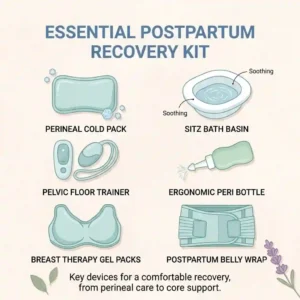
The narrative surrounding childbirth often abruptly shifts focus entirely to the newborn the moment they arrive, leaving the mother to navigate her physical recovery as an afterthought. But building a strategic toolkit for your fourth trimester is a profound act of self-care. Whether it is the pinpoint hygiene of a well-engineered wash bottle, the structural grace of a medical-grade garment, or the soothing relief of targeted thermotherapy, a dedicated postpartum care recovery device is essential to reclaiming your physical autonomy.
Do not accept pain and extreme discomfort as just a “normal” part of motherhood that you must grit your teeth through. By leveraging the expert insights and specialized products we’ve explored today, you can bridge the gap between hospital care and full systemic healing. Prioritize your recovery, because a healing mother is the strongest foundation a newborn can have.
FAQs
❓ What is the best postpartum care recovery device for a C-section?
✅ High-waisted, seamless compression garments and specialized silicone scar sheets are best. They stabilize the abdominal wall, reduce friction against the incision, and support weakened core muscles, allowing for safer, less painful mobility during the first month of recovery…
❓ How long should I use an upside-down peri bottle?
✅ Most mothers use a peri bottle for 2 to 4 weeks postpartum, or until bleeding stops and stitches dissolve. It remains useful during menstruation or for hemorrhoid management long after the initial postpartum phase has ended…
❓ Are postpartum belly wraps actually effective?
✅ Yes, if they are medical-grade compression garments, not just aesthetic waist trainers. Proper wraps provide necessary back support, stabilize the pelvic floor, and relieve structural pain, but they do not magically shrink your waist overnight…
❓ Can I use my FSA/HSA for postpartum recovery tools?
✅ Many FDA-registered tools, including medical compression garments, breast pumps, and certain therapeutic hot/cold packs, are FSA/HSA eligible. Always check the specific product listing and consult your plan administrator for exact reimbursement rules…
❓ How do silver nursing cups work for healing?
✅ Silver naturally possesses antimicrobial and anti-inflammatory properties. When placed over the nipples, the cups utilize a few drops of your own breastmilk to create a moist, protected healing environment, preventing cracking and infection without messy creams…
Recommended for You
- 5 Best Portable Electric Bidet Options for 2026: Clean Anywhere
- Perineal care bottle Guide 2026: 5 Smart Benefits Every New Mom Should Know
- Top 5 Ice Packs for After Birth in 2026: Expert Postpartum Recovery Guide
Disclaimer: This article contains affiliate links. As an Amazon Associate, I earn from qualifying purchases. If you purchase products through these links, we may earn a small commission at no additional cost to you.
✨ Found this guide helpful? Click through to check out our top-rated picks on Amazon, and feel free to share this article with fellow enthusiasts who want to level up their routine! 💬🤗
[addtoany]
