

If you are stepping into the reality of postpartum recovery, a perineal care bottle is a portable, squeezable plastic or silicone vessel featuring a specialized nozzle, designed to spray a gentle stream of water over the perineum. It dilutes urine to prevent stinging on stitches and provides hygienic cleansing when toilet paper is too abrasive. But the spec sheet won’t tell you the real story. In my 10+ years working as a postpartum recovery consultant, I’ve seen countless new parents rely solely on the flimsy, standard-issue hospital wash bottles, only to realize they are completely inadequate for home recovery.
Here is the truth: a well-engineered wash bottle isn’t just a hygiene tool; it is a pain-management device. When your tissue is swollen and sensitive, the difference between a harsh, poorly aimed splash and a soft, targeted mist is monumental. You need optimal water pressure, an ergonomic grip, and a nozzle that doesn’t require you to contort your body. Throughout my field tests—and the feedback from thousands of families—I’ve learned exactly what separates a top-tier recovery tool from a frustrating gimmick. Let’s dive into the data, the engineering, and the real-world experiences to help you find the perfect fit for your healing journey.
Quick Comparison Table: Top Contenders
| Product Name | Best For | Key Specification | Price Range |
| Frida Mom Upside Down | Overall Ergonomics | Angled nozzle, 10 oz capacity | $15 – $20 |
| Lansinoh Wash Bottle | Gentle Pressure Control | EVA material, collapsible | Under $15 |
| Bodily Care Bottle | High-Capacity Healing | 12 oz capacity, silicone | $15 – $25 |
| Medline Irrigation Bottle | Budget/Hospital Replica | Straight nozzle, 8 oz capacity | Under $10 (Multi-pack) |
| Brondell GoSpa | Travel & Discretion | Retractable nozzle, airlock valve | $10 – $15 |
Looking at the comparison above, the Frida Mom model delivers the best value for immediate postpartum recovery due to its aggressive nozzle angle, but if consistent, gentle pressure is your priority, the Lansinoh’s soft EVA material justifies looking past its smaller footprint. Budget buyers should note that the Medline option sacrifices ergonomics for its ultra-low price point, making it a better backup than a primary daily driver.
💬 Just one click — help others make better buying decisions too! 😊
[addtoany]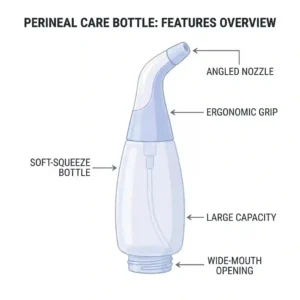
Top 5 Perineal Care Bottles: Insider Reviews & Analysis
1. Frida Mom Upside Down Peri Bottle
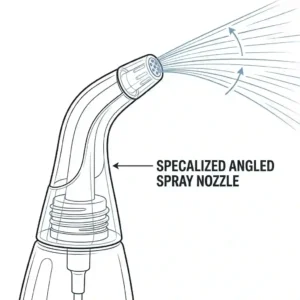
The Frida Mom Upside Down Peri Bottle revolutionized the market with its dramatically angled, narrow neck that targets the perineum without awkward reaching. Featuring a 10-ounce capacity and an upside-down spray mechanism, this means you can hold the bottle comfortably near your hip while the water sprays upward, saving your abdominal muscles from painful twisting. In my experience, this is the gold standard for the first two weeks of recovery; the targeted spray provides immense relief for second or third-degree tears. However, what most buyers overlook is the rigid neck—while excellent for aiming, it makes the bottle bulky to pack in a small diaper bag. Customers universally praise its aiming capability, though a few note the hard plastic base can be tough to squeeze with weak hands.
-
Pros: Perfect upward angle, includes waterproof travel bag, reduces bending.
-
Cons: Bulky for travel, stiffer plastic requires firmer squeezing.
-
Price Range & Value: In the $15-$20 range, it offers unmatched ROI for those crucial early weeks of recovery.
2. Lansinoh Postpartum Wash Bottle
The Lansinoh Postpartum Wash Bottle features a highly flexible EVA plastic body and a retractable spout. The use of EVA plastic means the bottle responds to the lightest touch, allowing you to control the water flow precisely—a critical feature when dealing with highly sensitive stitches where too much pressure causes searing pain. I constantly recommend this to parents who experienced severe tearing, as the gentle, rain-like shower head design is much softer than the single-stream competitors. Reviewers claim it’s the most comfortable bottle to use, though in practice, I found the retractable spout can sometimes push back into the bottle if you press it too firmly against your skin.
-
Pros: Incredibly easy to squeeze, soft shower-stream, collapsible for travel.
-
Cons: Spout can retract accidentally, smaller water volume.
-
Price Range & Value: Sitting comfortably under $15, this is a budget-friendly powerhouse for sensitive healing.
3. Bodily Care Peri Bottle
The Bodily Care Peri Bottle stands out with its premium silicone construction and massive 12-ounce capacity. That extra two ounces might not sound like much, but in practice, it means you can complete a full cleansing and soothing session without having to awkwardly refill at the sink mid-bathroom trip. I love this option for larger bodies and those with mobility issues, as the silicone is grippy even when wet, and the extended capacity is a lifesaver. Customers often highlight the aesthetic, modern design that doesn’t scream “medical device.” The one drawback is the silicone attracts dust and lint if dropped on a bathroom rug.
-
Pros: Large capacity, non-slip silicone, aesthetically pleasing.
-
Cons: Attracts dust/lint, slightly heavier when full.
-
Price Range & Value: In the $15-$25 range, it’s a premium investment that doubles beautifully as a portable bidet later.

4. Medline Perineal Irrigation Bottle
The Medline Perineal Irrigation Bottle is the classic, straight-nozzle, 8-ounce workhorse you likely saw in your hospital room. The straightforward squeeze-and-squirt design means there is zero learning curve, making it practically foolproof in the hazy hours immediately following birth. While I don’t recommend this as your primary home bottle due to the lack of an angled neck (which requires you to reach into the toilet bowl to aim properly), it is fantastic to keep in secondary bathrooms or use for mixing soothing solutions like witch hazel. Most reviews applaud its durability and low cost, though many admit the straight nozzle is functionally inferior to modern designs.
-
Pros: Extremely affordable, durable, great for mixing solutions.
-
Cons: Straight nozzle requires awkward bending, basic water stream.
-
Price Range & Value: Usually under $10 for a multi-pack, making it the perfect low-risk, high-utility backup.
5. Brondell GoSpa Travel Bidet
The Brondell GoSpa Travel Bidet features a metal airlock valve at the base and a discreet, tuck-away nozzle. The airlock valve is a game-changer; it means air enters the bottom of the bottle as you squeeze, allowing for a continuous, strong spray without the bottle crumpling in on itself. If you are a parent returning to work or traveling frequently, this is the ultimate transition product from postpartum care to general hygiene. The anti-recommendation here: do not use this in the first 48 hours postpartum, as the spray is surprisingly powerful and could irritate fresh stitches. Users rave about its longevity and discreet profile.
-
Pros: Continuous spray pressure, discreet design, long-term bidet use.
-
Cons: Spray can be too strong for fresh stitches, smaller reservoir.
-
Price Range & Value: At $10-$15, its total cost of ownership extends years beyond postpartum recovery.
✨ Don’t Miss These Exclusive Deals!
🔍 Take your recovery to the next level with these carefully selected products. Click on any highlighted item to check current pricing and availability. These tools will help you create authentic healing routines your family will love!
The “First 30 Days” Usage & Healing Guide
Transitioning from the hospital to home care requires a shift in your recovery strategy. For the first week, your perineal care bottle is your primary defense against infection and pain. When setting up your bathroom station, never use cold tap water. Your tissues are recovering from trauma, and cold water can cause muscles to involuntarily tense, exacerbating pain. Instead, fill your bottle with lukewarm water—test it on your wrist first.
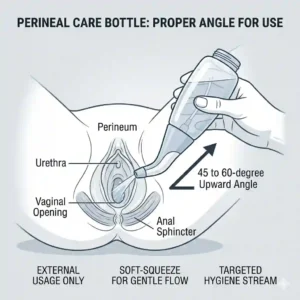
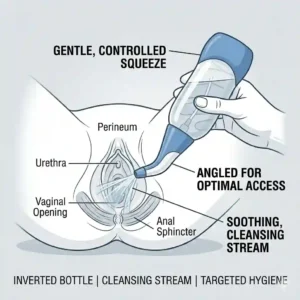
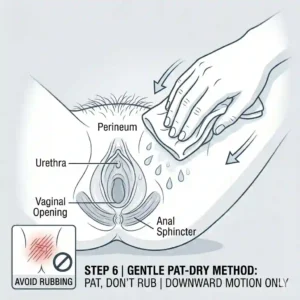
During days 1-14, I advise my clients to add a few drops of alcohol-free witch hazel to the warm water. This botanical astringent helps reduce swelling. Lean slightly forward on the toilet, position the angled nozzle near the perineum, and start squeezing before you begin urinating. The continuous stream dilutes the acidity of the urine, entirely neutralizing the dreaded “postpartum sting.” Once finished, do not wipe. Instead, gently pat the area dry with a dedicated, ultra-soft microfiber cloth or allow it to air dry for a few moments. This hands-off approach drastically reduces the friction that leads to prolonged healing and discomfort.
Navigating Common Pitfalls: Leaks, Temperature, and Positioning
Even with the best products, user error can turn a soothing experience into a frustrating mess. The most common problem I see is the “Airlock Collapse.” Buyers often complain that after a two-second squeeze, the bottle caves in and stops spraying. The solution? Stop death-gripping the plastic. Squeeze gently with three fingers, release to let air back through the nozzle, and squeeze again. If you have a bottle with a bottom air valve like the Brondell GoSpa, make sure your finger isn’t accidentally covering the metal hole.
Another major issue is leakage during transport. If you are packing an angled bottle in your diaper bag for a pediatrician visit, do not pre-fill it. The change in atmospheric pressure or a slight squeeze from neighboring items will flood your bag. Pack the bottle empty, and fill it at the clinic’s sink. Finally, positioning: if water is splashing everywhere but where it needs to go, you are likely holding the bottle too far away. The nozzle should be surprisingly close to your body—about an inch away—directed straight up or slightly backward, never front-to-back, to prevent the transfer of bacteria from the anal region.
How to Choose the Right Postpartum Wash Bottle
Selecting the right device isn’t just about picking the top-rated item; it’s about matching the engineering to your specific biological and environmental needs. Here is my expert framework for choosing:
-
Assess Your Mobility: If you had a Cesarean section, twisting your torso to reach behind you is out of the question. You absolutely require a bottle with a long, aggressively angled neck (like the Frida Mom).
-
Evaluate Your Tissue Sensitivity: For those with third or fourth-degree tears, water pressure is everything. Prioritize soft EVA plastics over rigid polymers so you can micro-manage the flow rate.
-
Capacity vs. Portability: A 12-ounce bottle is brilliant for your master bathroom, but it won’t fit in a standard purse. Consider buying a high-capacity unit for home and a collapsible 8-ounce unit for your travel bag.
-
Nozzle Stream Pattern: Look closely at the spout. Does it have one large hole or multiple small ones? A “shower head” design disperses pressure, making it vastly superior for sensitive, freshly sutured skin.
| Feature Type | Best Material/Design | Practical Benefit |
| Material | EVA or Silicone | Effortless squeezing; reduces hand fatigue and prevents jarring water blasts. |
| Nozzle Angle | 60-Degree Curvature | Eliminates the need to bend or twist the spine during use. |
| Spout Design | Multi-Hole “Shower” | Disperses water pressure to protect delicate stitches and swollen tissue. |
The breakdown in the table clearly illustrates that material and nozzle design are not just aesthetic choices, but clinical ones. Silicone and EVA models prevent the aggressive water spikes that hard plastic bottles produce. Furthermore, the 60-degree curvature is a non-negotiable feature for C-section mothers who must protect their abdominal incisions from strain.
Common Mistakes When Buying Recovery Gear
The biggest mistake new parents make is assuming the hospital will provide everything they need. The standard-issue hospital bottle is designed for one thing: cost-efficiency. It is not designed for ergonomic home use. By relying solely on it, you are signing up for unnecessary discomfort.
Another oversight is buying only one bottle. In my consultations, I constantly remind parents that postpartum mobility is limited. If you live in a two-story house, walking up the stairs just to use the bathroom with your recovery bottle is a recipe for physical exhaustion. You need one for every bathroom you plan to use, plus a travel option. Furthermore, many buyers discard the bottle once the bleeding stops. This is a massive waste of value; these devices are incredible for menstruation hygiene, hemorrhoid care, and even cleaning a toddler’s scraped knee on the go.
Angled Nozzles vs. Straight Nozzles: The Ergonomic Reality
Let’s settle the debate between angled and straight nozzles. A straight nozzle requires you to insert the bottle into the toilet bowl, pointing it upward towards your body. This forces your hand dangerously close to toilet water and requires a wrist contortion that is incredibly uncomfortable when your abdominal core is weakened from childbirth.
An angled nozzle flips the physics of the process. Because the neck bends at a 60-to-80-degree angle, you hold the bottle completely upright, resting your wrist comfortably on your thigh. Gravity feeds the water into the angled neck, and a gentle squeeze propels it exactly where it needs to go. The spec sheet won’t tell you this, but the angled design also creates a natural air-pocket at the base of the bottle, which prevents the vacuum effect that causes straight bottles to stop spraying mid-squeeze. For home recovery, angled is objectively superior.
What to Expect: Real-World Performance & Recovery Time
Transforming specs into everyday experience changes how you view this tool. A high-quality perineal care bottle won’t magically heal your body overnight, but it will drastically reduce the psychological dread associated with using the bathroom during the first two weeks postpartum. According to guidelines from institutions like the American College of Obstetricians and Gynecologists (ACOG), keeping the perineum clean and free of irritants is critical to preventing infection.
In real-world performance, expect to refill the bottle with warm water 4 to 6 times a day. By week three, as the stitches dissolve and the swelling subsides, you’ll notice you need less water and can tolerate slightly cooler temperatures. By week six, the tool transitions from a pain-management necessity to a hygiene luxury. The true ROI of a premium bottle isn’t just physical cleanliness; it’s the preservation of your mental peace during a highly vulnerable physical state.
Features That Actually Matter (And Those That Don’t)
Marketing hype in the baby and maternity space is relentless. You will see bottles marketed with “ergonomic grip textures,” “temperature indicating plastics,” and “antimicrobial coatings.” Let me filter this for you as an expert.
What matters:
-
Squeeze Resistance: You want a bottle that collapses easily. Your hands may be swollen or weak from IV fluids.
-
Water Volume: Anything under 8 ounces will run out before you finish cleaning.
-
Neck Length: A longer neck keeps your hand further from the toilet bowl.
What doesn’t matter:
-
Temperature Indicators: You should be testing the water on your wrist anyway. Trusting a plastic color-change over your own skin is unnecessary.
-
Carry Bags: Unless you travel constantly, the bottle will sit on your bathroom counter 99% of the time. Don’t pay a premium just for a nylon drawstring pouch.
Safety, Hygiene, and Medical Recommendations
Keeping your equipment sterile is a critical component of the healing process. The Mayo Clinic heavily emphasizes the importance of postpartum hygiene to prevent severe complications like endometritis or infected perineal tears. However, a dirty wash bottle can introduce bacteria directly into an open wound.
Never share your bottle, even if it has been washed. Every 48 hours, the bottle should be completely disassembled. Wash the bottle, the cap, and the nozzle in hot, soapy water. Do not put them in the dishwasher unless the manufacturer explicitly states it is safe, as the high heat cycle will warp EVA plastics and destroy the airlock valves. Furthermore, ensure the bottle is left to air dry completely upside down on a clean towel. Stagnant water left inside a sealed bottle for days is a breeding ground for mold and biofilm, completely negating its medical benefits.
Long-Term Cost & Maintenance
When calculating the total cost of ownership, a perineal care bottle is one of the cheapest medical devices you will ever purchase. Sitting in the $10 to $25 range, its utility far outlasts the initial six-week recovery phase.
The maintenance cycle is practically non-existent beyond regular washing. However, if you live in an area with hard water, you may notice mineral buildup clogging the tiny holes in the shower-head nozzles after a few months. A quick insider hack: soak the nozzle in a mixture of half white vinegar and half warm water for 20 minutes, then scrub gently with an old toothbrush. This restores the spray pressure to factory conditions. By keeping the bottle clean, it successfully doubles as a portable bidet for camping trips or managing IBS symptoms for years to come.
✨ Don’t Miss These Exclusive Deals!
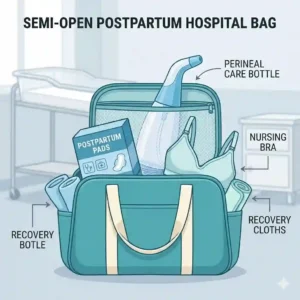
🔍 Ready to build your ultimate postpartum survival kit? Click on any highlighted item to check current pricing and availability. Secure your comfort today!
Conclusion
Navigating the postpartum period is challenging enough without battling poorly designed hygiene products. Upgrading your perineal care bottle from a basic hospital freebie to a purposefully engineered tool like the Frida Mom or Bodily Care bottle is one of the smartest, most cost-effective investments you can make for your physical recovery. By prioritizing ergonomic angles, soft materials, and adequate water capacity, you remove friction from your healing process. Remember, the goal is to dilute acidity, maintain optimal hygiene, and prevent infection—all without adding mechanical strain to your recovering body. Choose the model that fits your bathroom setup, keep it clean, and give your body the gentle care it requires.
FAQs
❓ How long should I use a perineal care bottle postpartum?
✅ Most parents use it consistently for the first 2 to 4 weeks postpartum. You should continue using it until you can wipe with toilet paper without experiencing pain, stinging, or irritation around your stitches or swollen tissues…
❓ Can I put warm water in my peri bottle?
✅ Yes! Lukewarm water is highly recommended. Cold water can cause painful muscle spasms, while hot water can burn sensitive healing skin. Always test the water temperature on your wrist before aiming it at your perineum…
❓ Should I use soap in my wash bottle?
✅ No. Keep soap away from healing perineal tissues as it alters pH levels and causes severe stinging. Stick to warm water, or consult your doctor about adding a few drops of pure, alcohol-free witch hazel…
❓ How do I clean my postpartum care bottle?
✅ Disassemble the bottle and wash it with hot water and mild dish soap every two days. Allow all parts to air dry completely to prevent mold. Avoid boiling or dishwashing unless the manual specifically allows it…
❓ Is an angled nozzle really better than a straight one?
✅ Yes. An angled nozzle allows you to sit upright and spray the water upward naturally. Straight nozzles require you to reach awkwardly into the toilet bowl, straining your abdominal muscles and core…
Recommended for You
- Body Cleansing Wipes After Surgery: 7 Best Options for Safe & Gentle Recovery
- 5 Best Postpartum Gift Box Essentials for 2026 (Expert Reviewed)
- 5 Unbeatable new mom necessities for 2026 (Expert Tested)
Disclaimer: This article contains affiliate links. As an Amazon Associate, I earn from qualifying purchases. If you purchase products through these links, we may earn a small commission at no additional cost to you.
✨ Found this helpful? Share it with your friends! 💬🤗
[addtoany]
