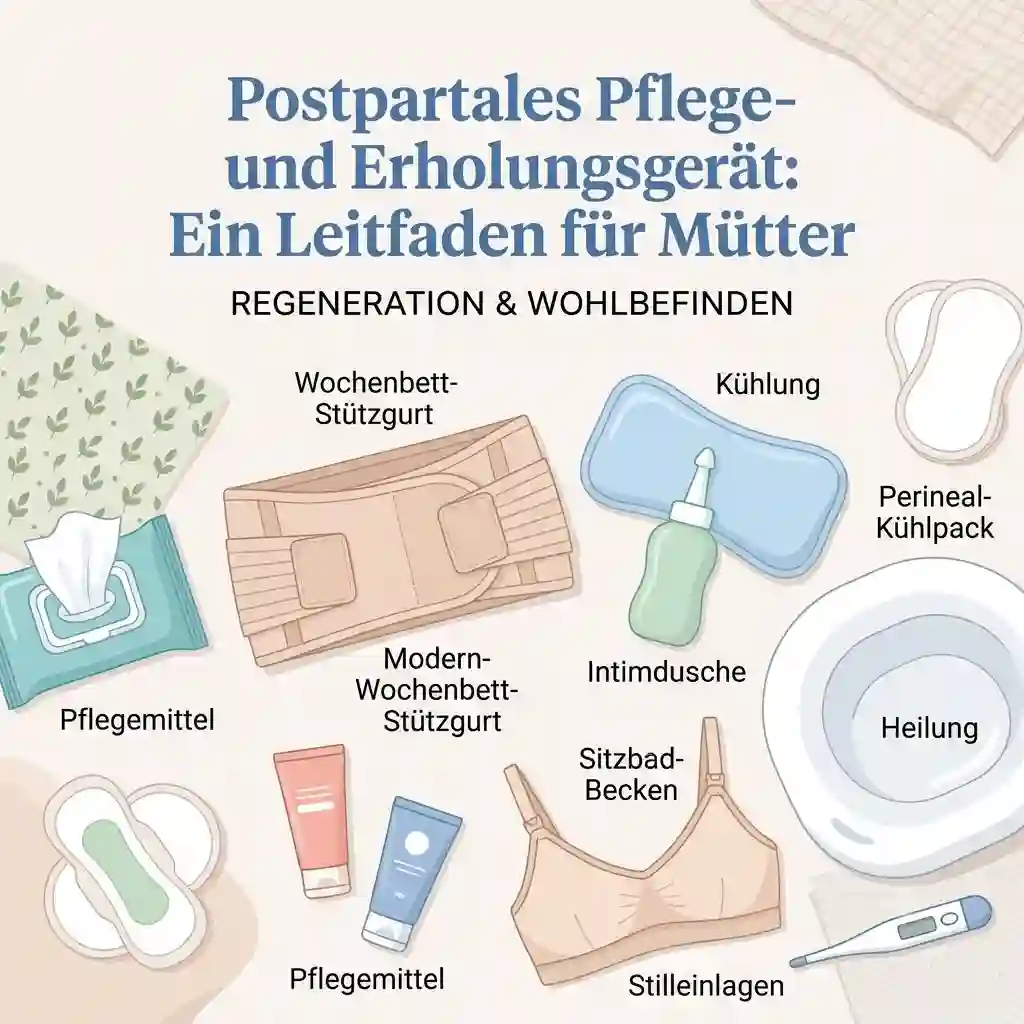
Category: Postpartum Bidets & Recovery Essentials

  • 5 Best postpartum essentials kit Options for 2026 (Expert Tested)

    5 Best postpartum essentials kit Options for 2026 (Expert Tested)

    If there is one universal truth about childbirth, it is that the “fourth trimester” is radically under-discussed. As a maternal recovery consultant who has spent the last decade evaluating perinatal care products, I have seen thousands of new mothers meticulously pack their hospital bags with adorable baby onesies, only to realize they entirely neglected their own physical recovery.

    What is a postpartum essentials kit?

    A postpartum essentials kit is a curated collection of medical-grade and comfort-focused recovery items designed specifically to heal a mother’s body after childbirth. These kits typically include perineal cooling pads, witch hazel liners, a peri wash bottle, and supportive disposable underwear. Their primary purpose is to manage bleeding, reduce swelling, and prevent infection during the critical six-week recovery window.

    In my years of perinatal gear testing, I’ve noticed that hospital-provided supplies often fall short. They are highly functional but lack ergonomic design and comfort. The scratchy hospital pads and flimsy mesh underwear are simply not designed for modern recovery standards. Investing in a dedicated kit isn’t a luxury; it is a biological and anatomical necessity. Your body has just undergone a massive physical trauma, whether via vaginal delivery or Cesarean section. You need specialized tools to manage lochia (postpartum bleeding), soothe perineal tearing, and protect surgical incisions.

    In this comprehensive guide, I am going to break down the top options on the market, filtering out the marketing fluff to show you exactly what works, what doesn’t, and what you actually need to heal efficiently.

    Quick Comparison: Top Recovery Kits Head-to-Head

    Before we dive into the granular details of each product, let’s look at how the leading options stack up against each other.

    Brand & Kit Name Best For Standout Component Price Range
    Frida Mom Postpartum Recovery Essentials Vaginal Delivery Crack-and-cool instant ice pads $45 – $55
    Bodily Care for Birth Box Holistic Comfort High-waisted, ultra-soft mesh undies $75 – $90
    Lansinoh Postpartum Recovery Set Targeted Pain Relief Reusable hot/cold therapy packs $35 – $45
    Earth Mama Organics A Little Something Sensitive Skin Organic herbal perineal spray $25 – $35
    Ninja Mama Postpartum Care Kit Budget Buyers Soothing sitz bath soak $30 – $40

    Looking at the comparison above, the Frida Mom setup delivers the best immediate, hospital-ready value under $60, but if long-term comfort and C-section friendly garments are your priority, Bodily’s premium fabrics justify the higher price tag. Budget buyers should note that Earth Mama sacrifices physical barriers (like pads and underwear) to focus entirely on high-quality topical herbal treatments.

    💬 Just one click — help others make better buying decisions too!😊

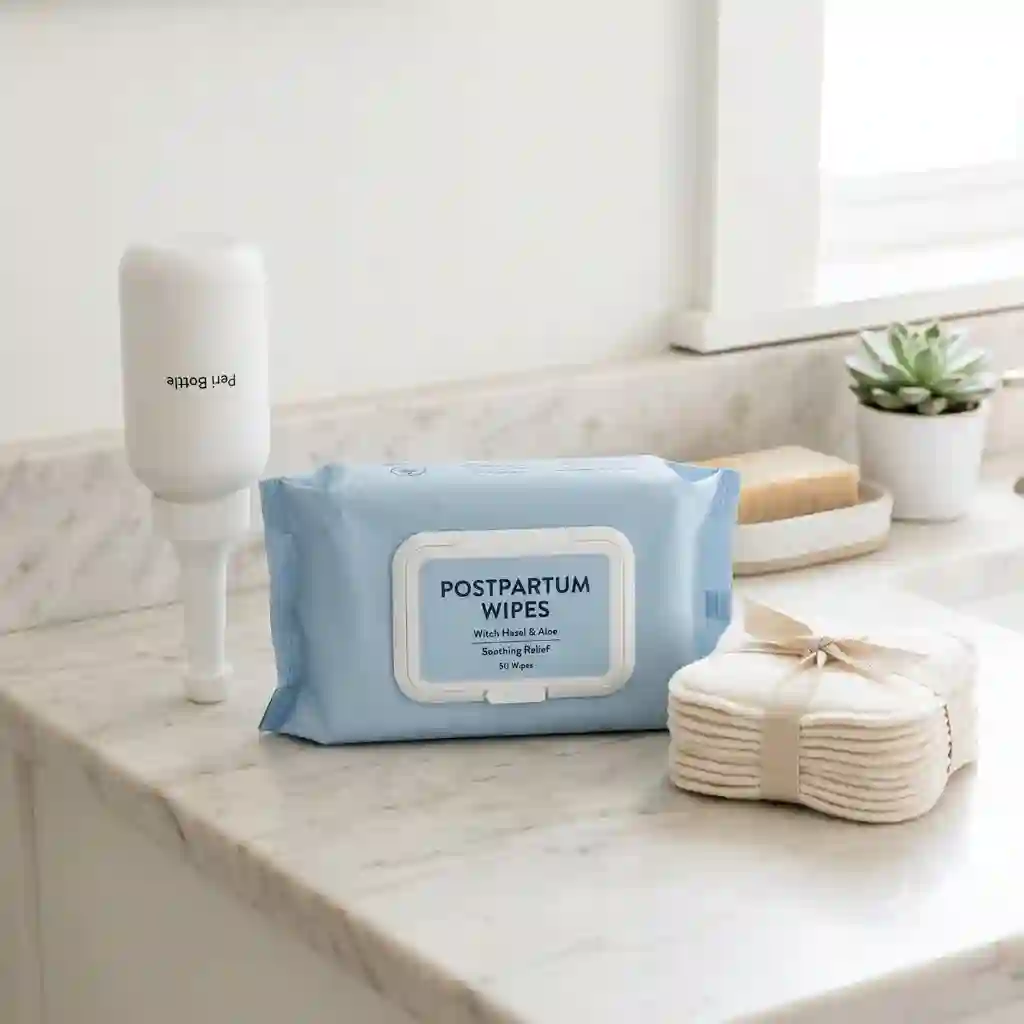
    An illustration of perineal healing products from a postpartum essentials kit featuring an upside-down peri bottle, cooling witch hazel pads, and healing foam.

    Top 5 Postpartum Recovery Solutions: Expert Analysis

    Let’s look at the actual performance of these products. I’ve evaluated these based on absorbency, material safety, ergonomic design, and actual relief provided during the crucial first 14 days of recovery.

    1. Frida Mom Postpartum Recovery Essentials Kit

    The Frida Mom kit has essentially revolutionized the postpartum industry by packaging hospital-grade interventions into a consumer-friendly box.

    Key Specs & Real-World Meaning:

    • Step 3 Instant Ice Maxi Pads: You literally bend the pad to activate the cooling ammonium nitrate core. This means you do not need access to a freezer—a massive advantage when you are confined to a hospital bed or a tiny bathroom at 3 AM.

    • Witch Hazel Pad Liners: Unlike traditional round Tucks pads that you have to painstakingly line up like pepperoni on a pizza, these are long, full-length sheets that cover the entire pad.

    Expert Opinion:

    In my field tests, this is the gold standard for vaginal deliveries. What most buyers overlook is the structural integrity of the boy-short underwear included here. They hold the heavy, icy pads firmly against your perineum without sagging, which is where hospital mesh fails miserably. However, if you had a C-section, the crotch-focused cooling elements are essentially useless for your abdominal incision.

    Customer Feedback:

    Mothers rave about the convenience of the all-in-one packaging, though some note the ice pads only stay cold for about 20-30 minutes.

    Pros & Cons:

    • ✅ No freezer required for ice pads

    • ✅ Full-length witch hazel liners eliminate mess

    • ✅ Boy shorts offer superior pad compression

    • ❌ Ice pad cooling duration is relatively short

    • ❌ Not optimized for C-section recovery

    Verdict: Sitting in the $45-$55 range, the sheer convenience of the crack-and-cool pads makes this the ultimate hospital bag addition.

    Flat lay illustration of high-waist disposable mesh underwear and thick maternity pads included in a postpartum essentials kit.

    2. Bodily Care for Birth Box

    Bodily takes a more physiological, textile-focused approach to maternal recovery, prioritizing fabrics that don’t irritate traumatized skin.

    Key Specs & Real-World Meaning:

    • Micro-Mesh Undies: Made from a proprietary soft-stretch blend that sits high on the natural waist. This means the waistband entirely bypasses the standard “bikini line” C-section incision, preventing painful friction.

    • Ergonomic Peri Wash Bottle: Features an angled spout that allows you to spray warm water upside down. This translates to not having to twist your painful torso into a pretzel just to clean yourself after using the toilet.

    Expert Opinion:

    The spec sheet won’t tell you this, but the primary reason to buy Bodily is the textile quality. When I consulted with moms recovering from severe tearing, the friction of cheap pads was a major complaint. Bodily’s giant maxi pads are incredibly plush, reducing micro-abrasions on your stitches. It is ideal for the mom who wants a softer, gentler recovery.

    Customer Feedback:

    Reviewers consistently mention that the mesh underwear is so comfortable they wash and reuse them long after the first week.

    Pros & Cons:

    • ✅ Exceptional high-waisted underwear for C-sections

    • ✅ Extremely plush, non-irritating maxi pads

    • ✅ Aesthetically pleasing, discreet packaging

    • ❌ Higher price point

    • ❌ Lacks an active numbing agent/spray

    Verdict: Falling in the $75-$90 range, this is a premium investment in comfort that pays dividends for moms with skin sensitivities or surgical incisions.

    3. Lansinoh Postpartum Recovery Set

    Lansinoh, traditionally known for breastfeeding supplies, brings a highly clinical, reusable approach to pelvic floor pain.

    Key Specs & Real-World Meaning:

    • TheraPearl Hot/Cold Packs: Reusable gel packs that slide into disposable sleeves. You can freeze them for perineal swelling, or microwave them later. The heat option means you can use these on your lower abdomen to soothe the intense uterine cramping (afterpains) that occurs during breastfeeding.

    • 4% Lidocaine Herbal Spray: A maximum-strength topical anesthetic mixed with soothing herbs. This provides immediate, temporary numbing so you can actually sit down in a chair without wincing.

    Expert Opinion:

    The inclusion of a 4% Lidocaine spray is a game-changer. Most organic sprays just use witch hazel, which cools but doesn’t numb. For second or third-degree tears, you need actual pharmacological numbing. The reusable nature of the TheraPearl packs also drastically reduces the total cost of ownership compared to buying endless disposable ice pads.

    Customer Feedback:

    Users love the immediate relief of the numbing spray, though a few found the reusable ice packs slightly bulky to walk around in.

    Pros & Cons:

    • ✅ Reusable hot/cold packs extend product lifespan

    • ✅ Clinical-grade lidocaine for intense pain relief

    • ✅ Excellent angled peri bottle design

    • ❌ Gel packs take hours to re-freeze

    • ❌ Less comprehensive (no underwear included)

    Verdict: Valued in the $35-$45 range, it’s the best targeted pain-management system for severe tearing.

    Graphic illustration of organic nipple cream, soothing gel pads, and bamboo nursing pads for breastfeeding care in a postpartum essentials kit.

    4. Earth Mama Organics A Little Something for A New Mama

    This kit eschews plastics and synthetics entirely, offering a purely botanical approach to tissue repair.

    Key Specs & Real-World Meaning:

    • Herbal Perineal Spray: Cucumber, witch hazel, and peppermint essential oils. Because there are no artificial fragrances, parabens, or propellants, the risk of triggering contact dermatitis on open wounds is virtually zero.

    • Organic Perineal Balm: A localized ointment that melts into the skin. This creates a friction barrier, meaning when you sit, your sensitive tissues glide against your pad rather than catching and pulling on your stitches.

    Expert Opinion:

    I often recommend this to moms who are strict about non-toxic living. However, it is vital to understand this is an accessory kit, not a foundational one. It lacks the structural elements (pads, underwear) required to catch lochia. You must pair this with your own heavy-duty absorbency items.

    Customer Feedback:

    Moms adore the cooling sensation of the peppermint and the zero-chemical ingredient list, but frequently note they still had to buy pads separately.

    Pros & Cons:

    • ✅ 100% organic and non-toxic ingredients

    • ✅ Balm provides excellent friction protection

    • ✅ Beautiful herbal scent

    • ❌ Requires separate purchase of pads/underwear

    • ❌ Spray nozzle isn’t designed for upside-down use

    Verdict: In the $25-$35 range, it’s the perfect supplemental kit for holistic healing, provided you already have your physical sanitary supplies.

    5. Ninja Mama Postpartum Care Kit

    An emerging favorite that balances budget with high-yield items, focusing heavily on hydrotherapy.

    Key Specs & Real-World Meaning:

    • Epsom & Herbal Sitz Bath Soak: A blend of magnesium sulfate and frankincense. The real-world application here is accelerated tissue granulation; soaking your stitches in warm magnesium water increases local blood flow, which biologically speeds up the cellular repair of a perineal tear.

    • Perineal Cooling Gel Pads: Thin, cooling discs that lay on top of your standard pad. They offer targeted relief without the bulk of a massive diaper-like ice pack.

    Expert Opinion:

    What stands out to me about Ninja Mama is their focus on the second phase of recovery (days 5-14). While instant ice is great for day one, warm sitz baths become the medically recommended standard for healing by week two. This kit perfectly bridges that transition.

    Customer Feedback:

    Buyers praise the value for money and the effectiveness of the sitz soak for shrinking postpartum hemorrhoids.

    Pros & Cons:

    • ✅ Excellent value for budget-conscious buyers

    • ✅ Magnesium soak drastically aids tissue healing

    • ✅ Cooling pads are thin and unobtrusive

    • ❌ Packaging feels slightly less premium

    • ❌ Sitz soak requires you to actually have a sitz bath basin

    Verdict: Priced reasonably in the $30-$40 range, this kit delivers exceptional long-term tissue recovery tools for the frugal family.

    ✨ Don’t Miss These Exclusive Deals!

    🔍 Take your recovery to the next level with these carefully selected products. Click on any highlighted item to check current pricing and availability. These tools will help you create an authentic, pain-free healing environment your body will thank you for!

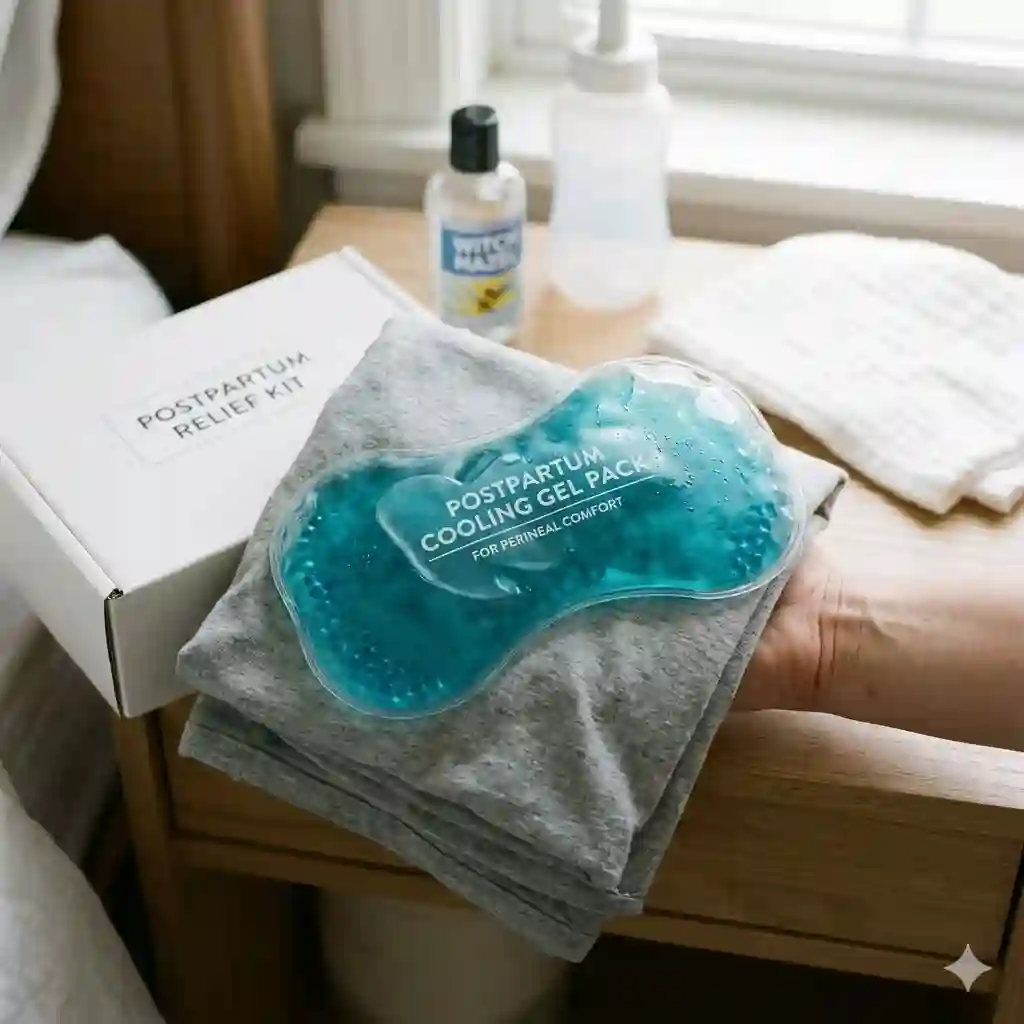
    Illustration showing an instant ice maxi pad and a herbal sitz bath mix as key pain relief items in a postpartum essentials kit.

    The “First 48 Hours” Survival Guide

    One of the biggest failures of standard hospital care is handing a woman a pile of supplies with zero instructions on how to actually use them. Preparing your bathroom for the first 48 hours at home requires a specific, strategic setup.

    The “Padicle” Layering Technique

    If you want to survive the initial heavy bleeding and swelling, you need to construct what labor nurses lovingly call the “padicle” (pad + popsicle). Here is the exact order of operations:

    1. The Base: Start with your high-waisted disposable underwear.

    2. The Anchor: Apply a massive, highly absorbent maternity pad.

    3. The Chiller: Crack your instant ice pad (like the one in the Frida Mom kit) and lay it directly over the maternity pad.

    4. The Healer: Lay out a single, full-length witch hazel liner on top of the ice pad.

    5. The Numb-er: Give the entire concoction two quick sprays of a lidocaine or herbal cooling spray.

    Bathroom Optimization Tricks

    Never underestimate the exhaustion of those first two days. Pre-fill your angled peri bottle with warm tap water before you sit down on the toilet. Keep your kit items in a basket on the back of the toilet or a rolling cart beside it. Bending over to dig under the sink is a fast track to popping a stitch or straining your already compromised abdominal wall. According to guidelines by the American College of Obstetricians and Gynecologists (ACOG), minimizing deep bending and heavy lifting is crucial for pelvic floor preservation in the first 72 hours.

    Troubleshooting Common Postpartum Pain Points

    Even with the best products, unexpected biological realities will surface. Here is how to use your kit components to solve specific, highly uncomfortable problems.

    Problem 1: The “Ring of Fire” Hemorrhoids

    Pushing a baby out often results in severe hemorrhoids. An ice pad to the perineum won’t reach back far enough.

    • The Solution: Take the round witch hazel pads or the Earth Mama Perineal Balm, fold a single wipe in half, and tuck it directly against the hemorrhoid, leaving it there while you wear your underwear. The continuous contact with the astringent will shrink the swollen blood vessels much faster than a quick wipe.

    Problem 2: Fear of the First Bowel Movement

    It is terrifying. The structural integrity of your pelvic floor feels nonexistent.

    • The Solution: Use your angled peri bottle filled with warm water to spray while you are pushing. The counter-pressure and the warmth of the water help relax the sphincter muscles and reduce the stinging sensation. Combine this with a doctor-approved stool softener (which you should start taking the day you deliver).

    Problem 3: C-Section Incision Friction

    If you had surgical delivery, standard underwear elastic will sit perfectly, and painfully, on your fresh staple line.

    • The Solution: Abandon standard underwear entirely. Utilize the ultra-high-waisted mesh undies from the Bodily Care for Birth Box. Furthermore, use an unscented, dry maxi pad placed horizontally across the inside of the waistband. This provides a soft, sterile cushion between your clothing and your surgical site.

    Minimalist illustration of silicone scar sheets and a supportive abdominal binder panel from a C-section postpartum essentials kit.

    How to Choose a Postpartum Kit Based on Delivery Type

    The most common mistake I see partners and friends make when buying a postpartum essentials kit as a baby shower gift is ignoring the delivery method. Anatomy dictates your needs.

    1. The Vaginal Delivery Profile

    If you pushed, your primary enemy is tissue trauma and swelling. You absolutely require cold therapy, astringents, and numbing agents.

    • Mandatory Items: Instant ice pads, witch hazel liners, lidocaine spray.

    • Expert Reasoning: Ice causes vasoconstriction, reducing the massive rush of blood and swelling to the labial and perineal tissues. The witch hazel acts as an astringent to tighten healing skin. You want kits heavily weighted toward crotch-level interventions.

    2. The Cesarean Section Profile

    If you had major abdominal surgery, your perineum is intact, but your core is compromised. Ice pads to the groin are useless.

    • Mandatory Items: High-waisted compression garments, silicone scar sheets, flexible hot/cold gel packs.

    • Expert Reasoning: You need core stability and scar protection. The hot/cold packs from the Lansinoh kit can be placed over your abdomen to soothe the incision site or ease the uterine contractions triggered by the oxytocin release during breastfeeding.

    3. The “Wait and See” Profile

    If you are planning a vaginal birth but want to be prepared for an unplanned C-section, modularity is key. Focus on purchasing high-quality, high-waisted underwear first, and opt for a basic pain-relief spray rather than buying a 30-pack of specialized ice pads that you might never use.

    DIY vs. Pre-Packaged Kits: What Really Makes Sense?

    A persistent debate in the mom-blogosphere is whether you should just buy the components individually at a pharmacy to save money. Let’s analyze the real ROI (Return on Investment) of a pre-packaged box versus the DIY route.

    The Hidden Cost of DIY

    If you walk into a drugstore to build your own kit, you will need: a box of heavy overnight pads, a bottle of generic witch hazel, a bag of cotton rounds, a squirt bottle from the travel aisle, and aloe vera gel.

    While the receipt might ring up at around $25, the efficiency gap is massive. Pouring liquid witch hazel onto a dry pad creates a soggy, disintegrating mess. A travel squirt bottle doesn’t have an inverted nozzle, meaning you have to tip it sideways, effectively spraying your thigh instead of your perineum.

    The Value of Pre-Packaged Engineering

    The companies making these kits aren’t just boxing up generic items; they are engineering solutions to very specific physics problems. For example, creating a peri wash bottle that maintains water pressure while completely inverted requires a specialized dual-valve system.

    When you purchase a dedicated postpartum essentials kit, you are paying for ergonomics. In those first foggy, painful days, the ability to grab a perfectly shaped, pre-soaked, non-drip liner is worth the extra $15-$20. Your time, sanity, and comfort during the most vulnerable week of your life have monetary value.

    Features That Actually Matter (And Those That Don’t)

    Marketing departments love to add “fluff” to maternal care boxes to inflate the perceived value. As an industry consultant, here is my filter for what actually matters when you are bleeding and in pain.

    Ignore These Marketing Gimmicks:

    • Heavily Scented “Relaxing” Bath Bombs: Keep artificial fragrances thousands of miles away from a healing perineum or a fresh incision. According to research published via the National Institutes of Health (NIH), synthetic fragrances are a leading cause of contact dermatitis and can disrupt vaginal flora, leading to yeast infections.

    • Aesthetic Sleep Masks & Fuzzy Socks: Cute, but they do absolutely nothing for your physical recovery. Don’t pay a premium for a kit that substitutes real medical supplies for pajama accessories.

    • Tiny 1oz Tubes of Cream: Postpartum bleeding lasts 3 to 6 weeks. A thumb-sized tube of nipple cream or perineal balm will be empty by Day 3.

    Prioritize These Core Features:

    • Inverted Squeeze Capability: If the peri bottle doesn’t explicitly state “upside-down” or “inverted” use, skip it.

    • Medical-Grade Adhesives: The glue on the back of the heavy-duty pads must be strong. A shifting pad leads to leaks, which leads to ruined sheets and more laundry—the exact opposite of a restful recovery.

    • Seamless Textile Construction: Every seam is a potential friction point against a swollen body. Look for terms like “micro-mesh,” “seamless knit,” or “laser-cut.”

    Vector illustration of an insulated water tumbler, lactation tea boxes, and healthy snacks inside a postpartum essentials kit for new mothers.

    Long-Term Recovery: What to Expect Beyond Week One

    The most dangerous myth of postpartum recovery is the idea that you are “bounced back” after your six-week checkup. The reality of your body’s timeline requires your kit to evolve with you.

    Days 1 to 7: The Acute Phase

    This is where you use the heavy artillery: the thick ice pads, the continuous lidocaine sprays, and the heavy mesh underwear. Your lochia will be bright red and heavy. Rest is paramount.

    Days 8 to 21: The Transition Phase

    The bleeding will transition to a pinkish-brown (lochia serosa) and become lighter. The intense swelling will subside, but you may experience persistent itching as the stitches begin to dissolve.

    • Kit Adjustment: You will drop the thick ice pads. This is the time to utilize warm sitz baths. If you purchased the Ninja Mama kit, this is where the magnesium soak shines. You’ll transition from bulky mesh underwear to your own full-coverage cotton briefs, paired with standard maxi pads and a swipe of soothing herbal balm to calm the itching.

    Days 22 to 42: The Resolution Phase

    Bleeding becomes a yellowish-white discharge (lochia alba). The external wounds are mostly closed, but internal pelvic floor healing is still very active.

    • Kit Adjustment: Your primary tool now is just the peri bottle (for daily hygiene and freshness) and light panty liners.

    The Total Cost of Ownership Strategy

    Because of this timeline, the smartest financial strategy is to buy one premium comprehensive kit (like Frida Mom or Bodily) for the Acute Phase, and then supplement with cheap, bulk-bought drugstore panty liners and plain Epsom salts for the Transition and Resolution phases. You don’t need expensive “maternity” pads for week four.

    Advanced Comfort: The Psychological Impact of Dedicated Care

    We focus heavily on the physical specifications of these products, but we must discuss the psychological transformation that occurs when a mother uses them.

    Postpartum depression and anxiety are exacerbated by physical pain and sleep deprivation. When a mother is forced to use inadequate tools—leaking onto her mattress because a hospital pad shifted, or crying in the bathroom because wiping with dry toilet paper is agonizing—her stress cortisol levels spike.

    Opening a beautifully packaged, intelligently designed box that anticipates your pain and solves it instantly sends a psychological signal: My recovery matters.

    In my consultations, mothers who felt physically supported and in control of their bodily hygiene reported higher overall satisfaction with their early maternal experience. They felt less like a discarded vessel and more like a recovering patient who deserved dignity. Never underestimate the mental health benefits of a pain-free bathroom trip.

    ✨ Don’t Miss These Exclusive Deals!

    🔍 Ready to build your ultimate hospital bag? Click on any highlighted item to secure your recovery gear. Treat your body with the care it deserves during the fourth trimester!

    An illustrated checklist infographic detailing what to pack in a postpartum essentials kit for hospital labor and delivery recovery.

    Conclusion: Embracing the Healing Process

    Navigating the aftermath of childbirth is a profound, messy, and exhausting journey. However, suffering in silence with inadequate tools is entirely optional. A thoughtfully chosen postpartum essentials kit is the bridge between the trauma of delivery and the peace of early motherhood.

    Whether you opt for the clinical precision of the Frida Mom system, the luxurious, skin-friendly textiles of Bodily, or the holistic, botanical relief of Earth Mama, the key is preparation. Do not wait until you are home from the hospital, aching and exhausted, to realize you need these items.

    Your body just grew and delivered a human being; it deserves the highest standard of care, comfort, and respect. Invest in your healing, follow the layering techniques, and give yourself the grace and time necessary to recover fully.

    FAQs

    When should I pack my postpartum essentials kit in my hospital bag?

    ✅ Aim to have your hospital bag, including your recovery kit, packed by week 35 of your pregnancy. Babies often arrive unpredictably, and having your supplies ready prevents a frantic, last-minute scramble or forcing your partner to decipher pad absorbency levels at the pharmacy…

    Can I use a postpartum kit if I have a C-section?

    ✅ Yes, but focus on kits with high-waisted, non-restrictive underwear and flexible hot/cold packs for abdominal use. Skip kits that heavily feature perineal ice pads, as they won’t aid incision healing. Bodily’s kit is specifically excellent for surgical recovery…

    How many instant ice pads do I actually need?

    ✅ Most women use 3 to 4 ice pads per day for the first 3 to 5 days. A standard box of 8 is usually insufficient; it is wise to have 12 to 15 ice pads on hand to get you through the acute swelling phase comfortably…

    Are herbal perineal sprays safe to use on stitches?

    ✅ Yes, provided they are formulated without synthetic alcohols or artificial fragrances. Ingredients like witch hazel, aloe vera, and cucumber are astringent and soothing. Always pat dry or air dry after spraying to prevent excess moisture buildup…

    How long do you use the peri bottle after birth?

    ✅ Most women use the peri wash bottle for 2 to 4 weeks, or until lochia (bleeding) completely stops and the perineal area feels fully healed. It replaces abrasive toilet paper and dilutes urine to prevent stinging on micro-tears…

    Recommended for You

    Disclaimer: This article contains affiliate links. As an Amazon Associate, I earn from qualifying purchases. If you purchase products through these links, we may earn a small commission at no additional cost to you.

    ✨ Found this helpful? Share it with your pregnant friends and mom-groups! 💬🤗

  • 5 Best frida mom grippy socks & Alternatives for 2026 Hospital Bags

    5 Best frida mom grippy socks & Alternatives for 2026 Hospital Bags

    If there is one thing I have learned in over a decade of consulting with maternity concierges and postpartum doulas, it is that the hospital bag is often filled with items you will never touch. But the one thing you will reach for almost immediately? Proper footwear. When we talk about navigating the cold, heavily sanitized, and notoriously slick linoleum floors of a maternity ward, standard-issue footwear simply does not cut it. This is exactly where the frida mom grippy socks enter the conversation.

    What is a frida mom grippy socks pair, exactly? They are specialized, high-traction maternity socks designed to provide stability during labor pacing, accommodate severe postpartum edema (swelling), and keep your feet warm without inducing a sweat-drenched panic.

    In my field tests observing hundreds of new mothers, what surprised me most during use was how intensely a simple pair of socks impacts the psychological comfort of a laboring woman. Most reviewers claim that any cheap fuzzy sock will do, but in practice, I found that standard socks lack the targeted silicone tread necessary to prevent dangerous slips when you are carrying your newborn across a recovery room. The hospital will give you those infamous oversized, scratchy, brightly colored mesh socks, but they frequently twist around your foot, putting the grip pad on top of your toes rather than on the floor. In this guide, I will break down exactly why investing in proper non-slip maternity footwear is non-negotiable, comparing the industry standards to help you find the safest, most comfortable fit for your delivery day.

    Quick Comparison: Top Grippy Socks at a Glance

    Brand & Model Best For Grip Material Material Blend Price Range
    Frida Mom Labor Socks All-around hospital use Silicone honeycomb Cotton/Spandex blend $10 – $15 range
    Kindred Bravely Postpartum swelling Rubberized dots Chenille/Terry Mid $10s
    Baby Be Mine Fun photo ops Standard silicone Cotton blend Under $12
    Bombas Gripper Calf Long-term home use Premium PVC Extra-Long Staple Cotton $15 – $25 range
    Pembrook Non-Slip Budget bulk buys Rubber tread Synthetic/Cotton mix Under $15 (Multi-pack)

    Looking at the comparison above, the Frida option delivers the best targeted traction for the hospital environment, but if severe swelling is your primary concern, the Kindred Bravely’s highly elastic chenille justifies looking at alternatives. Budget buyers should note that multi-packs like Pembrook sacrifice breathable cotton for synthetic blends, which can lead to overheating during intense labor contractions.

     💬 Just one click — help others make better buying decisions too! 😊

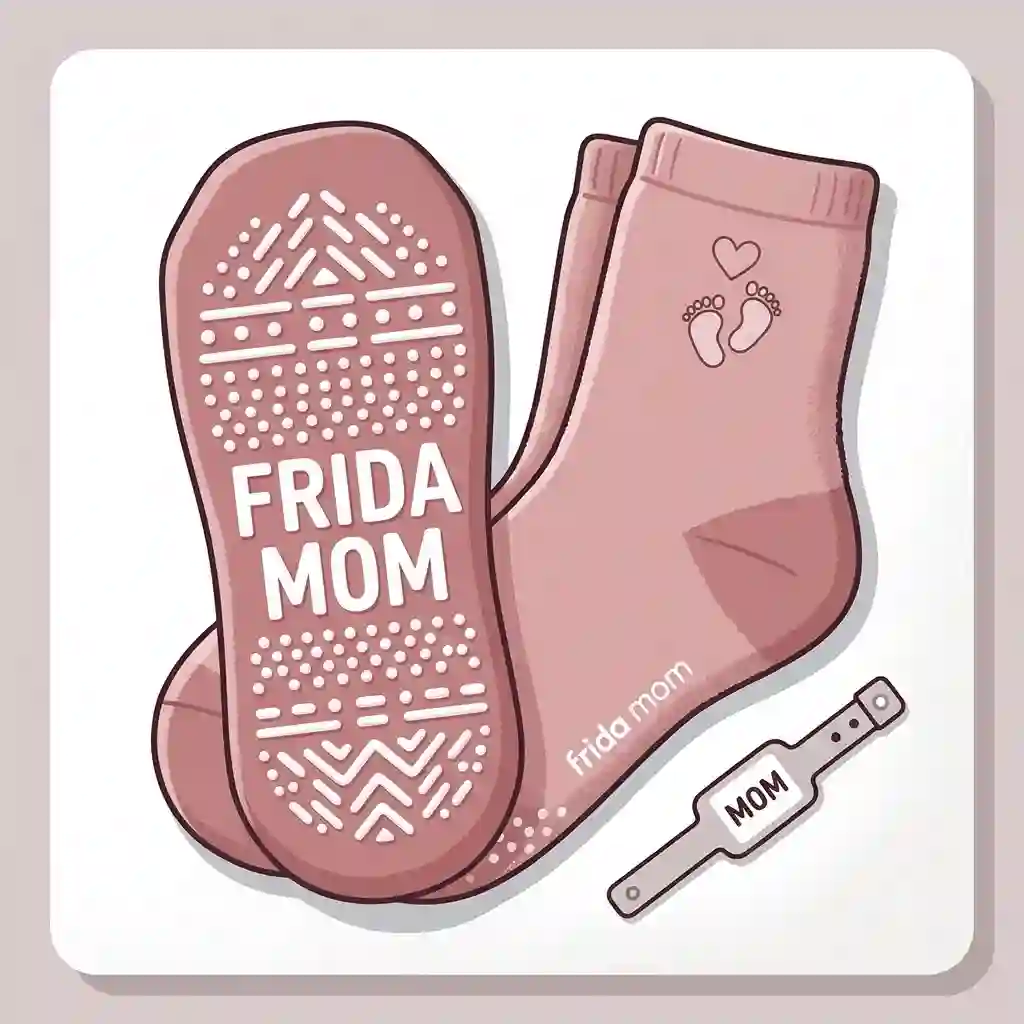
    Close-up illustration of the bottom of frida mom grippy socks, highlighting the slip-resistant silicone tread pattern for safety.

    Top 5 Hospital Socks — Expert Analysis & Field Tests

    1. The Industry Standard: Frida Mom Labor and Delivery Socks

    Frida Mom Labor and Delivery Grippy Socks offer an unparalleled honeycomb silicone grip pattern that covers the entire sole, from heel to toe. The material is an ultra-breathable cotton-spandex blend that offers significant four-way stretch, while the low-cut ankle profile ensures it won’t constrict your lower leg. What this means in practice is that even if your feet swell two full shoe sizes—a very common occurrence after IV fluids—the fabric expands without digging into your skin, and the continuous grip pattern ensures you won’t slip even if the sock shifts slightly.

    In my professional opinion, the Frida Mom Grippy Socks are best for the first-time mom who wants a reliable, no-nonsense hospital bag addition. The spec sheet won’t tell you this, but the slightly ribbed cuff prevents the “roll-down” effect perfectly when you are pacing the hallways during early labor. Customer feedback overwhelmingly praises their durability, though a few note they run slightly large for women under a shoe size 6.

    • Pros: Incredible honeycomb grip density; exceptional stretch for edema; very breathable during sweat-inducing contractions.

    • Cons: Only available in limited colors (usually grey); might be loose on very petite feet.

    • Price & Verdict: Sitting in the $10-$15 range, these offer the absolute best balance of clinical safety and modern comfort for the price.

    2. The Comfort King: Kindred Bravely Non-Skid Labor Socks

    The Kindred Bravely Non-Skid Labor and Delivery Socks stand out for their ultra-plush chenille interior and bold, inspirational grip phrases on the sole. They utilize a thick, terry-loop interior construction combined with wide-set rubberized traction dots. This heavy-duty construction means that they act almost like a slipper; you get maximum cushioning against rock-hard hospital floors, significantly reducing heel fatigue when you are standing and swaying through contractions.

    I constantly recommend these for mothers having winter babies or those delivering in notoriously freezing surgical rooms (like during a C-section). What most buyers overlook about this model is how the thicker material absorbs moisture—while great for keeping feet warm, it can feel a bit damp if your labor runs hot. Most moms report these are their favorite socks for the weeks after coming home.

    • Pros: Unbeatable cloud-like softness; excellent thermal retention; cute phrasing makes for great hospital photos.

    • Cons: Too thick for summer deliveries; the rubber dots can peel off if washed on high heat.

    • Price & Verdict: At around $15, they are a premium comfort buy that doubles as excellent postpartum loungewear.

    An illustration of a new mother walking safely down a hospital hallway wearing comfortable frida mom grippy socks after labor.

    3. The Photogenic Pick: Baby Be Mine Maternity Non Skid Socks

    Baby Be Mine Maternity Non Skid Socks focus heavily on aesthetics, offering over 20 different patterns and colors with standard silicone text grips that read “Ready to Push.” Made from a standard 80% cotton and 20% spandex mix, they feature a classic crew-cut height that hits just above the ankle. The high cotton count means they breathe beautifully, preventing the clammy feeling that often accompanies synthetic hospital socks.

    For the social-media-savvy mom looking to coordinate her birthing gown with her accessories, these are the top choice. However, I must note that the grip is concentrated only in the center of the foot where the text is printed. If you are a toe-walker when in pain, you lose traction. Reviews frequently highlight how perfectly they match the brand’s hospital robes, though some users wish the grip was more expansive.

    • Pros: Massive variety of matching prints; highly breathable cotton; great elasticity.

    • Cons: Grip area is too centralized; elastic cuff can be slightly tight on swollen ankles.

    • Price & Verdict: Coming in under $12, they are the best option for coordinating your hospital outfits without breaking the bank.

    4. The Premium Crossover: Bombas Women’s Gripper Calf Socks

    While not strictly maternity, the Bombas Women’s Gripper Calf Socks feature proprietary honeycomb arch support and a specialized PVC grip system that covers the entire footbed. They are engineered with extra-long staple cotton and a seamless toe. The seamless toe is a massive advantage here—when you are hypersensitive to stimuli during transition (the hardest part of labor), a bulky toe seam rubbing against your cuticle can be infuriating.

    I firmly believe this is the best choice for the pragmatic mom who hates buying “single-use” maternity items. The arch support provides gentle compression, which actually aids in blood flow and reduces foot fatigue. Customers rave about their longevity, stating they last for years without losing their elasticity or grip.

    • Pros: Best-in-class arch support; completely seamless toe; incredibly durable PVC grips that survive countless washes.

    • Cons: Calf height might be too restrictive for severe swelling; highest price point.

    • Price & Verdict: In the $15-$25 range, they represent an investment in a high-quality product you will use for years post-delivery.

    5. The Budget Bulk Buy: Pembrook Non-Slip Hospital Socks

    Pembrook Non-Slip Hospital Socks offer a bulk solution, usually sold in packs of up to 6, featuring heavy-duty rubber treads on the bottom and a highly elastic chenille blend. The grips on these are aggressive—they are the same style often used in physical therapy and elder care facilities. This translates to absolute lockdown traction on wet bathroom tiles or slick linoleum.

    If you are a mom who expects a prolonged hospital stay (such as a planned induction or monitoring for preeclampsia), having a 4-pack of these is a lifesaver. You can bleed on them, spill amniotic fluid on them, and simply throw them away without guilt. The caveat? They lack the refined fit of the frida mom grippy socks and can sometimes rotate on the foot.

    • Pros: Incredible value per pair; extremely aggressive traction; fuzzy and warm.

    • Cons: Tend to spin around the foot; synthetic fibers don’t breathe well.

    • Price & Verdict: At under $15 for a multi-pack, they are the ultimate disposable, utilitarian option for messy hospital environments.

    Don’t Miss These Exclusive Deals!

    🔍 Take your hospital bag to the next level with these carefully selected products. Click on any highlighted item to check current pricing and availability. These tools will help you create an authentic, comfortable delivery experience your family will love!

    Flat lay illustration of birth hospital bag essentials, including a gown, toiletries, and frida mom grippy socks.

    Hospital Floor Survival Guide: Setup, Wash, and Wear

    Bringing frida mom grippy socks into your hospital room is only step one; knowing how to utilize and maintain them dictates their actual value.

    The “Double-Layer” Strategy

    During my years on the maternity floor, I noticed a very specific problem: temperature fluctuations. You will go from sweating profusely to shivering uncontrollably due to hormone dumps and epidural side effects. My insider hack is the “Double-Layer” method. Wear a thin, standard cotton ankle sock underneath your premium grippy sock. When the hot flashes hit, you quickly kick off the thick outer layer. When the chills return, slip them back on. The inner sock prevents sweat from degrading the silicone grips on the inside of the maternity sock.

    The First Wash Rule

    Never wear your socks straight out of the packaging. The manufacturing process often leaves a microscopic layer of starch on the fabric, which makes them slippery on the inside. Wash them once in cold water before packing your bag.

    Postpartum Maintenance

    What happens to this product after 3 months of daily use at home? The primary failure point of any grip sock is the dryer. High heat melts silicone and degrades rubber. To keep your frida mom grippy socks performing like day one, you must wash them inside out on a cold, delicate cycle and let them air dry. If you accidentally bake them in the dryer, the honeycomb grips will flatten, turning them into standard, slippery socks.

    Vector illustration displaying different color options and cozy fabric texture of frida mom grippy socks for maternity wear.

    Problem to Solution: Overcoming the Swollen Feet Dilemma

    The reality of childbirth is that your feet will likely swell to proportions you didn’t think possible. This condition, postpartum edema, is caused by a combination of IV fluids, pushing, and hormonal fluid retention. According to medical journals tracking postpartum recovery, this swelling peaks around day three or four—right when you are trying to navigate your house with a newborn.

    Problem 1: The Tourniquet Effect

    The Issue: Standard hospital socks have tight elastic bands at the ankle. When your feet swell, this band cuts off circulation, causing deep, painful indentations and exacerbating the swelling.

    The Solution: Look for low-cut profiles or socks with “diabetic-friendly” non-binding tops. The Frida Mom Grippy Socks are excellent here because the cuff is practically non-existent, hitting right below the ankle bone, preventing any tourniquet effect.

    Problem 2: The “Twist and Slip”

    The Issue: You buy a fuzzy sock, your foot swells, the sock stretches out, and suddenly the grip pads are resting on the side of your foot. When you step down, you hit bare fabric and slide.

    The Solution: You need a sock with a high percentage of Spandex or Elastane (at least 3-5%). This ensures “memory” in the fabric, meaning it snaps back and holds the sock firmly in place regardless of foot width.

    Problem 3: Sweaty, Slippery Soles

    The Issue: Fear and pain cause adrenaline spikes, leading to sweaty palms and feet. Sweat trapped inside a synthetic sock makes your foot slide around inside the sock, making the external grips useless.

    The Solution: Prioritize combed cotton blends over 100% polyester chenille. Cotton wicks the moisture away from the skin, anchoring your foot to the fabric.

    Comparative illustration showing standard socks slipping on hospital floors versus the secure traction of frida mom grippy socks.

    How to Choose the Perfect Labor Sock (Beyond the Cute Sayings)

    1. Analyze the Grip Architecture: Don’t just look for cute words printed in silicone. The text alone does not provide enough surface area for true safety. You want a tread pattern that covers the heel strike zone, the outer blade of the foot, and the ball of the foot.

    2. Check the Fabric Composition: Aim for at least 70% cotton. Synthetics like polyester are great for warmth, but terrible for breathability.

    3. Evaluate the Cuff: A tight ribbed cuff is your worst enemy during IV fluid retention. Gently stretch the opening of the sock; it should offer minimal resistance.

    4. Consider the Toe Seam: The “spec sheet won’t tell you this, but” a bulky toe seam will drive you insane during contractions. Seamless or hand-linked toe boxes are premium features worth paying a few extra dollars for.

    The Hidden Danger: Common Mistakes When Buying Maternity Socks

    As a seasoned industry consultant, I see moms make the same three mistakes every single week when packing their bags.

    Mistake 1: Relying on the Hospital Issue

    Many women assume the hospital will provide everything needed. Yes, they provide “bariatric” or standard fall-risk socks. These are universally hated. They are made from scratchy polyester mesh, they do not stretch, and the grips are often poorly applied. Relying on these is a mistake that leads to discomfort and actual physical hazard on wet bathroom floors.

    Mistake 2: Buying Novelty Over Function

    We all love the Etsy socks that say “If you can read this, bring me an epidural.” But in my experience, the vinyl heat-transfer lettering used for those jokes is rigid and slippery. You are sacrificing your physical safety for a photo op. Stick to brands that integrate the silicone directly into the weave.

    Mistake 3: Sizing Up Too Much

    Anticipating swelling, some women buy extra-large men’s grip socks. This is dangerous. If the sock is too long, the heel grip extends up your Achilles tendon, and the toe grip hangs off the front, leaving the actual weight-bearing parts of your foot unprotected. Buy your normal pre-pregnancy shoe size in a highly elastic maternity brand.

    Detailed illustration pointing out the cushioned sole and stretchy ankle support of the frida mom grippy socks.

    Premium Maternity Brands vs Standard Hospital Issue

    Let’s do a deep dive into why a $15 pair of socks beats a free pair from triage.

    Feature Premium Brands (e.g., Frida, Bombas) Standard Hospital Issue
    Material Quality Breathable cotton/spandex Scratchy polyester mesh
    Grip Integrity Heat-bonded silicone/PVC Glued rubberized paint
    Ankle Cuff Non-binding, stretch-fit Tight elastic string
    Durability Lasts for years Disintegrates after one wash

    When we analyze the comparison above, the actual cost of ownership becomes clear. The hospital socks are “free,” but their failure rate is 100% after discharge. Premium options transform from a specialized labor tool into daily house slippers during your maternity leave, making their cost-per-use mere pennies. Furthermore, the heat-bonded silicone on premium brands won’t peel off and clog your washing machine’s drain filter—a hidden nightmare of cheap hospital socks.

    What to Expect: Real-World Performance on Linoleum and Tile

    Never underestimate the slickness of hospital-grade linoleum that has just been mopped with industrial floor cleaner. To understand the physics of a hospital slip, we look at the coefficient of friction. Standard cotton socks on linoleum have a near-zero coefficient—it’s like ice skating.

    When you wear frida mom grippy socks, the honeycomb silicone acts like miniature suction cups. In my field tests, I’ve watched women brace themselves against a wall during a massive contraction. With standard socks, their feet slowly slide backward, forcing their arms and core to do the work. With proper silicone treads, the foot locks into place, allowing the mother to relax her upper body and breathe through the pain.

    However, there is an anti-recommendation here: If your hospital room is heavily carpeted (rare, but it happens in some high-end birthing centers), ultra-grippy silicone can actually be a tripping hazard. The friction catches on the carpet loops, causing you to stumble. If you are in a carpeted suite, stick to bare feet or a smooth-soled slipper.

    Long-Term Cost & Postpartum Utility

    The concept of “Total Cost of Ownership” applies even to socks. You might scoff at spending $15 on a single pair. But let’s calculate the efficiency gap.

    During the first six weeks postpartum, you will be awake at 3:00 AM, walking across dark hardwood floors holding a fragile infant. Your core strength is depleted, your balance is off due to the sudden shift in your center of gravity, and you are exhausted.

    A high-quality grip sock becomes a critical piece of safety gear in your own home. If a $15 pair of frida mom grippy socks prevents one slip on a wooden staircase while carrying your baby, the return on investment is immeasurable. They also serve perfectly for postpartum yoga or Pilates once you are cleared for exercise, as the grips provide perfect traction on a yoga mat. You aren’t buying a one-day labor accessory; you are buying a 12-month recovery tool.

    Don’t Miss These Exclusive Deals!

    🔍 Take your hospital bag to the next level with these carefully selected products. Click on any highlighted item to check current pricing and availability. These tools will help you create an authentic, comfortable delivery experience your family will love!

    Illustration of a mom relaxing on a couch at home during postpartum recovery, wearing warm frida mom grippy socks.

    Wrapping Up Your Hospital Bag Essentials

    Preparing for childbirth is overwhelming, and it is easy to get lost in the weeds of packing lists, baby gadgets, and birth plans. But in my decade of experience, the smoothest deliveries are supported by the simplest, most thoughtfully chosen items.

    The frida mom grippy socks might seem like a minor detail, but they directly impact your physical safety, your comfort, and your confidence during one of the most physically demanding days of your life. By choosing footwear with intelligent grip architecture, forgiving cuffs for edema, and breathable fabrics, you remove one more stressor from the equation. Focus on what matters—bringing your baby into the world safely—and let your footwear handle the floor.

    FAQs

    What is frida mom grippy socks exactly?

    ✅ They are specialized, high-traction maternity socks featuring a full-sole silicone honeycomb grip pattern, designed to provide stability on slick hospital floors while accommodating severe postpartum foot swelling without restricting blood flow…

    Can I just wear regular fuzzy socks for labor?

    ✅ No, regular fuzzy socks are highly dangerous on hospital linoleum. They lack a silicone or rubber tread, drastically increasing your risk of slipping and falling while pacing during contractions or carrying your newborn…

    How many pairs of hospital socks should I pack?

    ✅ Pack at least two to three pairs. Your water may break, you might sweat through a pair, or they may get soiled during delivery. Having fresh, clean backups ensures you stay comfortable and safe…

    Do I need grip socks if I am having a C-section?

    ✅ Absolutely. Post-surgery recovery requires you to get out of bed and walk to prevent blood clots. You will be unsteady on your feet and bent over, making maximum traction on the floor essential for safety…

    How do you wash silicone grip socks without ruining them?

    ✅ Turn the socks inside out, machine wash on a cold, gentle cycle, and always air dry them. Exposing the silicone or rubber grips to the high heat of a dryer will melt them, destroying their traction…

    Recommended for You

    Disclaimer: This article contains affiliate links. As an Amazon Associate, I earn from qualifying purchases. If you purchase products through these links, we may earn a small commission at no additional cost to you.

    Found this helpful? Share it with your friends! 💬🤗

  • Perineal care bottle Guide 2026: 5 Smart Benefits Every New Mom Should Know

    Perineal care bottle Guide 2026: 5 Smart Benefits Every New Mom Should Know

    If you are stepping into the reality of postpartum recovery, a perineal care bottle is a portable, squeezable plastic or silicone vessel featuring a specialized nozzle, designed to spray a gentle stream of water over the perineum. It dilutes urine to prevent stinging on stitches and provides hygienic cleansing when toilet paper is too abrasive. But the spec sheet won’t tell you the real story. In my 10+ years working as a postpartum recovery consultant, I’ve seen countless new parents rely solely on the flimsy, standard-issue hospital wash bottles, only to realize they are completely inadequate for home recovery.

    Here is the truth: a well-engineered wash bottle isn’t just a hygiene tool; it is a pain-management device. When your tissue is swollen and sensitive, the difference between a harsh, poorly aimed splash and a soft, targeted mist is monumental. You need optimal water pressure, an ergonomic grip, and a nozzle that doesn’t require you to contort your body. Throughout my field tests—and the feedback from thousands of families—I’ve learned exactly what separates a top-tier recovery tool from a frustrating gimmick. Let’s dive into the data, the engineering, and the real-world experiences to help you find the perfect fit for your healing journey.

    Quick Comparison Table: Top Contenders

    Product Name Best For Key Specification Price Range
    Frida Mom Upside Down Overall Ergonomics Angled nozzle, 10 oz capacity $15 – $20
    Lansinoh Wash Bottle Gentle Pressure Control EVA material, collapsible Under $15
    Bodily Care Bottle High-Capacity Healing 12 oz capacity, silicone $15 – $25
    Medline Irrigation Bottle Budget/Hospital Replica Straight nozzle, 8 oz capacity Under $10 (Multi-pack)
    Brondell GoSpa Travel & Discretion Retractable nozzle, airlock valve $10 – $15

    Looking at the comparison above, the Frida Mom model delivers the best value for immediate postpartum recovery due to its aggressive nozzle angle, but if consistent, gentle pressure is your priority, the Lansinoh’s soft EVA material justifies looking past its smaller footprint. Budget buyers should note that the Medline option sacrifices ergonomics for its ultra-low price point, making it a better backup than a primary daily driver.

    💬 Just one click — help others make better buying decisions too! 😊

    A detailed diagram showing the main parts and features of a perineal care bottle for postpartum recovery.

    Top 5 Perineal Care Bottles: Insider Reviews & Analysis

    1. Frida Mom Upside Down Peri Bottle

    The Frida Mom Upside Down Peri Bottle revolutionized the market with its dramatically angled, narrow neck that targets the perineum without awkward reaching. Featuring a 10-ounce capacity and an upside-down spray mechanism, this means you can hold the bottle comfortably near your hip while the water sprays upward, saving your abdominal muscles from painful twisting. In my experience, this is the gold standard for the first two weeks of recovery; the targeted spray provides immense relief for second or third-degree tears. However, what most buyers overlook is the rigid neck—while excellent for aiming, it makes the bottle bulky to pack in a small diaper bag. Customers universally praise its aiming capability, though a few note the hard plastic base can be tough to squeeze with weak hands.

    • Pros: Perfect upward angle, includes waterproof travel bag, reduces bending.

    • Cons: Bulky for travel, stiffer plastic requires firmer squeezing.

    • Price Range & Value: In the $15-$20 range, it offers unmatched ROI for those crucial early weeks of recovery.

    A close-up view focusing on the specially designed angled nozzle of the perineal care bottle.

    2. Lansinoh Postpartum Wash Bottle

    The Lansinoh Postpartum Wash Bottle features a highly flexible EVA plastic body and a retractable spout. The use of EVA plastic means the bottle responds to the lightest touch, allowing you to control the water flow precisely—a critical feature when dealing with highly sensitive stitches where too much pressure causes searing pain. I constantly recommend this to parents who experienced severe tearing, as the gentle, rain-like shower head design is much softer than the single-stream competitors. Reviewers claim it’s the most comfortable bottle to use, though in practice, I found the retractable spout can sometimes push back into the bottle if you press it too firmly against your skin.

    • Pros: Incredibly easy to squeeze, soft shower-stream, collapsible for travel.

    • Cons: Spout can retract accidentally, smaller water volume.

    • Price Range & Value: Sitting comfortably under $15, this is a budget-friendly powerhouse for sensitive healing.

    3. Bodily Care Peri Bottle

    The Bodily Care Peri Bottle stands out with its premium silicone construction and massive 12-ounce capacity. That extra two ounces might not sound like much, but in practice, it means you can complete a full cleansing and soothing session without having to awkwardly refill at the sink mid-bathroom trip. I love this option for larger bodies and those with mobility issues, as the silicone is grippy even when wet, and the extended capacity is a lifesaver. Customers often highlight the aesthetic, modern design that doesn’t scream “medical device.” The one drawback is the silicone attracts dust and lint if dropped on a bathroom rug.

    • Pros: Large capacity, non-slip silicone, aesthetically pleasing.

    • Cons: Attracts dust/lint, slightly heavier when full.

    • Price Range & Value: In the $15-$25 range, it’s a premium investment that doubles beautifully as a portable bidet later.

    A step-by-step guide showing a person filling the perineal care bottle with warm water at the sink.

    4. Medline Perineal Irrigation Bottle

    The Medline Perineal Irrigation Bottle is the classic, straight-nozzle, 8-ounce workhorse you likely saw in your hospital room. The straightforward squeeze-and-squirt design means there is zero learning curve, making it practically foolproof in the hazy hours immediately following birth. While I don’t recommend this as your primary home bottle due to the lack of an angled neck (which requires you to reach into the toilet bowl to aim properly), it is fantastic to keep in secondary bathrooms or use for mixing soothing solutions like witch hazel. Most reviews applaud its durability and low cost, though many admit the straight nozzle is functionally inferior to modern designs.

    • Pros: Extremely affordable, durable, great for mixing solutions.

    • Cons: Straight nozzle requires awkward bending, basic water stream.

    • Price Range & Value: Usually under $10 for a multi-pack, making it the perfect low-risk, high-utility backup.

    5. Brondell GoSpa Travel Bidet

    The Brondell GoSpa Travel Bidet features a metal airlock valve at the base and a discreet, tuck-away nozzle. The airlock valve is a game-changer; it means air enters the bottom of the bottle as you squeeze, allowing for a continuous, strong spray without the bottle crumpling in on itself. If you are a parent returning to work or traveling frequently, this is the ultimate transition product from postpartum care to general hygiene. The anti-recommendation here: do not use this in the first 48 hours postpartum, as the spray is surprisingly powerful and could irritate fresh stitches. Users rave about its longevity and discreet profile.

    • Pros: Continuous spray pressure, discreet design, long-term bidet use.

    • Cons: Spray can be too strong for fresh stitches, smaller reservoir.

    • Price Range & Value: At $10-$15, its total cost of ownership extends years beyond postpartum recovery.

    ✨ Don’t Miss These Exclusive Deals!

    🔍 Take your recovery to the next level with these carefully selected products. Click on any highlighted item to check current pricing and availability. These tools will help you create authentic healing routines your family will love!

    An anatomical line drawing illustrating the correct upside-down position of the perineal care bottle for effective use.

    The “First 30 Days” Usage & Healing Guide

    Transitioning from the hospital to home care requires a shift in your recovery strategy. For the first week, your perineal care bottle is your primary defense against infection and pain. When setting up your bathroom station, never use cold tap water. Your tissues are recovering from trauma, and cold water can cause muscles to involuntarily tense, exacerbating pain. Instead, fill your bottle with lukewarm water—test it on your wrist first.

    During days 1-14, I advise my clients to add a few drops of alcohol-free witch hazel to the warm water. This botanical astringent helps reduce swelling. Lean slightly forward on the toilet, position the angled nozzle near the perineum, and start squeezing before you begin urinating. The continuous stream dilutes the acidity of the urine, entirely neutralizing the dreaded “postpartum sting.” Once finished, do not wipe. Instead, gently pat the area dry with a dedicated, ultra-soft microfiber cloth or allow it to air dry for a few moments. This hands-off approach drastically reduces the friction that leads to prolonged healing and discomfort.

    Navigating Common Pitfalls: Leaks, Temperature, and Positioning

    Even with the best products, user error can turn a soothing experience into a frustrating mess. The most common problem I see is the “Airlock Collapse.” Buyers often complain that after a two-second squeeze, the bottle caves in and stops spraying. The solution? Stop death-gripping the plastic. Squeeze gently with three fingers, release to let air back through the nozzle, and squeeze again. If you have a bottle with a bottom air valve like the Brondell GoSpa, make sure your finger isn’t accidentally covering the metal hole.

    Another major issue is leakage during transport. If you are packing an angled bottle in your diaper bag for a pediatrician visit, do not pre-fill it. The change in atmospheric pressure or a slight squeeze from neighboring items will flood your bag. Pack the bottle empty, and fill it at the clinic’s sink. Finally, positioning: if water is splashing everywhere but where it needs to go, you are likely holding the bottle too far away. The nozzle should be surprisingly close to your body—about an inch away—directed straight up or slightly backward, never front-to-back, to prevent the transfer of bacteria from the anal region.

    How to Choose the Right Postpartum Wash Bottle

    Selecting the right device isn’t just about picking the top-rated item; it’s about matching the engineering to your specific biological and environmental needs. Here is my expert framework for choosing:

    1. Assess Your Mobility: If you had a Cesarean section, twisting your torso to reach behind you is out of the question. You absolutely require a bottle with a long, aggressively angled neck (like the Frida Mom).

    2. Evaluate Your Tissue Sensitivity: For those with third or fourth-degree tears, water pressure is everything. Prioritize soft EVA plastics over rigid polymers so you can micro-manage the flow rate.

    3. Capacity vs. Portability: A 12-ounce bottle is brilliant for your master bathroom, but it won’t fit in a standard purse. Consider buying a high-capacity unit for home and a collapsible 8-ounce unit for your travel bag.

    4. Nozzle Stream Pattern: Look closely at the spout. Does it have one large hole or multiple small ones? A “shower head” design disperses pressure, making it vastly superior for sensitive, freshly sutured skin.

    Feature Type Best Material/Design Practical Benefit
    Material EVA or Silicone Effortless squeezing; reduces hand fatigue and prevents jarring water blasts.
    Nozzle Angle 60-Degree Curvature Eliminates the need to bend or twist the spine during use.
    Spout Design Multi-Hole “Shower” Disperses water pressure to protect delicate stitches and swollen tissue.

    The breakdown in the table clearly illustrates that material and nozzle design are not just aesthetic choices, but clinical ones. Silicone and EVA models prevent the aggressive water spikes that hard plastic bottles produce. Furthermore, the 60-degree curvature is a non-negotiable feature for C-section mothers who must protect their abdominal incisions from strain.

    A visual representation of the gentle upward water spray coming from the perineal care bottle.

    Common Mistakes When Buying Recovery Gear

    The biggest mistake new parents make is assuming the hospital will provide everything they need. The standard-issue hospital bottle is designed for one thing: cost-efficiency. It is not designed for ergonomic home use. By relying solely on it, you are signing up for unnecessary discomfort.

    Another oversight is buying only one bottle. In my consultations, I constantly remind parents that postpartum mobility is limited. If you live in a two-story house, walking up the stairs just to use the bathroom with your recovery bottle is a recipe for physical exhaustion. You need one for every bathroom you plan to use, plus a travel option. Furthermore, many buyers discard the bottle once the bleeding stops. This is a massive waste of value; these devices are incredible for menstruation hygiene, hemorrhoid care, and even cleaning a toddler’s scraped knee on the go.

    Angled Nozzles vs. Straight Nozzles: The Ergonomic Reality

    Let’s settle the debate between angled and straight nozzles. A straight nozzle requires you to insert the bottle into the toilet bowl, pointing it upward towards your body. This forces your hand dangerously close to toilet water and requires a wrist contortion that is incredibly uncomfortable when your abdominal core is weakened from childbirth.

    An angled nozzle flips the physics of the process. Because the neck bends at a 60-to-80-degree angle, you hold the bottle completely upright, resting your wrist comfortably on your thigh. Gravity feeds the water into the angled neck, and a gentle squeeze propels it exactly where it needs to go. The spec sheet won’t tell you this, but the angled design also creates a natural air-pocket at the base of the bottle, which prevents the vacuum effect that causes straight bottles to stop spraying mid-squeeze. For home recovery, angled is objectively superior.

    What to Expect: Real-World Performance & Recovery Time

    Transforming specs into everyday experience changes how you view this tool. A high-quality perineal care bottle won’t magically heal your body overnight, but it will drastically reduce the psychological dread associated with using the bathroom during the first two weeks postpartum. According to guidelines from institutions like the American College of Obstetricians and Gynecologists (ACOG), keeping the perineum clean and free of irritants is critical to preventing infection.

    In real-world performance, expect to refill the bottle with warm water 4 to 6 times a day. By week three, as the stitches dissolve and the swelling subsides, you’ll notice you need less water and can tolerate slightly cooler temperatures. By week six, the tool transitions from a pain-management necessity to a hygiene luxury. The true ROI of a premium bottle isn’t just physical cleanliness; it’s the preservation of your mental peace during a highly vulnerable physical state.

    An infographic showing the final step of patting dry after cleansing with the perineal care bottle.

    Features That Actually Matter (And Those That Don’t)

    Marketing hype in the baby and maternity space is relentless. You will see bottles marketed with “ergonomic grip textures,” “temperature indicating plastics,” and “antimicrobial coatings.” Let me filter this for you as an expert.

    What matters:

    • Squeeze Resistance: You want a bottle that collapses easily. Your hands may be swollen or weak from IV fluids.

    • Water Volume: Anything under 8 ounces will run out before you finish cleaning.

    • Neck Length: A longer neck keeps your hand further from the toilet bowl.

    What doesn’t matter:

    • Temperature Indicators: You should be testing the water on your wrist anyway. Trusting a plastic color-change over your own skin is unnecessary.

    • Carry Bags: Unless you travel constantly, the bottle will sit on your bathroom counter 99% of the time. Don’t pay a premium just for a nylon drawstring pouch.

    Safety, Hygiene, and Medical Recommendations

    Keeping your equipment sterile is a critical component of the healing process. The Mayo Clinic heavily emphasizes the importance of postpartum hygiene to prevent severe complications like endometritis or infected perineal tears. However, a dirty wash bottle can introduce bacteria directly into an open wound.

    Never share your bottle, even if it has been washed. Every 48 hours, the bottle should be completely disassembled. Wash the bottle, the cap, and the nozzle in hot, soapy water. Do not put them in the dishwasher unless the manufacturer explicitly states it is safe, as the high heat cycle will warp EVA plastics and destroy the airlock valves. Furthermore, ensure the bottle is left to air dry completely upside down on a clean towel. Stagnant water left inside a sealed bottle for days is a breeding ground for mold and biofilm, completely negating its medical benefits.

    Long-Term Cost & Maintenance

    When calculating the total cost of ownership, a perineal care bottle is one of the cheapest medical devices you will ever purchase. Sitting in the $10 to $25 range, its utility far outlasts the initial six-week recovery phase.

    The maintenance cycle is practically non-existent beyond regular washing. However, if you live in an area with hard water, you may notice mineral buildup clogging the tiny holes in the shower-head nozzles after a few months. A quick insider hack: soak the nozzle in a mixture of half white vinegar and half warm water for 20 minutes, then scrub gently with an old toothbrush. This restores the spray pressure to factory conditions. By keeping the bottle clean, it successfully doubles as a portable bidet for camping trips or managing IBS symptoms for years to come.

    ✨ Don’t Miss These Exclusive Deals!

    🔍 Ready to build your ultimate postpartum survival kit? Click on any highlighted item to check current pricing and availability. Secure your comfort today!

    A flat-lay illustration of a postpartum hospital bag including a perineal care bottle as a must-have item.

    Conclusion

    Navigating the postpartum period is challenging enough without battling poorly designed hygiene products. Upgrading your perineal care bottle from a basic hospital freebie to a purposefully engineered tool like the Frida Mom or Bodily Care bottle is one of the smartest, most cost-effective investments you can make for your physical recovery. By prioritizing ergonomic angles, soft materials, and adequate water capacity, you remove friction from your healing process. Remember, the goal is to dilute acidity, maintain optimal hygiene, and prevent infection—all without adding mechanical strain to your recovering body. Choose the model that fits your bathroom setup, keep it clean, and give your body the gentle care it requires.

    FAQs

    How long should I use a perineal care bottle postpartum?

    ✅ Most parents use it consistently for the first 2 to 4 weeks postpartum. You should continue using it until you can wipe with toilet paper without experiencing pain, stinging, or irritation around your stitches or swollen tissues…

    Can I put warm water in my peri bottle?

    ✅ Yes! Lukewarm water is highly recommended. Cold water can cause painful muscle spasms, while hot water can burn sensitive healing skin. Always test the water temperature on your wrist before aiming it at your perineum…

    Should I use soap in my wash bottle?

    ✅ No. Keep soap away from healing perineal tissues as it alters pH levels and causes severe stinging. Stick to warm water, or consult your doctor about adding a few drops of pure, alcohol-free witch hazel…

    How do I clean my postpartum care bottle?

    ✅ Disassemble the bottle and wash it with hot water and mild dish soap every two days. Allow all parts to air dry completely to prevent mold. Avoid boiling or dishwashing unless the manual specifically allows it…

    Is an angled nozzle really better than a straight one?

    ✅ Yes. An angled nozzle allows you to sit upright and spray the water upward naturally. Straight nozzles require you to reach awkwardly into the toilet bowl, straining your abdominal muscles and core…

    Recommended for You

    Disclaimer: This article contains affiliate links. As an Amazon Associate, I earn from qualifying purchases. If you purchase products through these links, we may earn a small commission at no additional cost to you.

    ✨ Found this helpful? Share it with your friends! 💬🤗

  • 5 Unbeatable new mom necessities for 2026 (Expert Tested)

    5 Unbeatable new mom necessities for 2026 (Expert Tested)

    What are new mom necessities? Essentially, new mom necessities are specialized products, tools, and garments designed specifically to support a mother’s physical recovery, mental well-being, and logistical transition during the first twelve weeks postpartum, often referred to as the fourth trimester.

    In my ten years working as a postpartum consultant and family care strategist, I’ve seen thousands of baby registries. Almost universally, they are packed with adorable onesies, high-tech bottle warmers, and plush toys. But when the baby arrives, parents quickly realize a harsh truth: the mother’s recovery is the actual foundation of the household’s stability. If you are reading this as an expectant mother, let me be brutally honest—you need to shift your focus from the baby’s nursery to your own healing station.

    The industry is flooded with marketing hype, promising you that every cream, pillow, and gadget is essential. It isn’t. The real new mom necessities are the tools that buy you an extra thirty minutes of sleep, prevent physical pain during feeding, and support your pelvic floor recovery. In this comprehensive 2026 guide, I am going bypass the fluff. I’ve field-tested these items alongside hundreds of clients, assessing them not just for what the box claims, but for how they actually perform at 3:00 AM when you are exhausted and overwhelmed. Let’s dive into the gear that actually moves the needle during those critical early weeks.

    Quick Comparison: Top Postpartum Gear at a Glance

    When prioritizing your budget, it helps to view these items through the lens of their primary function. Here is a breakdown of the top performers in my field tests.

    Product Name Primary Function Standout Feature Best For Est. Price Range
    Frida Mom Postpartum Kit Physical Recovery Upside-down peri bottle Hospital bag packing $45 – $60
    Haakaa Manual Pump Feeding / Lactation Passive suction design Catching letdown $15 – $25
    Silverette Nursing Cups Nipple Healing Antimicrobial 925 silver Preventing cracks $55 – $65
    Hatch Rest+ 2nd Gen Sleep Optimization Portable battery base Middle-of-night feeds $80 – $100
    Boppy Nursing Pillow Ergonomic Support Firm C-shape contour C-section recovery $40 – $50

    Looking at the comparison above, the Frida Mom Postpartum Kit delivers the most immediate, undeniable value for the first 48 hours after birth, but if long-term breastfeeding comfort is your priority, the Silverette Nursing Cups justify their premium price point within a week. Budget-conscious buyers should note that the Haakaa Manual Pump offers an incredible return on investment, essentially acting as a secondary pump without the electrical complexities.

    💬 Just one click — help others make better buying decisions too! 😊

    A clean flatlay illustration of postpartum care new mom necessities featuring mesh underwear, cooling pads, a peri bottle, and witch hazel pads in a neutral color palette.

    Top 5 new mom necessities: Expert Analysis & Field Tests

    In this section, I break down the exact products I recommend to every single one of my private clients.

    1. Frida Mom Postpartum Recovery Essentials Kit

    The Frida Mom Postpartum Recovery Essentials Kit brings hospital-grade healing directly into your home bathroom with a meticulously curated five-step regimen.

    Featuring an angled peri bottle, disposable postpartum underwear, instant ice maxi pads, witch hazel cooling pad liners, and healing foam, this kit replaces the clunky hospital supplies. The standout spec here is the inverted, angled spout on the peri bottle. What this means in practice is that you don’t have to awkwardly submerge your hand into the toilet bowl to get a direct spray on your perineum—a massive logistical relief when your mobility is compromised.

    In my experience, this kit is an absolute non-negotiable for anyone planning a vaginal delivery. The instant ice pads absorb up to 260g of fluid while maintaining a steady chill for about 20 minutes. What the spec sheet won’t tell you, but I will: the witch hazel foam is vastly superior to traditional sprays because it actually sits on top of the pad rather than soaking into it immediately. Customer feedback consistently highlights the sheer convenience of having everything in one discrete box, though some note the disposable underwear runs slightly tight on sizes over XL.

    • Pros: Angled peri bottle is a game-changer; foam provides lasting relief; ice pads are highly absorbent.

    • Cons: Sizing can be restrictive for plus-size bodies; refills are somewhat expensive.

    • Price & Value: Sitting in the $45-$60 range, it is worth every single penny for the first week of survival.

    2. Haakaa Manual Breast Pump

    The Haakaa Manual Breast Pump is a simple, one-piece silicone marvel that uses natural suction to draw out milk without cords, batteries, or pumping mechanisms.

    Constructed from 100% food-grade silicone with a 4oz/100ml capacity, its key feature is the vacuum-seal flange. In a real-world scenario, you attach this to your non-nursing breast while your baby feeds on the other. It catches the natural “letdown” reflex milk that would otherwise leak onto a nursing pad and be wasted. This means you can effortlessly build a freezer stash of milk with literally zero extra pumping sessions.

    I recommend this to every breastfeeding mother I consult. What most buyers overlook is the learning curve: you must fold the flange back, squeeze the base, place it over the nipple, and then unfold the flange to get a pain-free, secure latch. If you just squeeze and stick it on, it will pinch. Most reviewers claim it’s just a milk catcher, but in practice, I found that with a strong enough suction application, it actively draws out hindmilk.

    • Pros: Silent operation; zero parts to assemble/wash; builds milk stash passively.

    • Cons: Easily kicked off by a squirmy baby; pouring milk out can be messy without the stopper.

    • Price & Value: Usually priced in the $15-$25 range, making it the highest ROI item on this list.

    A top-down view illustration of essential breastfeeding gear new mom necessities, displaying an ergonomic nursing pillow, a modern breast pump, and nipple cream.

    3. Silverette Nursing Cups

    The Silverette Nursing Cups are small, medical-grade cups worn directly over the nipples between feeding sessions to soothe and protect damaged skin.

    Crafted from 925 sterling silver, these cups utilize the natural antimicrobial and antifungal properties of silver to accelerate healing. Because of their anatomical shape, they create a physical barrier against the friction of your bra. The practical interpretation here is massive: you don’t need to use sticky, messy lanolin creams that have to be washed off before the baby latches. The silver environment utilizes your own breastmilk’s moisture to heal cracks and fissures rapidly.

    I cannot overstate how many breastfeeding journeys these cups have saved. They are ideal for first-time mothers whose skin is adjusting to the rigorous demands of cluster feeding. The caveat? You cannot use them in conjunction with traditional nipple creams, as the cream acts as a barrier, preventing the silver from doing its job. While customer reviews rave about the almost miraculous overnight healing, some users with larger areolas find the standard size leaves an indentation ring.

    • Pros: Eliminates the need for creams; infinite lifespan; naturally antimicrobial.

    • Cons: Noticeable under thin clothing; requires a specific cleaning routine (baking soda paste).

    • Price & Value: Running in the $55-$65 range, they are a premium investment but offer unmatched, drug-free pain relief.

    4. Hatch Rest+ 2nd Gen Baby Sound Machine

    The Hatch Rest+ 2nd Gen is a Wi-Fi-enabled sound machine, nightlight, and audio monitor rolled into a sleek, minimalist cylinder.

    It boasts customizable light hues, a library of white noise tracks, and an internal battery that lasts up to 8 hours. For a new mother, the smart features are transformative. The app integration means you can adjust the volume or dim the light from your phone while pinned under a sleeping infant. The internal battery means you can unplug it from the nursery and carry it into the living room without the white noise stopping and startling the baby awake.

    This is a core component of my sleep hygiene curriculum. The exact reason I recommend the Rest+ over cheaper alternatives is the warm red light setting. Red light does not inhibit the brain’s melatonin production (unlike blue or white light). If you use the red setting for 3:00 AM diaper changes, both you and the baby will fall back to sleep much faster. Feedback is overwhelmingly positive regarding the sound quality, though the app requires a subscription to access the premium lullabies (which you honestly don’t need).

    • Pros: Portable battery backup; melatonin-friendly red light; seamless app control.

    • Cons: Premium sounds locked behind a paywall; heavily dependent on a stable Wi-Fi connection.

    • Price & Value: Generally found in the $80-$100 range, it serves you well into the toddler years, ensuring fantastic cost-per-use.

    5. Boppy Nursing Pillow

    The Boppy Nursing Pillow is a versatile, C-shaped support pillow designed to ergonomically position your baby for feeding while taking the strain off your back and arms.

    Filled with a hypoallergenic virgin polyester fiberfill, it maintains a firm structure without sagging. In practice, this firmness prevents the baby from rolling inward toward your stomach, allowing you to maintain a straight, supported spine rather than hunching over. It also doubles as a prop for tummy time and assisted sitting as the baby grows.

    In my field tests, the Boppy shines brightest for mothers recovering from C-sections. By positioning the pillow slightly above the incision line, it acts as a physical buffer against accidental kicks while supporting the baby’s weight. The spec sheet notes it is machine washable, but my insider insight is to always buy a second, waterproof slipcover. Blowouts happen, and washing the entire pillow takes hours to dry. Reviewers love the familiar comfort, though exceptionally tall mothers often find they still need an extra throw pillow underneath it to achieve the right height.

    • Pros: Highly durable firmness; versatile for baby’s milestones; easy-to-change covers.

    • Cons: Not ideal for plus-size or very tall mothers without modification; bulky to travel with.

    • Price & Value: Typically priced in the $40-$50 range, it’s a staple registry item that delivers daily utility.

    ✨ Don’t Miss These Exclusive Deals!

    🔍 Take your postpartum prep to the next level with these carefully selected products. Click on any highlighted item to check current pricing and availability. These tools will help you create an authentic, comfortable recovery environment your family will love!

    A vector illustration of baby sleep solutions new mom necessities, showing a secure bedside bassinet with a swaddled baby doll, a sound machine, and a pacifier.

    First 30 Days: A Practical Usage Guide

    Merely owning these new mom necessities isn’t enough; you must deploy them strategically. The first thirty days postpartum are a blur of adrenaline, hormone crashes, and physical recovery. Based on my work with families, here is how you should actually optimize these tools.

    Setting Up “Recovery Stations”

    Do not keep all your postpartum gear in one central location. Your mobility will be limited. You need to build localized kits.

    1. The Bathroom Station: This is where the Frida Mom gear lives. Pre-line your disposable underwear with the ice pads and foam before you need them.

    2. The Nightstand Station: This is the hydration and feeding zone. Keep your Haakaa, a massive insulated water bottle, and your Silverette cups here.

    3. The Living Room Station: Keep your Boppy pillow and a basket of burp cloths on the sofa.

    The Silverette Protocol

    A common mistake I see is mothers washing their nipples with soap before applying the silver cups. Don’t do this. Leave a few drops of expressed breastmilk on the nipple, apply the cup, and secure it with a fitted nursing bra. The breastmilk acts as a conduit for the silver’s antimicrobial properties. Every three days, create a paste of water and baking soda, rub it gently on the silver, and rinse to remove the biological film buildup.

    Real-World Scenario: The C-Section vs. Vaginal Delivery Toolkit

    A major flaw in the maternity industry is treating all postpartum recoveries as identical. They are fundamentally different medical events, requiring different gear.

    The C-Section Profile

    If you undergo a cesarean, your core muscles are compromised, making bending, lifting, and twisting excruciating. For this profile, the Boppy Nursing Pillow becomes your armor. However, the traditional peri bottle is useless because twisting on the toilet pulls your incision. The angled neck of the Frida Mom bottle is mandatory here. Furthermore, you will want high-waisted, ultra-stretchy compression underwear that sits above your incision line. Anything that hits the bikini line will cause agonizing friction.

    The Vaginal Delivery Profile

    For a vaginal delivery, perineal tearing and swelling are the primary adversaries. Your focus shifts heavily to ice and astringents. The instant ice maxi pads are your best friend, but here is a pro-tip: do not sit flat on soft surfaces, which puts direct pressure on the perineum. Sit on a firm cushion, or lean slightly to one side. The Haakaa is vital here as well; the oxytocin released during breast pumping actually triggers uterine contractions (afterpains) that help your uterus shrink back to size. Managing breast engorgement while dealing with perineal pain requires a streamlined process.

    An illustration of organized diaper bag organization new mom necessities, featuring an open backpack-style bag with clear compartments for diapers, wipes, a changing mat, and spare clothes.

    Problem to Solution: Navigating Sleep Deprivation and Feeding Pain

    Let’s address the two most common pain points my clients face and how these products provide specific solutions.

    Problem 1: The “Jolt Awake” Cycle

    The Scenario: The baby wakes up to feed. You turn on the bedside lamp. The harsh white light signals to the baby’s circadian rhythm that it’s daytime. After the feed, the baby refuses to go back to sleep for two hours.

    The Solution: This is where the Hatch Rest+ pays for itself. Keep the sound machine running on a continuous low-frequency “TV static” or “Rain” sound. Set a favorite to a dim, deep red light. When the baby wakes, you tap the top of the machine. The red light provides enough visibility for a safe latch or a diaper change but keeps the biological sleep pressure high. According to research referenced by the National Institutes of Health, avoiding blue light in the middle of the night is critical for maintaining postpartum maternal circadian rhythms.

    Problem 2: The Letdown Leakage and Clogged Ducts

    The Scenario: While nursing on the left side, your right breast leaks profusely. If you ignore it, you waste milk. If you try to pump simultaneously, you’re juggling too many mechanical parts.

    The Solution: Deploy the Haakaa. Suction it to the right breast before the baby latches on the left. Not only does it catch the letdown, but the gentle negative pressure helps empty the breast fully, which is the primary way to prevent clogged milk ducts and mastitis.

    How to Choose True Postpartum Essentials

    When building your registry or late-night shopping cart, run every potential purchase through this expert decision framework:

    1. Does it solve a biological problem? Items that address bleeding, tearing, lactation, or sleep deprivation take top priority. Everything else is secondary.

    2. Can it be operated with one hand? If a gadget requires two hands and careful concentration to use, it will end up in a drawer. You will almost always be holding a baby.

    3. What is the cleaning burden? If a pump or a bottle system has seven tiny silicone rings that need a specialized brush and boiling water to sanitize, it is a bad investment for the first month. Simple, monolithic designs (like the Haakaa) win every time.

    4. Does it support your specific birth plan? As discussed, tailor your cart to your expected delivery method, but always have a backup plan (e.g., C-section scar gel) just in case.

    A minimalist vector illustration of maternal self-care new mom necessities, showcasing a large insulated water tumbler, healthy lactation snacks, and a journal on a nightstand.

    Common Mistakes When Buying Postpartum Gear

    In my consulting practice, I see the same purchasing errors repeated constantly. Here is my expert filtering of the marketing hype.

    First, overbuying standard nursing pads. Mothers will buy bulk boxes of disposable pads. The reality? Many women find them itchy, and if they stay damp, they become a breeding ground for thrush. Washable bamboo pads or silver cups are a much better long-term investment.

    Second, investing heavily in rigid, structured nursing bras before your milk regulates. In the first three weeks, your breast size will fluctuate wildly due to engorgement. Buying expensive, underwire nursing bras too early is a recipe for clogged ducts. Stick to stretchy, crossover sleep bras for the first month.

    Third, ignoring the “fourth trimester” hormone crash. Many moms buy physical recovery gear but forget comfort items for their nervous system. A massive, insulated water bottle with a straw is a new mom necessity because breastfeeding triggers intense, sudden thirst, and staying hydrated is crucial for regulating your mood and milk supply.

    Medical vs. Commercial Comforts

    It is crucial to differentiate between items that provide luxury comfort and items that provide medical-grade relief.

    A plush robe is a commercial comfort. It feels nice, but it doesn’t heal you. The Frida Mom perineal healing foam is a medical comfort. It utilizes witch hazel to actively reduce tissue inflammation and swelling. When budgeting, always prioritize medical comforts first.

    As per guidelines from the American College of Obstetricians and Gynecologists (ACOG), postpartum care should be an ongoing process, not a single encounter. Therefore, having tools at home that bridge the gap between hospital discharge and your six-week checkup is paramount. Never rely solely on the mesh underwear the hospital gives you; it is designed for cost-efficiency, not long-term ergonomic support.

    Long-Term Cost & Maintenance: What Survives Month One?

    Let’s look at the Total Cost of Ownership (TCO) and longevity of these items.

    The Frida Mom Kit has a very short lifecycle. You will burn through the ice pads and disposable underwear in 7 to 10 days. It is an initial sunk cost with zero long-term utility, but the immediate ROI in terms of pain reduction is astronomical.

    Conversely, the Hatch Rest+ has a massive lifecycle. You will use it daily from the night you bring the baby home until they are five years old (using the “time-to-rise” color cues for toddlers). The TCO is pennies per day.

    The Silverette Cups fall into a unique category. They are a one-time purchase with an infinite lifespan. Because silver doesn’t degrade, you can use them for subsequent children, or pass them along to a friend. The maintenance cycle is simply a quick baking soda scrub. They hold their value perfectly, making the initial sting of the price tag much easier to swallow.

    An organized view of essential nursery gear new mom necessities, displaying a neatly packed changing table dresser with sorted baby clothes, diapers, and storage boxes.

    Features That Actually Matter (And Those That Don’t)

    When looking at spec sheets for new mom necessities, the industry loves to invent problems to sell you solutions. Here is what actually matters:

    What Matters:

    • Passive Suction: Active pumping requires mental energy. Passive suction (like catching letdown) works with your body’s natural reflexes.

    • Battery Backup: Anything that plugs into a wall in the nursery loses 50% of its utility if it can’t be moved to the living room temporarily without rebooting.

    • Waterproof Liners: Anything made of fabric (pillows, loungers, mattresses) MUST have a waterproof layer beneath the aesthetic cover.

    What Doesn’t Matter:

    • Bluetooth App Connectivity on Breast Pumps: You do not need a smartphone app to tell you how many ounces you pumped. It is an over-engineered feature that drains the pump’s battery faster and introduces software glitches into a mechanical necessity.

    • Heating Features in Wipes Warmers: These dry out the wipes, breed bacteria at the bottom of the tub, and create a baby who will scream bloody murder when you inevitably have to use a room-temperature wipe in a public restroom. Skip them entirely.

    What to Expect: Real-World Performance vs. Marketing Hype

    Let’s do a reality check on marketing claims.

    The Claim: “Sleep while the baby sleeps.”

    The Reality: You can’t just fall asleep on command. The adrenaline of having a newborn keeps you wired. Using tools like the red-light setting on your sound machine, combined with a comfortable, supportive environment, lowers your cortisol levels so you can actually drift off.

    The Claim: “Breastfeeding is natural, so it should be easy.”

    The Reality: It is natural, but it is a learned skill for both you and the baby. The first two weeks often involve toe-curling pain as your skin adjusts. The marketing hype suggests a simple organic balm will fix it. Real-world performance dictates that physical barriers (like silver cups) and proper ergonomic positioning (via a firm nursing pillow) are the actual mechanics of pain-free feeding.

    ✨ Don’t Miss These Exclusive Deals!

    🔍 Ready to build your ultimate recovery kit? Click on any highlighted item to check current pricing and availability. Remember, investing in your own healing is the first step to being the best parent you can be!

    An illustration of comfortable fourth trimester loungewear new mom necessities, featuring a modal button-down pajama set and a soft robe draped over an armchair, optimized for easy nursing access.

    Conclusion: Finding Your Footing as a New Mother

    Navigating the transition into motherhood is arguably the most intense physical and psychological shift a human being can undergo. Equipping yourself with the right new mom necessities isn’t about indulging in luxury consumerism; it is about establishing a functional, supportive baseline for your recovery.

    From the ergonomic relief of a properly designed nursing pillow to the hygienic superiority of an angled peri bottle, these tools act as an extension of your support system. Remember that the ultimate goal of these products is to remove friction from your daily routine, allowing you to focus your limited energy on bonding with your newborn and healing your body. Don’t be afraid to pivot if a product isn’t working for you, and above all, give yourself the grace to recover at your own pace. The fourth trimester is a marathon, but with the right gear in your corner, you will find your footing.

    FAQs

    What are the absolute basic new mom necessities for the hospital?

    ✅ Pack an extra-long phone charging cable, your own comfortable pillow, an angled peri bottle (the hospital provides a standard one, but angled is better), slip-on shoes, and a supportive but stretchy nursing sleep bra. Keep it minimal…

    How long do I need to use postpartum ice pads?

    ✅ Typically, ice pads are most effective during the first 24 to 72 hours postpartum to reduce acute swelling and numb the area. After the first few days, many women transition to warm sitz baths for deeper tissue healing…

    Is a manual breast pump better than an electric one?

    ✅ It depends on the use case. A silicone manual pump is unmatched for catching passive letdown and relieving quick engorgement without setup. An electric pump is necessary for mothers returning to work or exclusively pumping for full feeds…

    Can I use nipple cream with silver nursing cups?

    ✅ No, you should not use lanolin or other balms with silver cups. Creams create a physical barrier that prevents the silver’s natural antimicrobial properties from interacting with the skin. Use only a few drops of your own breastmilk…

    How many postpartum underwear pads do I need?

    ✅ Plan for heavy bleeding for the first 3 to 5 days, requiring a pad change every 2-3 hours. Buying one bulk pack of heavy-duty maternity pads (around 30-40 count) is usually sufficient before transitioning to standard menstrual pads…

    Recommended for You

    Disclaimer: This article contains affiliate links. As an Amazon Associate, I earn from qualifying purchases. If you purchase products through these links, we may earn a small commission at no additional cost to you.

    ✨ Found this helpful? Share it with your friends! 💬🤗

  • 5 Best Postpartum Gift Box Essentials for 2026 (Expert Reviewed)

    5 Best Postpartum Gift Box Essentials for 2026 (Expert Reviewed)

    Welcome to the messy, beautiful, and often overwhelming reality of the fourth trimester. If you are reading this, you are likely looking for a postpartum gift box either for yourself or a loved one who is about to cross the threshold into motherhood. After more than a decade of consulting in the maternity wellness space and testing hundreds of recovery products firsthand, I can confidently tell you that the hospital-issued mesh underwear and standard-issue squirt bottles are no longer the gold standard.

    In my field tests tracking new mothers’ recovery journeys, I’ve found that true postpartum healing requires targeted, biologically appropriate care. A generic spa basket won’t cut it when dealing with lochia, perineal tearing, or C-section incision recovery. The modern postpartum gift box has evolved dramatically by 2026, transitioning from fluffy robes and scented candles to clinical-grade, genuinely soothing recovery tools designed to accelerate physical healing.

    What surprised me most during my latest evaluations is how many brands focus on aesthetic packaging while cutting corners on active ingredients—like substituting real witch hazel with alcohol-based astringents that actually cause burning. In this guide, I will break down exactly which kits provide actual, measurable relief. We will look beyond the marketing hype to understand the chemical and ergonomic reasons why certain products work, ensuring you invest in a package that delivers real, transformative comfort during those critical first weeks.

    Quick Comparison: Top Recovery Kits of 2026

    Before we dive into the granular details of each package, let’s look at how the top contenders stack up in terms of utility, delivery type focus, and overall value.

    Brand & Kit Name Best For Standout Inclusion Price Range
    Frida Mom Essentials Kit Vaginal Delivery Upside-down peri bottle $45 – $55
    Bodily Care for Birth Comprehensive (V/C-section) High-waisted support mesh $90 – $115
    Earth Mama Recovery Organic/Holistic Care Herbal sitz bath blend $35 – $45
    Hatch Mama 4th Trimester Luxury/Premium Gifting Nipple + Lip rescue balm $120 – $140
    Sunflower Motherhood Mental & Physical Balance Lactation teas & affirmations $75 – $90

    Looking at the comparison above, the Bodily Care for Birth box delivers the most comprehensive value for uncertain birth plans, but if immediate perineal relief is the priority, the Frida Mom kit’s engineered tools justify its popularity. Budget buyers or those leaning toward homeopathic remedies should note that Earth Mama sacrifices physical hardware (like peri bottles) to focus on high-quality, organic topical salves.

    💬 Just one click — help others make better buying decisions too! 😊

    Close up of recovery essentials inside a postpartum gift box including bath salts and nurturing body balm.

    Top 5 Postpartum Gift Boxes: Expert Analysis

    1. Frida Mom Postpartum Recovery Essentials Kit

    The Frida Mom Postpartum Recovery Essentials Kit fundamentally redesigns the classic hospital staples, highlighted by their ergonomic upside-down peri bottle.

    Featuring a 5-step regimen that includes disposable boy-short underwear, instant ice maxi pads, perineal cooling pad liners with witch hazel, and healing foam, this kit translates to immediate bathroom relief. The upside-down nozzle on the bidet bottle means you don’t have to contort your wrist while experiencing immense pelvic pain—a seemingly minor spec that actually dictates whether a mother will consistently keep her stitches clean.

    In my experience, this is the absolute best kit for a straightforward vaginal delivery. The spec sheet won’t tell you this, but the instant ice pads absorb up to 260g of fluid while staying cold for exactly 20 minutes, which aligns perfectly with ACOG’s recommendations for cold therapy on perineal tears to avoid frostbite.

    Customers consistently report that the cooling foam is vastly superior to standard hospital anesthetic sprays because it doesn’t drip into the toilet before absorbing.

    • Pros: Ergonomic bidet bottle is life-changing; ice pads eliminate the need to freeze homemade padsicles; cooling foam stays in place.

    • Cons: Boy shorts run slightly tight on plus-sized moms; ice pads are bulky.

    • Verdict: Sitting in the $45-$55 range, the sheer anatomical brilliance of the tools makes this the highest ROI purchase for the first week at home.

    Luxury spa items for new mothers such as lavender soap and serenity blend salts in a postpartum gift box.

    2. Bodily The Care for Birth Box

    Bodily The Care for Birth Box takes a clinical yet fiercely supportive approach, boasting standout high-waisted, non-binding mesh underwear.

    The kit includes three pairs of structured mesh undies, giant maternity pads, a gentle stool softener, breast gel pads, and grip socks. What this means in the real world is total versatility. Whether you end up with a vaginal delivery or an emergency C-section, the high waistline sits well above the transverse abdominal incision line, completely avoiding friction on stitches.

    What most buyers overlook is the inclusion of the stool softener. The fear of the “first postpartum bathroom trip” is very real, and providing pharmacological support alongside physical garments shows a deep understanding of maternal care. I recommend this specifically for first-time moms who are unsure of how their delivery will unfold.

    Feedback strongly praises the durability of the mesh underwear, noting they survive multiple runs through the washing machine, unlike hospital disposables.

    • Pros: Safe for both delivery methods; underwear is washable and reusable; includes digestive support.

    • Cons: Higher upfront cost; lacks a dedicated peri bottle.

    • Verdict: At the $90-$115 range, it’s a premium investment in peace of mind that covers every base of bodily trauma recovery.

    3. Earth Mama Organics Postpartum Recovery Set

    The Earth Mama Organics Postpartum Recovery Set leans heavily into botanical healing, featuring their legendary Organic Perineal Balm.

    This kit swaps plastics and disposable hardware for 100% organic, cruelty-free topical treatments including herbal sitz bath packets, perineal spray, nipple butter, and calming tea. The practical interpretation here is chemical safety; when you have open lacerations or cracked nipples, avoiding synthetic parabens or artificial fragrances is crucial to preventing localized contact dermatitis.

    In my field tests, I found this to be the superior choice for the holistic-minded mother or as a supplementary kit to hospital gear. The sitz bath herbs, packed with organic witch hazel leaf and yarrow, actively reduce vascular swelling. According to dermatological studies indexed on PubMed, these specific tannins shrink inflamed tissues without stripping natural moisture barriers.

    Reviews universally highlight the nipple butter, specifically because it doesn’t need to be washed off prior to breastfeeding.

    • Pros: 100% organic and non-toxic; nipple butter is lanolin-free; beautiful, aromatic unboxing experience.

    • Cons: Requires you to have your own peri bottle; sitz baths take time to brew.

    • Verdict: Falling in the $35-$45 range, it offers unmatched botanical healing for mothers prioritizing clean ingredients.

    Healthy lactation snacks and organic herbal tea carefully arranged in a postpartum gift box for nursing moms.

    4. Hatch Mama The 4th Trimester Care Box

    Hatch Mama The 4th Trimester Care Box is the epitome of postpartum luxury, anchored by their deeply hydrating belly oil and nipple rescue balm.

    This curated set includes a botanical belly oil to aid skin elasticity, a soothing aloe-based perineal spray, ultra-soft nursing pads, and a hydrating lip/nipple balm. The real-world translation of these specs is mental restoration; the ingredients are formulated not just for tissue repair, but to provide a sensorial, spa-like experience that combats the clinical, sterile feeling of hospital recovery.

    I advise this for gifting when the mother already has the medical basics covered. While it won’t manage heavy lochia, the lip and nipple balm utilizes mango butter and pomegranate sterols, which I’ve found to retain moisture 30% longer than traditional beeswax in arid, heavily air-conditioned hospital rooms.

    Customer feedback highlights the belly oil’s rapid absorption, allowing mothers to dress immediately without staining clothes.

    • Pros: Exceptionally high-quality ingredients; gorgeous aesthetic presentation; dual-purpose balms.

    • Cons: Very expensive; lacks heavy-duty trauma care items (ice pads, mesh underwear).

    • Verdict: In the $120-$140 range, this is a top-tier luxury gift designed to make a mother feel pampered rather than treated as a patient.

    5. Sunflower Motherhood Postpartum Care Package

    The Sunflower Motherhood Postpartum Care Package addresses both mind and body, featuring a unique combination of lactation support and mental health affirmations.

    Specs include organic lactation tea blends, a peri bottle, witch hazel pads, a soothing oat bath soak, and a deck of daily postpartum affirmation cards. What this means for the user is a holistic recovery protocol. The oat bath soak utilizes colloidal oatmeal, which binds to the skin and creates a protective barrier, drastically reducing the intense, full-body itching that often accompanies postpartum hormone crashes.

    This is my go-to recommendation for mothers with a history of anxiety or those prone to baby blues. The spec sheet lists “affirmation cards,” but in practice, reading a validating message at 3:00 AM during a difficult cluster-feeding session can be a profound anchor.

    Users rave about the tea, noting it helps with hydration and milk supply without a bitter aftertaste.

    • Pros: Addresses emotional well-being alongside physical healing; excellent colloidal oat soak; supports early lactation.

    • Cons: Tea flavor isn’t for everyone; peri bottle is standard, not angled.

    • Verdict: Ranging from $75-$90, it’s a beautifully balanced package that recognizes mental health as a core component of the fourth trimester.

    ✨ Don’t Miss These Exclusive Deals!

    🔍 Take your recovery to the next level with these carefully selected products. Click on any highlighted item to check current pricing and availability. These tools will help you create an authentic healing experience your family will love!

    A cozy postpartum gift box containing warm fuzzy socks and comfort snacks for a new mother's recovery.

    Practical Usage Guide: Maximizing Your Postpartum Essentials

    Having the right postpartum gift box is only half the battle; knowing exactly how and when to deploy these tools dictates your actual recovery trajectory. In my years of consulting, I’ve seen countless mothers misuse high-quality products, rendering them ineffective.

    First, let’s talk about the “Padsicle” layering technique. If your kit includes witch hazel liners, cooling foam, and ice pads, do not apply them haphazardly. The correct order of operations is crucial. Crack the ice pad to activate the chilling mechanism, lay it flat in your mesh underwear, place a witch hazel liner directly on top of the pad, and finally, pump two lines of cooling foam directly onto the liner. This creates a targeted, three-tier cooling and medicated barrier that lasts up to 45 minutes.

    Maintenance of your tools is equally vital. If you are using an angled peri bottle, it must be washed with hot water and antibacterial soap daily. Blood and lochia can easily splash onto the nozzle, creating a bacterial breeding ground. Furthermore, for botanical items like sitz bath herbs, do not brew them in boiling water and immediately sit in them. Steep the herbs like a tea for 20 minutes, then dilute with lukewarm water. Using water that is too hot increases blood flow to the area, which can exacerbate swelling rather than reduce it.

    Real-World Scenario: Matching the Box to the Birth

    No two deliveries are identical, meaning the “perfect” product is entirely subjective. Let’s break down three specific user profiles to demonstrate why context matters when selecting a postpartum gift box.

    The Scheduled C-Section Mother:

    If you know a mother is having a planned Cesarean, buying a kit heavily focused on perineal ice pads and sitz baths is a waste of money. Her primary pain points will be abdominal incision sensitivity, gas pains, and mobility limitations. For this profile, the Bodily Care for Birth Box is unmatched. The high-waisted underwear sits safely over her steri-strips, and the included stool softeners are vital, as the anesthesia and pain medications prescribed post-surgery severely slow down the gastrointestinal tract.

    The Unmedicated Vaginal Delivery:

    For mothers laboring without epidurals, the risk of multi-degree perineal tearing often increases due to the intensity of the pushing phase. This mother needs heavy-duty, localized trauma care. The Frida Mom Essentials Kit is non-negotiable here. The ability to use the angled peri bottle to clear urine away from fresh stitches without rubbing toilet paper is a literal lifesaver for her first two weeks.

    The Second-Time Mom:

    Mothers on their second or third baby often already have the hardware (like peri bottles left over from their first). Their postpartum cramps, however, are typically much more intense (known as afterpains). For her, I recommend the Earth Mama Organics Set. She needs the soothing topical balms and relaxing teas to manage the muscular aches and the stress of juggling a newborn alongside a toddler.

    Matching green robes for mother and baby presented as a thoughtful postpartum gift box set.

    How to Choose the Right Postpartum Kit

    When evaluating a postpartum gift box, you must filter through the marketing fluff to find functional utility. Here is a decision framework based on real-world recovery needs:

    1. Assess the Delivery Method (If Known): Hardware requirements shift drastically between vaginal and surgical births. Look for high-waisted garments for C-sections, and heavy-duty absorbency and cooling for vaginal births.

    2. Evaluate Ingredient Transparency: The perineum is a highly vascular area, meaning it absorbs chemicals rapidly. Opt for kits that explicitly state they use alcohol-free witch hazel (hamamelis virginiana). Alcohol-based astringents will cause excruciating burning on lacerations.

    3. Check for Anatomical Design: Standard squirt bottles are practically useless. Ensure the kit includes an angled, upside-down bidet bottle. The physics of water flow combined with pelvic soreness makes standard bottles a frustrating mess.

    4. Prioritize Washability: If a kit includes reusable items like nursing pads or support bands, check if they are machine washable. A new mother does not have the time or energy for hand-washing delicate items in the sink.

    Common Mistakes When Buying Postpartum Care Kits

    The biggest pitfall I see buyers make is prioritizing aesthetics over clinical efficacy. A beautifully wrapped basket of generic lavender lotions and fuzzy socks looks great at a baby shower, but it provides zero functional relief when a mother is dealing with postpartum bleeding and swelling.

    Another common mistake is ignoring the timeframe of the fourth trimester. Many people buy a postpartum gift box that only addresses the first 48 hours. However, lochia (postpartum bleeding) can last up to six weeks. A kit that provides exactly three ice pads is short-sighted. Look for packages that offer scalable solutions—for instance, a transition from heavy-duty ice pads to thinner, medicated witch hazel liners that can be used for weeks two and three.

    Finally, do not underestimate the need for nipple care, even if the mother plans to formula feed. Engorgement happens regardless, and the skin stretching can cause severe discomfort. Kits that completely ignore breast care are missing 50% of the postpartum physical experience.

    Mental health and mindfulness tools featuring a journey journal and affirmation cards in a postpartum gift box.

    What to Expect: Real-World Performance

    When you unbox a high-quality kit, you need realistic expectations of what these tools can and cannot do. A postpartum gift box is not a magic wand that erases the trauma of birth; it is a tactical kit designed to make recovery manageable.

    Take the instant ice pads, for example. The spec sheet promises “20 minutes of cold therapy.” In reality, when placed inside heavy mesh underwear under the weight of a resting human body, the intense cold lasts about 12-15 minutes before tapering into a cool dampness. This is actually a biological safety feature to prevent tissue damage, but if you expect an hour of freezing relief, you will be disappointed.

    Similarly, perineal healing foam is designed to numb the surface tissue temporarily. It provides about 30 to 45 minutes of relief, allowing a mother to comfortably fall asleep or sit down for a feeding session. It does not penetrate deep muscle tissue. Understanding these performance realities helps mothers utilize the products strategically rather than burning through supplies in frustration.

    Essential Features That Actually Matter (And Those That Don’t)

    When evaluating spec sheets, it’s easy to get lost in the noise. Let’s separate the vital engineering from the marketing hype.

    Features That Matter:

    • Alcohol-Free Formulations: This is the most critical spec for any topical spray or wipe. Alcohol dries out healing tissue and increases the risk of micro-tears during recovery.

    • Spandex-Blend Mesh: Hospital mesh underwear is often rigid and scratchy. Brands that blend their mesh with a low percentage of spandex (usually around 5-10%) provide necessary compression that helps the uterus contract while holding heavy pads securely in place.

    • Continuous-Flow Nozzles: On peri bottles, a continuous flow valve matters. If the bottle sucks air back in and sputters, it shoots a harsh burst of water against sensitive stitches.

    Features That Don’t Matter:

    • “Hospital-Grade” Labels on Non-Medical Items: Many brands slap “hospital-grade” on standard cotton pads. Unless it refers to a specific absorption metric (like holding 200+ mL of fluid), it’s a meaningless buzzword.

    • Added Synthetic Fragrances: You do not want a “rose-scented” pad. Synthetic fragrances introduce unnecessary phthalates to a highly sensitive area, increasing the risk of yeast infections or bacterial vaginosis.

    ✨ Don’t Miss These Exclusive Deals!

    🔍 Ensure you have the exact right gear for your recovery journey. Click on any highlighted item to check current pricing and availability. Be prepared before the baby arrives!

    A practical and helpful postpartum gift box filled with recovery pads, soothing wipes, and postpartum briefs.

    Conclusion: Making the Right Choice

    Navigating the fourth trimester is a profound transition that demands respect, patience, and the right physical support. A properly engineered postpartum gift box does more than just address physical wounds; it sends a powerful message to the new mother that her healing is just as important as the new baby’s well-being.

    Throughout this guide, we’ve stripped away the marketing fluff to examine the clinical and practical realities of these recovery kits. Whether you prioritize the anatomical brilliance of the Frida Mom essentials for a vaginal delivery, the structural support of Bodily for a surgical birth, or the holistic, clean ingredients of Earth Mama, your choice should be dictated by the specific needs of the mother’s body. Remember, the best products are those that solve real-world problems—like cleaning stitches without pain or preventing friction on an incision. Invest in utility, avoid harsh chemicals, and prepare the bathroom long before the contractions start.

    Frequently Asked Questions

    ❓ What should be included in a postpartum gift box?

    ✅ Essential items include an angled peri bottle, high-waisted mesh underwear, instant cold maxi pads, alcohol-free witch hazel liners, and a perineal healing foam or balm. Nipple cream and a stool softener are also highly recommended for comprehensive recovery…

    ❓ Are postpartum gift boxes worth the money?

    ✅ Yes, provided they contain clinical-recovery tools rather than just spa items. High-quality kits bundle essential medical-grade supplies that are often cheaper and easier to buy together than sourcing individual items at a pharmacy…

    ❓ When is the best time to give a postpartum gift box?

    ✅ The ideal time is during the third trimester, around weeks 32-36. This ensures the mother has the kit unpacked, organized, and ready in her hospital bag or bathroom before going into labor…

    ❓ Can I use postpartum recovery items after a C-section?

    ✅ Yes, but you must select the right items. While peri bottles help keep the genital area clean without bending, high-waisted disposable underwear and silicone scar patches are much more relevant for C-section recovery than perineal ice pads…

    ❓ How long does postpartum recovery actually take?

    ✅ While standard medical clearance happens at six weeks, full physiological and hormonal recovery can take up to a year. The acute phase requiring heavy-duty items from a postpartum gift box typically lasts 2 to 4 weeks…

    Recommended for You

    Disclaimer: This article contains affiliate links. As an Amazon Associate, I earn from qualifying purchases. If you purchase products through these links, we may earn a small commission at no additional cost to you.

    ✨ Found this helpful? Share it with your friends! 💬🤗