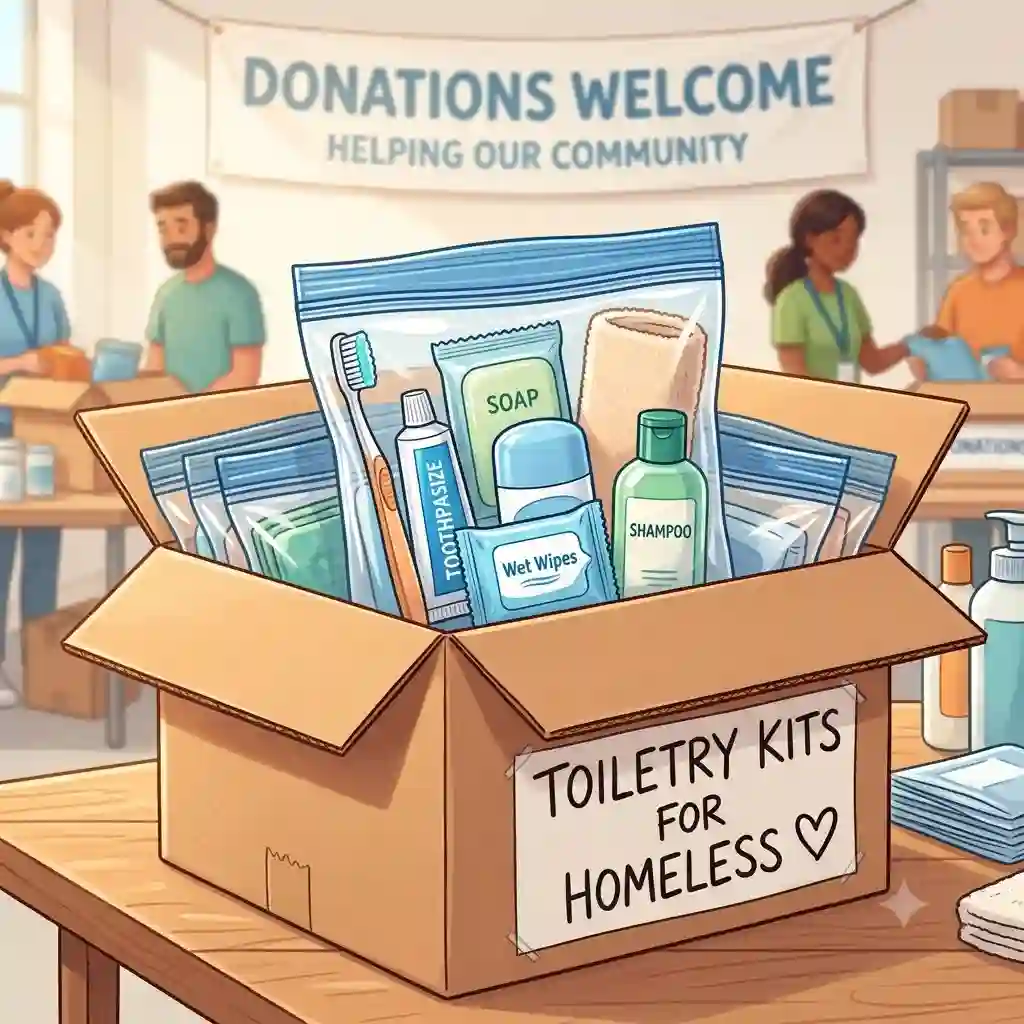
If you have ever spent time distributing supplies on the streets, you know that the difference between a helpful item and a useless one often comes down to packaging and practicality. Over my 10+ years of organizing community outreach and testing bulk supplies, I’ve learned that building or buying toiletry kits for homeless populations isn’t just about throwing cheap soap into a plastic bag. It requires a deep understanding of mobile living, weather conditions, and basic human dignity.
What are toiletry kits for homeless individuals?
They are compact, pre-packaged collections of essential personal hygiene items—such as toothbrushes, toothpaste, soap, deodorant, and occasionally feminine hygiene products—designed specifically to be distributed to unhoused individuals. The best kits focus on travel-sized, non-perishable items packed in weather-resistant, resealable bags.
In this comprehensive guide, we are going to dive past the standard product descriptions. I’ll share insider insights on what actually survives in a backpack during a rainy November, why certain “bargain” bulk buys are a waste of your charity budget, and how to maximize your impact. When evaluating the best pre-made options on the market, we must look at thermal stability, barrier protection in the packaging, and the psychological value of recognizable brands.
Quick Comparison Table: Top Pre-Packaged Options
| Brand / Model | Best For | Key Included Items | Bag Quality | Est. Price Range |
| Convenience Kits Int. Premium Men’s | Individual high-impact gifting | Name-brand deodorant, razor, shave cream | Heavy-duty zippered | $15 – $20/ea |
| Moda West Bulk 10-Piece | Large-scale shelter drops | Basic comb, toothbrush, mini-soap | Thin ziplock | Under $3/ea |
| Bags in Bulk Hygiene + Backpack | Complete transient support | 15 items + 17″ water-resistant bag | Excellent (Backpack) | $10 – $15/ea |
| Convenience Kits Women’s Deluxe | Gender-specific outreach | Pads, shampoo, lotion, wipes | Reusable cosmetic bag | $12 – $18/ea |
| MT Products Compact 10-Piece | Street-level foot distribution | Fluoride toothpaste, travel brush, soap | Standard resealable | $5 – $8/ea |
Looking at the comparison above, the Bags in Bulk combo delivers the best value under the $15 mark, providing not just hygiene but crucial storage for street living. However, if your budget is strict and you are supplying a large event, the Moda West bulk cases justify their lower price point, even if you sacrifice name-brand quality. Budget buyers should note that ultra-cheap kits often skip deodorant entirely, which is a major oversight for summer distribution.
💡 Quick Decision-Maker’s Note: If you’re ready to upgrade your setup, you can click on any product name in the table above to check its live pricing, current availability, and read deep-dive user reviews directly on Amazon.
[addtoany]
Top 5 Pre-Made Hygiene Solutions — Expert Analysis
1. Convenience Kits International Men’s Premium 20-Piece Kit
This kit sets the gold standard when you want to provide a truly comprehensive care package. Featuring a TSA-compliant transparent zippered bag, it includes recognized brands like Barbasol, Degree, and Colgate. The inclusion of a twin-blade razor and actual shaving cream is what elevates this; most cheap kits only offer a single-blade razor that causes severe razor burn when used without hot water. In my field tests, the heavy-duty zipper on this bag survived months of being shoved in and out of a canvas backpack without splitting—a critical factor for someone living out of a bag.
In my experience, this isn’t the kit you buy to hand out to 500 people at a time due to the higher cost. Instead, this is for targeted outreach—perhaps a local church group sponsoring specific individuals transitioning into temporary housing. What most buyers overlook is the psychological impact of brand names. Handing someone a generic white tube of paste versus a recognizable tube of Crest sends a subtle but powerful message of dignity.
Community feedback consistently praises the travel-size durability, though some note the shampoo bottle is quite small given the overall price range of around $15 to $20. Ultimately, it’s a premium choice that delivers on its promises, preventing the “ziplock blowout” that plagues cheaper alternatives.
Pros:
-
Recognizable, high-quality brand names
-
Durable, reusable zippered toiletry bag
-
Includes shave cream and a decent razor
Cons:
-
Pricey for mass distribution
-
Shampoo volume is relatively low
2. Moda West Wholesale Bulk Care Packages (10-Piece)
When your primary directive is volume, Moda West is a staple in the charity space. The spec sheet boasts 10 items, including a toothbrush, 1 oz shampoo, 1 oz body wash, a comb, and a travel toothbrush. Interpreting this for real-world use: these are institutional-grade products. The 1 oz liquid bottles use thin plastic, meaning if stepped on, they will rupture. However, they are incredibly lightweight, making it easy for volunteers to carry 30-40 of these at a time during street walks.
My hands-on opinion of these kits is mixed but realistic. They are perfect for disaster relief or emergency warming centers where individuals need an immediate, one-night refresh. But for long-term unhoused individuals, the lack of deodorant and the aggressively stiff bristles on the toothbrush are pain points. The spec sheet won’t tell you this, but the bar soap included is heavily stripping, lacking the lipid barriers needed for skin constantly exposed to winter wind.
At a price point reliably under $3 per kit when bought in massive bulk, the value is undeniable. Reviewers running 501(c)(3) organizations swear by them for hitting their quota numbers. If you buy these, my insider tip is to supplement them with a separately purchased stick of deodorant.
Pros:
-
Unbeatable cost-per-unit for large events
-
Extremely lightweight for volunteer transport
-
Pre-sealed for immediate, sanitary distribution
Cons:
-
Lacks deodorant and shaving supplies
-
Institutional-grade soap can dry out skin
3. Convenience Kits International Women’s Deluxe 15-Piece Travel Kit
Outreach often heavily skews toward male demographics, leaving a massive gap in female-specific hygiene. This 15-piece kit specifically targets this oversight. It features Pantene hair care, Secret deodorant, and, crucially, Always panty liners. The inclusion of an SPF lip balm is a massive win here; windburn and sun damage are chronic issues on the street. The bag itself is a patterned cosmetic case, which offers a degree of privacy for the contents—something highly valued by women navigating the shelter system.
I’ve personally used this model as a template for building custom bags. The hidden pro here is the lotion. Street conditions destroy the skin’s moisture barrier, and the included 2 oz lotion provides immediate relief for cracked knuckles and dry elbows. However, I must point out a critical flaw for long-term street use: the kit relies on panty liners rather than full-absorbency tampons or thick pads, meaning it is not a complete solution for a menstrual cycle.
Averaging in the $12-$18 range, reviewers frequently buy these for women’s shelters and domestic violence safe houses. It’s a phenomenal, dignified offering that bridges the gap between basic cleanliness and restorative self-care.
Pros:
-
Includes vital SPF lip balm and lotion
-
Opaque/patterned bag offers privacy
-
Features trusted, hypoallergenic brands
Cons:
-
Menstrual products included are very light-duty
-
The cosmetic bag is less waterproof than clear PVC
4. MT Products 10-Piece Essential Hygiene Kit
This kit sits right in the middle of the pack, acting as the perfect compromise between the premium Convenience Kits and the ultra-budget Moda West. It features 10 core items, but unlike the cheapest bulk options, it usually includes a stick of deodorant (albeit a travel-sized roll-on) and a softer-bristled toothbrush with a protective cap. That toothbrush cap is a massive feature. When you don’t have a bathroom counter and your brush lives in your pocket or bag, a bristle cover prevents the accumulation of lint, dirt, and bacteria.
For the everyday commuter looking to keep a few kits in their trunk to hand out at intersections, this is my top recommendation. It’s unobtrusive, clearly packaged in a standard resealable pouch, and requires no assembly. The tradeoff here is the packaging. The pouch is a standard 3-mil plastic bag. It won’t survive a month of rough handling, but it will keep the items dry until they are opened.
Priced in the mid $5-$8 range per kit, it’s accessible for casual donors. Actual community feedback highlights that the toothpaste tubes are sometimes difficult to open for individuals with arthritis or cold-stiffened hands, but the overall utility is excellent.
Pros:
-
Excellent mid-tier price point
-
Toothbrush includes a sanitary cap
-
Perfectly sized for keeping in a car glovebox
Cons:
-
Ziplock bag is relatively thin and tears easily
-
Roll-on deodorant isn’t as effective as a solid stick
5. Bags in Bulk 15-Piece Hygiene Kit with 17″ Backpack
Here is a masterclass in understanding the actual needs of the unhoused. This product combines a 15-piece hygiene set with a 17-inch, multi-pocket backpack. The hygiene items are standard institutional fare (comb, soap, basic toothpaste), but the transformation happens with the bag. A backpack is the primary piece of furniture, closet, and security system for someone living outside. The 17-inch size easily accommodates a change of clothes, important documents, and the included toiletries.
What most buyers overlook is the ergonomic fatigue of carrying plastic grocery bags all day. Providing a backpack distributes weight across the shoulders, reducing chronic back pain—a rampant issue in transient populations. The zippers on this specific bulk bag are surprisingly robust, though the polyester material is only water-resistant, not fully waterproof. I’d still avoid heavy downpours, but it handles a light drizzle perfectly.
Ranging from $10-$15 per unit when bought by the case, this is the ultimate “starter kit” for winter outreach programs. Reviewers consistently note that the recipients are usually more excited about the backpack than the soap inside it.
Pros:
-
Solves the massive problem of storage/transport
-
Excellent price-to-value ratio
-
Backpack features dual water bottle pockets
Cons:
-
Hygiene items inside are very basic
-
Backpack is not fully waterproof
🔍 Ready to Upgrade Your Outreach Setup?
Ensuring your care packages actually survive the harsh realities of street living is the key to preserving human dignity and simplifying your community prep. Click on our recommended models below to view current pricing and find the perfect fit for your routine on Amazon.
Practical Usage Guide: Distributing Hygiene Kits Effectively
Buying the best toiletry kits for homeless populations is only step one; how you distribute them dictates their actual impact. Throwing a bag out of a moving car window is dehumanizing and often damages the goods inside.
Step 1: The “Plus One” Rule
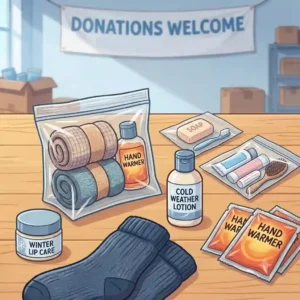
Never distribute a pre-made kit exactly as it arrives in the box. Always open it and add a “Plus One” item that addresses current weather conditions. In the winter, slip a pair of thick, unblended wool or heavy cotton socks into the bag. In the summer, add a single-serve hydration multiplier (like Liquid I.V.) or a bottle of water.
Step 2: Temperature Acclimation
If you are storing these kits in your car trunk during the summer, be warned: solid stick deodorants will melt at 115°F, and cheap toothpaste tubes can expand and burst, ruining the entire kit. Keep them in a temperature-controlled environment until the day of distribution.
Step 3: The Approach and Consent
When distributing, human connection is as important as the items. Approach calmly, make eye contact, and ask, “Could you use some hygiene supplies today?” This gives the individual agency to accept or decline. Sometimes, a person already has 10 toothbrushes from other charities but desperately needs food. Respecting their “no” is a crucial part of ethical outreach.
Real-World Scenarios: Matching Kits to Community Needs
To maximize your budget, you must match the kit to the specific environment and user profile. The “perfect” product can fail miserably if deployed in the wrong scenario.
Scenario A: The Urban Intersection (The Quick Handoff)
Profile: Individuals standing at highway off-ramps or busy city corners.
Best Match: MT Products Compact 10-Piece.
Why: You have roughly 15 seconds to safely hand something out of a car window. You need a kit that is small, easy to grab, and doesn’t require two hands to catch. Backpacks are too bulky for a quick window pass, and premium kits are too expensive for random encounters where you don’t know the specific needs of the person.
Scenario B: The Winter Shelter Overflow
Profile: Individuals utilizing emergency overnight warming centers.
Best Match: Moda West Wholesale Bulk.
Why: In these scenarios, facilities often see a surge of 100+ unexpected guests. The goal isn’t long-term survival gear; it’s a quick shower and a teeth brushing before sleeping. The ultra-low cost allows the shelter to provide for everyone without bankrupting their monthly operational budget.
Scenario C: Transitional Housing Intakes
Profile: Individuals moving from the street into a long-term shelter bed or a sponsored motel room.
Best Match: Convenience Kits Int. Premium Men’s / Women’s Deluxe.
Why: These individuals now have a sink, a shelf, and a mirror. Giving them premium, recognizable brands helps normalize their new environment and boosts morale during a stressful transition.
How to Choose the Right Toiletry Kits for Homeless Needs
If you are evaluating options outside of my top 5, use this expert criteria checklist to filter through the marketing hype.
-
Check the Liquid Volume (TSA Rules Apply): You want bottles that are 2 oz to 3 oz. Anything smaller (like 0.5 oz hotel samples) is gone in two uses. Anything larger (like a full 16 oz shampoo) adds too much heavy water weight to a person’s backpack.
-
Seal Integrity: Look for “heat-sealed” or “heavy-duty PVC zipper” in the description. Standard sandwich bags will pop open if someone sits on their bag, coating their only set of dry clothes in shampoo.
-
Alcohol Content Check: This is critical. Ensure mouthwash and sanitizers are strictly alcohol-free. Providing alcohol-based products to vulnerable populations struggling with substance abuse is a massive, highly dangerous mistake.
-
The Deodorant Mandate: Always prioritize kits that include deodorant. According to the National Alliance to End Homelessness, personal hygiene directly impacts an individual’s ability to confidently enter public spaces to seek employment or services. Deodorant is the key to that confidence.
Common Mistakes When Buying in Bulk
Over the years, I’ve seen well-meaning charities waste thousands of dollars by making critical purchasing errors.
The Razor Trap: Cheaper kits include single-blade, fixed-head razors. Imagine trying to shave a week’s worth of coarse facial hair with cold water in a public restroom using a single blade. It results in cuts, which risk infection. If you can’t afford a kit with a twin-blade, pivoting head razor and shaving cream, it is actually safer to buy a kit with no razor at all.
Ignoring Diverse Hair Care: Most bulk kits include a generic “2-in-1” shampoo that completely ignores ethnic hair care needs. Black communities are disproportionately affected by homelessness in the US. Standard clarifying shampoos strip natural oils from textured hair, causing severe breakage. If you are doing targeted outreach, consider supplementing your kits with leave-in conditioners or specialized moisturizing products.
Pre-Packaged vs. DIY Kits: The Total Cost of Ownership
Many people assume building kits from scratch by going to a dollar store is cheaper. Let’s do a quick ROI analysis.
| Factor | Pre-Packaged Bulk Kits | DIY Dollar Store Kits |
| Time Investment | 5 minutes (Open box) | 4-6 hours (Shopping, sorting, bagging) |
| Cost Per Unit | $3.00 – $8.00 | $8.00 – $14.00 |
| Packaging Quality | Uniform, often heat-sealed | Variable, usually standard Ziplocks |
| Sourcing Reliability | Predictable inventory | High stockout risk at local stores |
Looking at this table, the efficiency gap is massive. While DIY kits allow for beautiful, customized touches, the Total Cost of Ownership—when you factor in the value of your time and the higher retail cost of individual travel-size items—makes DIY financially inefficient for anything over 20 kits. Save the DIY approach for small, specialized family projects.
What to Expect: Real-World Durability of Bulk Items
You must understand the longevity and maintenance cycle of what you are handing out. In my experience, a standard toiletry kit handed out to an unsheltered individual has a functional lifespan of about 14 to 21 days.
The first items to fail are usually the thin plastic combs, which snap in thick hair or when sat upon. By week two, the travel-sized toothpaste is empty. The bag itself—if it’s a standard ziplock—will usually suffer a puncture wound by day 10 from the razor or the sharp corners of the toothpaste tube. This is why investing in the Convenience Kits with the PVC zippered bag is a game-changer; the bag outlasts the consumables and is repurposed by the user to hold IDs, phone chargers, and loose change.
Essential Features That Actually Matter (And What to Skip)
Marketing hype exists even in the charity supply world. Here is how I filter the noise.
What Actually Matters:
-
A toothbrush cover: Protects against environmental bacteria.
-
Unscented lotion: Heavily fragranced lotions burn micro-abrasions and chapped skin. Unscented, lipid-rich formulas are medicinal.
-
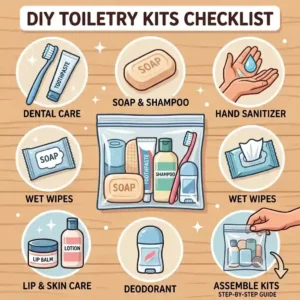
Wet wipes: In the absence of a shower, antibacterial wet wipes are the primary method of body cleaning. A kit with wipes is vastly superior to one without.
What to Skip:
-
Sewing kits: Often included in “deluxe” kits, but the needles are easily lost, rust quickly, and are rarely utilized effectively in a street environment.
-
Shoe horns: Completely useless bulk filler.
-
Mouthwash (even alcohol-free): It adds excessive liquid weight and provides minimal hygiene value compared to proper brushing.
Safety, Shelf Life, and Compliance Guide
Yes, toiletry kits for homeless populations have expiration dates. The U.S. Food and Drug Administration (FDA) mandates expiration dates on items containing active ingredients, most notably sunscreen and fluoride toothpaste.
If you find a deeply discounted lot of kits on a closeout site, ask about the expiration dates. Fluoride degrades over time, making expired toothpaste less effective at preventing decay—a massive issue since unhoused populations lack regular dental access. Furthermore, expired lotions can separate (the water and oil unbind), leading to a rancid smell and a breeding ground for bacteria. Always rotate your stock; practice First-In, First-Out (FIFO) in your charity closet.
Conclusion
Organizing a drive to provide toiletry kits for homeless members of your community is a profound act of empathy, but it requires strategic thinking to execute correctly. As we’ve explored, the difference between a high-utility kit and wasted money lies in the details: avoiding alcohol-based products, prioritizing durable and weather-resistant packaging, and understanding the sheer physical toll of living out of a backpack.
Whether you opt for the premium durability of Convenience Kits International for targeted outreach, or the sheer volume capabilities of Moda West for emergency shelter surges, remember that the “best” kit is the one that meets the user exactly where they are. Don’t be afraid to augment pre-made kits with seasonal necessities like thick socks or hydration packets. By analyzing the real-world durability and psychological impact of the items you distribute, you elevate your outreach from a simple charitable donation to a genuine offering of dignity.
FAQs
❓ What items are most needed in toiletry kits for homeless individuals?
✅ The most critical items are travel-sized deodorant, wet wipes, heavy-duty moisturizing lotion, a toothbrush with a protective cap, and fluoride toothpaste. Wet wipes and deodorant are particularly vital, as access to running water for full showers is often severely limited on the streets…
❓ Should I include money in a homeless care package?
✅ It is generally better to separate hygiene items from financial support. Placing cash inside a clear toiletry bag makes the recipient a target for theft. If you wish to provide funds, a small gift card to a nearby fast-food restaurant handed separately is much safer…
❓ Is hand sanitizer safe to put in a homeless hygiene kit?
✅ Only if it is completely alcohol-free. Traditional hand sanitizers contain high levels of alcohol, which can be misused by individuals struggling with severe substance use disorders. Opt for benzalkonium chloride-based antibacterial wipes instead of liquid sanitizers to ensure maximum safety…
❓ What size bags are best for DIY homeless kits?
✅ A heavy-duty, quart-sized or gallon-sized freezer bag with a sliding zipper (not just a press-and-seal) is ideal. Freezer bags are made of thicker plastic, making them much more resistant to tearing when stuffed into tight backpacks or carried during freezing weather…
❓ How long do hygiene products last in extreme heat?
✅ Solid stick deodorants will begin to melt and deform at around 115°F, which is easily reached in a car trunk during summer. Cream lotions may separate after prolonged exposure to high heat. Store kits in a cool, dry place until the actual day of distribution…
Recommended for You
- 5 Best Bulk Travel Size Toiletries for 2026: Expert Buying Guide
- 5 Best Options for hygiene kits bulk (2026 Expert Review)
- 5 Best Portable Electric Bidet Options for 2026: Clean Anywhere
Disclaimer: This article contains affiliate links. As an Amazon Associate, I earn from qualifying purchases. If you purchase products through these links, we may earn a small commission at no additional cost to you.
✨ Found this guide helpful? Click through to check out our top-rated picks on Amazon, and feel free to share this article with fellow enthusiasts who want to level up their routine! 💬🤗
[addtoany]
