
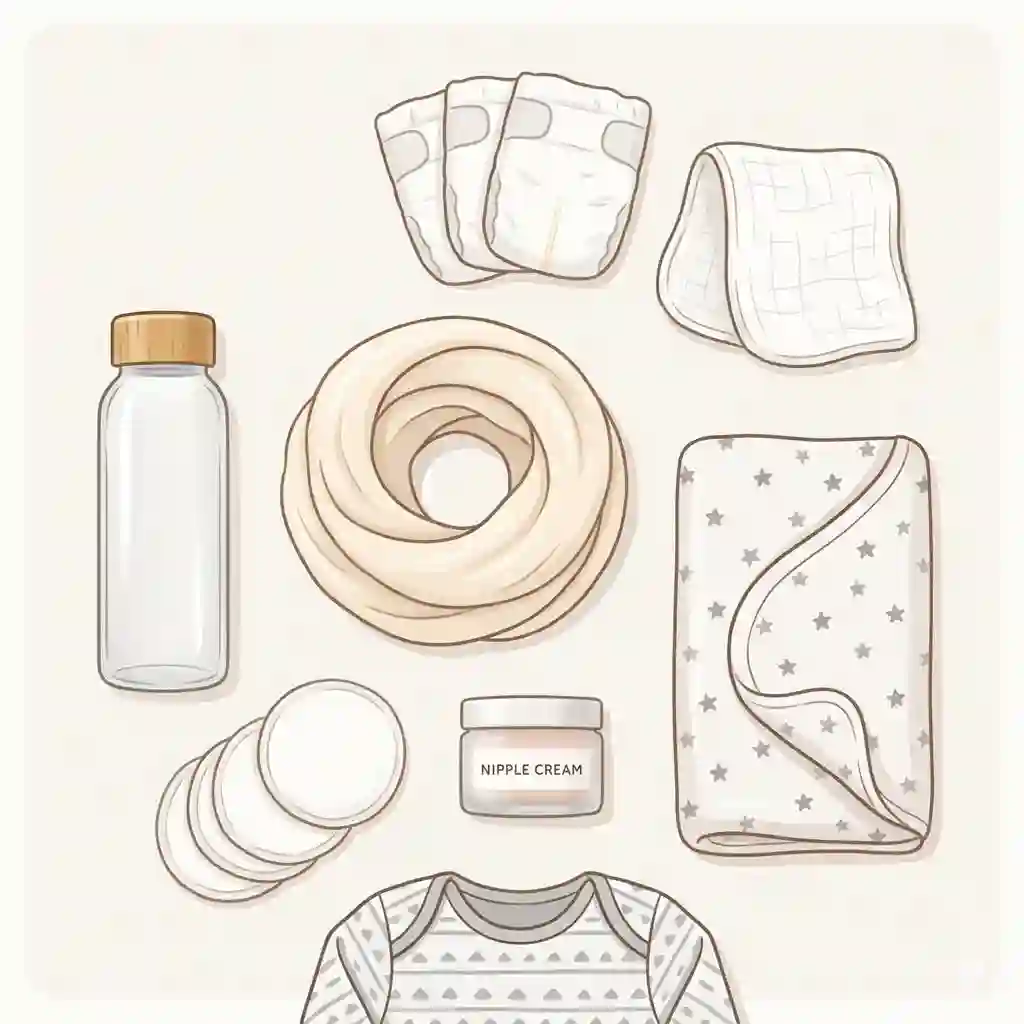
What are new mom necessities? Essentially, new mom necessities are specialized products, tools, and garments designed specifically to support a mother’s physical recovery, mental well-being, and logistical transition during the first twelve weeks postpartum, often referred to as the fourth trimester.
In my ten years working as a postpartum consultant and family care strategist, I’ve seen thousands of baby registries. Almost universally, they are packed with adorable onesies, high-tech bottle warmers, and plush toys. But when the baby arrives, parents quickly realize a harsh truth: the mother’s recovery is the actual foundation of the household’s stability. If you are reading this as an expectant mother, let me be brutally honest—you need to shift your focus from the baby’s nursery to your own healing station.
The industry is flooded with marketing hype, promising you that every cream, pillow, and gadget is essential. It isn’t. The real new mom necessities are the tools that buy you an extra thirty minutes of sleep, prevent physical pain during feeding, and support your pelvic floor recovery. In this comprehensive 2026 guide, I am going bypass the fluff. I’ve field-tested these items alongside hundreds of clients, assessing them not just for what the box claims, but for how they actually perform at 3:00 AM when you are exhausted and overwhelmed. Let’s dive into the gear that actually moves the needle during those critical early weeks.
Quick Comparison: Top Postpartum Gear at a Glance
When prioritizing your budget, it helps to view these items through the lens of their primary function. Here is a breakdown of the top performers in my field tests.
| Product Name | Primary Function | Standout Feature | Best For | Est. Price Range |
| Frida Mom Postpartum Kit | Physical Recovery | Upside-down peri bottle | Hospital bag packing | $45 – $60 |
| Haakaa Manual Pump | Feeding / Lactation | Passive suction design | Catching letdown | $15 – $25 |
| Silverette Nursing Cups | Nipple Healing | Antimicrobial 925 silver | Preventing cracks | $55 – $65 |
| Hatch Rest+ 2nd Gen | Sleep Optimization | Portable battery base | Middle-of-night feeds | $80 – $100 |
| Boppy Nursing Pillow | Ergonomic Support | Firm C-shape contour | C-section recovery | $40 – $50 |
Looking at the comparison above, the Frida Mom Postpartum Kit delivers the most immediate, undeniable value for the first 48 hours after birth, but if long-term breastfeeding comfort is your priority, the Silverette Nursing Cups justify their premium price point within a week. Budget-conscious buyers should note that the Haakaa Manual Pump offers an incredible return on investment, essentially acting as a secondary pump without the electrical complexities.
💬 Just one click — help others make better buying decisions too! 😊
[addtoany]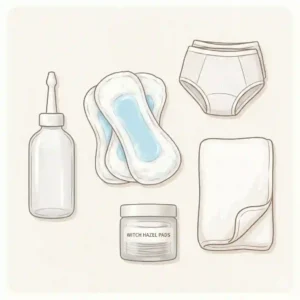
Top 5 new mom necessities: Expert Analysis & Field Tests
In this section, I break down the exact products I recommend to every single one of my private clients.
1. Frida Mom Postpartum Recovery Essentials Kit
The Frida Mom Postpartum Recovery Essentials Kit brings hospital-grade healing directly into your home bathroom with a meticulously curated five-step regimen.
Featuring an angled peri bottle, disposable postpartum underwear, instant ice maxi pads, witch hazel cooling pad liners, and healing foam, this kit replaces the clunky hospital supplies. The standout spec here is the inverted, angled spout on the peri bottle. What this means in practice is that you don’t have to awkwardly submerge your hand into the toilet bowl to get a direct spray on your perineum—a massive logistical relief when your mobility is compromised.
In my experience, this kit is an absolute non-negotiable for anyone planning a vaginal delivery. The instant ice pads absorb up to 260g of fluid while maintaining a steady chill for about 20 minutes. What the spec sheet won’t tell you, but I will: the witch hazel foam is vastly superior to traditional sprays because it actually sits on top of the pad rather than soaking into it immediately. Customer feedback consistently highlights the sheer convenience of having everything in one discrete box, though some note the disposable underwear runs slightly tight on sizes over XL.
-
✅ Pros: Angled peri bottle is a game-changer; foam provides lasting relief; ice pads are highly absorbent.
-
❌ Cons: Sizing can be restrictive for plus-size bodies; refills are somewhat expensive.
-
Price & Value: Sitting in the $45-$60 range, it is worth every single penny for the first week of survival.
2. Haakaa Manual Breast Pump
The Haakaa Manual Breast Pump is a simple, one-piece silicone marvel that uses natural suction to draw out milk without cords, batteries, or pumping mechanisms.
Constructed from 100% food-grade silicone with a 4oz/100ml capacity, its key feature is the vacuum-seal flange. In a real-world scenario, you attach this to your non-nursing breast while your baby feeds on the other. It catches the natural “letdown” reflex milk that would otherwise leak onto a nursing pad and be wasted. This means you can effortlessly build a freezer stash of milk with literally zero extra pumping sessions.
I recommend this to every breastfeeding mother I consult. What most buyers overlook is the learning curve: you must fold the flange back, squeeze the base, place it over the nipple, and then unfold the flange to get a pain-free, secure latch. If you just squeeze and stick it on, it will pinch. Most reviewers claim it’s just a milk catcher, but in practice, I found that with a strong enough suction application, it actively draws out hindmilk.
-
✅ Pros: Silent operation; zero parts to assemble/wash; builds milk stash passively.
-
❌ Cons: Easily kicked off by a squirmy baby; pouring milk out can be messy without the stopper.
-
Price & Value: Usually priced in the $15-$25 range, making it the highest ROI item on this list.
3. Silverette Nursing Cups
The Silverette Nursing Cups are small, medical-grade cups worn directly over the nipples between feeding sessions to soothe and protect damaged skin.
Crafted from 925 sterling silver, these cups utilize the natural antimicrobial and antifungal properties of silver to accelerate healing. Because of their anatomical shape, they create a physical barrier against the friction of your bra. The practical interpretation here is massive: you don’t need to use sticky, messy lanolin creams that have to be washed off before the baby latches. The silver environment utilizes your own breastmilk’s moisture to heal cracks and fissures rapidly.
I cannot overstate how many breastfeeding journeys these cups have saved. They are ideal for first-time mothers whose skin is adjusting to the rigorous demands of cluster feeding. The caveat? You cannot use them in conjunction with traditional nipple creams, as the cream acts as a barrier, preventing the silver from doing its job. While customer reviews rave about the almost miraculous overnight healing, some users with larger areolas find the standard size leaves an indentation ring.
-
✅ Pros: Eliminates the need for creams; infinite lifespan; naturally antimicrobial.
-
❌ Cons: Noticeable under thin clothing; requires a specific cleaning routine (baking soda paste).
-
Price & Value: Running in the $55-$65 range, they are a premium investment but offer unmatched, drug-free pain relief.
4. Hatch Rest+ 2nd Gen Baby Sound Machine
The Hatch Rest+ 2nd Gen is a Wi-Fi-enabled sound machine, nightlight, and audio monitor rolled into a sleek, minimalist cylinder.
It boasts customizable light hues, a library of white noise tracks, and an internal battery that lasts up to 8 hours. For a new mother, the smart features are transformative. The app integration means you can adjust the volume or dim the light from your phone while pinned under a sleeping infant. The internal battery means you can unplug it from the nursery and carry it into the living room without the white noise stopping and startling the baby awake.
This is a core component of my sleep hygiene curriculum. The exact reason I recommend the Rest+ over cheaper alternatives is the warm red light setting. Red light does not inhibit the brain’s melatonin production (unlike blue or white light). If you use the red setting for 3:00 AM diaper changes, both you and the baby will fall back to sleep much faster. Feedback is overwhelmingly positive regarding the sound quality, though the app requires a subscription to access the premium lullabies (which you honestly don’t need).
-
✅ Pros: Portable battery backup; melatonin-friendly red light; seamless app control.
-
❌ Cons: Premium sounds locked behind a paywall; heavily dependent on a stable Wi-Fi connection.
-
Price & Value: Generally found in the $80-$100 range, it serves you well into the toddler years, ensuring fantastic cost-per-use.
5. Boppy Nursing Pillow
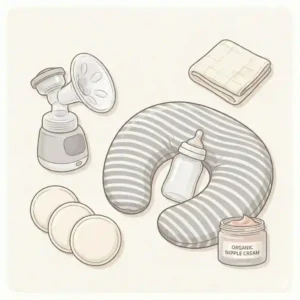
The Boppy Nursing Pillow is a versatile, C-shaped support pillow designed to ergonomically position your baby for feeding while taking the strain off your back and arms.
Filled with a hypoallergenic virgin polyester fiberfill, it maintains a firm structure without sagging. In practice, this firmness prevents the baby from rolling inward toward your stomach, allowing you to maintain a straight, supported spine rather than hunching over. It also doubles as a prop for tummy time and assisted sitting as the baby grows.
In my field tests, the Boppy shines brightest for mothers recovering from C-sections. By positioning the pillow slightly above the incision line, it acts as a physical buffer against accidental kicks while supporting the baby’s weight. The spec sheet notes it is machine washable, but my insider insight is to always buy a second, waterproof slipcover. Blowouts happen, and washing the entire pillow takes hours to dry. Reviewers love the familiar comfort, though exceptionally tall mothers often find they still need an extra throw pillow underneath it to achieve the right height.
-
✅ Pros: Highly durable firmness; versatile for baby’s milestones; easy-to-change covers.
-
❌ Cons: Not ideal for plus-size or very tall mothers without modification; bulky to travel with.
-
Price & Value: Typically priced in the $40-$50 range, it’s a staple registry item that delivers daily utility.
✨ Don’t Miss These Exclusive Deals!
🔍 Take your postpartum prep to the next level with these carefully selected products. Click on any highlighted item to check current pricing and availability. These tools will help you create an authentic, comfortable recovery environment your family will love!

First 30 Days: A Practical Usage Guide
Merely owning these new mom necessities isn’t enough; you must deploy them strategically. The first thirty days postpartum are a blur of adrenaline, hormone crashes, and physical recovery. Based on my work with families, here is how you should actually optimize these tools.
Setting Up “Recovery Stations”
Do not keep all your postpartum gear in one central location. Your mobility will be limited. You need to build localized kits.
-
The Bathroom Station: This is where the Frida Mom gear lives. Pre-line your disposable underwear with the ice pads and foam before you need them.
-
The Nightstand Station: This is the hydration and feeding zone. Keep your Haakaa, a massive insulated water bottle, and your Silverette cups here.
-
The Living Room Station: Keep your Boppy pillow and a basket of burp cloths on the sofa.
The Silverette Protocol
A common mistake I see is mothers washing their nipples with soap before applying the silver cups. Don’t do this. Leave a few drops of expressed breastmilk on the nipple, apply the cup, and secure it with a fitted nursing bra. The breastmilk acts as a conduit for the silver’s antimicrobial properties. Every three days, create a paste of water and baking soda, rub it gently on the silver, and rinse to remove the biological film buildup.
Real-World Scenario: The C-Section vs. Vaginal Delivery Toolkit
A major flaw in the maternity industry is treating all postpartum recoveries as identical. They are fundamentally different medical events, requiring different gear.
The C-Section Profile
If you undergo a cesarean, your core muscles are compromised, making bending, lifting, and twisting excruciating. For this profile, the Boppy Nursing Pillow becomes your armor. However, the traditional peri bottle is useless because twisting on the toilet pulls your incision. The angled neck of the Frida Mom bottle is mandatory here. Furthermore, you will want high-waisted, ultra-stretchy compression underwear that sits above your incision line. Anything that hits the bikini line will cause agonizing friction.
The Vaginal Delivery Profile
For a vaginal delivery, perineal tearing and swelling are the primary adversaries. Your focus shifts heavily to ice and astringents. The instant ice maxi pads are your best friend, but here is a pro-tip: do not sit flat on soft surfaces, which puts direct pressure on the perineum. Sit on a firm cushion, or lean slightly to one side. The Haakaa is vital here as well; the oxytocin released during breast pumping actually triggers uterine contractions (afterpains) that help your uterus shrink back to size. Managing breast engorgement while dealing with perineal pain requires a streamlined process.
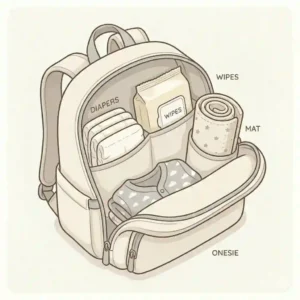
Problem to Solution: Navigating Sleep Deprivation and Feeding Pain
Let’s address the two most common pain points my clients face and how these products provide specific solutions.
Problem 1: The “Jolt Awake” Cycle
The Scenario: The baby wakes up to feed. You turn on the bedside lamp. The harsh white light signals to the baby’s circadian rhythm that it’s daytime. After the feed, the baby refuses to go back to sleep for two hours.
The Solution: This is where the Hatch Rest+ pays for itself. Keep the sound machine running on a continuous low-frequency “TV static” or “Rain” sound. Set a favorite to a dim, deep red light. When the baby wakes, you tap the top of the machine. The red light provides enough visibility for a safe latch or a diaper change but keeps the biological sleep pressure high. According to research referenced by the National Institutes of Health, avoiding blue light in the middle of the night is critical for maintaining postpartum maternal circadian rhythms.
Problem 2: The Letdown Leakage and Clogged Ducts
The Scenario: While nursing on the left side, your right breast leaks profusely. If you ignore it, you waste milk. If you try to pump simultaneously, you’re juggling too many mechanical parts.
The Solution: Deploy the Haakaa. Suction it to the right breast before the baby latches on the left. Not only does it catch the letdown, but the gentle negative pressure helps empty the breast fully, which is the primary way to prevent clogged milk ducts and mastitis.
How to Choose True Postpartum Essentials
When building your registry or late-night shopping cart, run every potential purchase through this expert decision framework:
-
Does it solve a biological problem? Items that address bleeding, tearing, lactation, or sleep deprivation take top priority. Everything else is secondary.
-
Can it be operated with one hand? If a gadget requires two hands and careful concentration to use, it will end up in a drawer. You will almost always be holding a baby.
-
What is the cleaning burden? If a pump or a bottle system has seven tiny silicone rings that need a specialized brush and boiling water to sanitize, it is a bad investment for the first month. Simple, monolithic designs (like the Haakaa) win every time.
-
Does it support your specific birth plan? As discussed, tailor your cart to your expected delivery method, but always have a backup plan (e.g., C-section scar gel) just in case.

Common Mistakes When Buying Postpartum Gear
In my consulting practice, I see the same purchasing errors repeated constantly. Here is my expert filtering of the marketing hype.
First, overbuying standard nursing pads. Mothers will buy bulk boxes of disposable pads. The reality? Many women find them itchy, and if they stay damp, they become a breeding ground for thrush. Washable bamboo pads or silver cups are a much better long-term investment.
Second, investing heavily in rigid, structured nursing bras before your milk regulates. In the first three weeks, your breast size will fluctuate wildly due to engorgement. Buying expensive, underwire nursing bras too early is a recipe for clogged ducts. Stick to stretchy, crossover sleep bras for the first month.
Third, ignoring the “fourth trimester” hormone crash. Many moms buy physical recovery gear but forget comfort items for their nervous system. A massive, insulated water bottle with a straw is a new mom necessity because breastfeeding triggers intense, sudden thirst, and staying hydrated is crucial for regulating your mood and milk supply.
Medical vs. Commercial Comforts
It is crucial to differentiate between items that provide luxury comfort and items that provide medical-grade relief.
A plush robe is a commercial comfort. It feels nice, but it doesn’t heal you. The Frida Mom perineal healing foam is a medical comfort. It utilizes witch hazel to actively reduce tissue inflammation and swelling. When budgeting, always prioritize medical comforts first.
As per guidelines from the American College of Obstetricians and Gynecologists (ACOG), postpartum care should be an ongoing process, not a single encounter. Therefore, having tools at home that bridge the gap between hospital discharge and your six-week checkup is paramount. Never rely solely on the mesh underwear the hospital gives you; it is designed for cost-efficiency, not long-term ergonomic support.
Long-Term Cost & Maintenance: What Survives Month One?
Let’s look at the Total Cost of Ownership (TCO) and longevity of these items.
The Frida Mom Kit has a very short lifecycle. You will burn through the ice pads and disposable underwear in 7 to 10 days. It is an initial sunk cost with zero long-term utility, but the immediate ROI in terms of pain reduction is astronomical.
Conversely, the Hatch Rest+ has a massive lifecycle. You will use it daily from the night you bring the baby home until they are five years old (using the “time-to-rise” color cues for toddlers). The TCO is pennies per day.
The Silverette Cups fall into a unique category. They are a one-time purchase with an infinite lifespan. Because silver doesn’t degrade, you can use them for subsequent children, or pass them along to a friend. The maintenance cycle is simply a quick baking soda scrub. They hold their value perfectly, making the initial sting of the price tag much easier to swallow.
Features That Actually Matter (And Those That Don’t)
When looking at spec sheets for new mom necessities, the industry loves to invent problems to sell you solutions. Here is what actually matters:
What Matters:
-
Passive Suction: Active pumping requires mental energy. Passive suction (like catching letdown) works with your body’s natural reflexes.
-
Battery Backup: Anything that plugs into a wall in the nursery loses 50% of its utility if it can’t be moved to the living room temporarily without rebooting.
-
Waterproof Liners: Anything made of fabric (pillows, loungers, mattresses) MUST have a waterproof layer beneath the aesthetic cover.
What Doesn’t Matter:
-
Bluetooth App Connectivity on Breast Pumps: You do not need a smartphone app to tell you how many ounces you pumped. It is an over-engineered feature that drains the pump’s battery faster and introduces software glitches into a mechanical necessity.
-
Heating Features in Wipes Warmers: These dry out the wipes, breed bacteria at the bottom of the tub, and create a baby who will scream bloody murder when you inevitably have to use a room-temperature wipe in a public restroom. Skip them entirely.
What to Expect: Real-World Performance vs. Marketing Hype
Let’s do a reality check on marketing claims.
The Claim: “Sleep while the baby sleeps.”
The Reality: You can’t just fall asleep on command. The adrenaline of having a newborn keeps you wired. Using tools like the red-light setting on your sound machine, combined with a comfortable, supportive environment, lowers your cortisol levels so you can actually drift off.
The Claim: “Breastfeeding is natural, so it should be easy.”
The Reality: It is natural, but it is a learned skill for both you and the baby. The first two weeks often involve toe-curling pain as your skin adjusts. The marketing hype suggests a simple organic balm will fix it. Real-world performance dictates that physical barriers (like silver cups) and proper ergonomic positioning (via a firm nursing pillow) are the actual mechanics of pain-free feeding.
✨ Don’t Miss These Exclusive Deals!
🔍 Ready to build your ultimate recovery kit? Click on any highlighted item to check current pricing and availability. Remember, investing in your own healing is the first step to being the best parent you can be!

Conclusion: Finding Your Footing as a New Mother
Navigating the transition into motherhood is arguably the most intense physical and psychological shift a human being can undergo. Equipping yourself with the right new mom necessities isn’t about indulging in luxury consumerism; it is about establishing a functional, supportive baseline for your recovery.
From the ergonomic relief of a properly designed nursing pillow to the hygienic superiority of an angled peri bottle, these tools act as an extension of your support system. Remember that the ultimate goal of these products is to remove friction from your daily routine, allowing you to focus your limited energy on bonding with your newborn and healing your body. Don’t be afraid to pivot if a product isn’t working for you, and above all, give yourself the grace to recover at your own pace. The fourth trimester is a marathon, but with the right gear in your corner, you will find your footing.
FAQs
❓ What are the absolute basic new mom necessities for the hospital?
✅ Pack an extra-long phone charging cable, your own comfortable pillow, an angled peri bottle (the hospital provides a standard one, but angled is better), slip-on shoes, and a supportive but stretchy nursing sleep bra. Keep it minimal…
❓ How long do I need to use postpartum ice pads?
✅ Typically, ice pads are most effective during the first 24 to 72 hours postpartum to reduce acute swelling and numb the area. After the first few days, many women transition to warm sitz baths for deeper tissue healing…
❓ Is a manual breast pump better than an electric one?
✅ It depends on the use case. A silicone manual pump is unmatched for catching passive letdown and relieving quick engorgement without setup. An electric pump is necessary for mothers returning to work or exclusively pumping for full feeds…
❓ Can I use nipple cream with silver nursing cups?
✅ No, you should not use lanolin or other balms with silver cups. Creams create a physical barrier that prevents the silver’s natural antimicrobial properties from interacting with the skin. Use only a few drops of your own breastmilk…
❓ How many postpartum underwear pads do I need?
✅ Plan for heavy bleeding for the first 3 to 5 days, requiring a pad change every 2-3 hours. Buying one bulk pack of heavy-duty maternity pads (around 30-40 count) is usually sufficient before transitioning to standard menstrual pads…
Recommended for You
- 7 Best Japanese WC Bidet Models To Upgrade Your Bathroom Comfort!
- 5 Best bulk toiletries to Buy in 2026: A Host & Donor’s Guide
- 5 Best Postpartum Gift Box Essentials for 2026 (Expert Reviewed)
Disclaimer: This article contains affiliate links. As an Amazon Associate, I earn from qualifying purchases. If you purchase products through these links, we may earn a small commission at no additional cost to you.
✨ Found this helpful? Share it with your friends! 💬🤗
[addtoany]
