
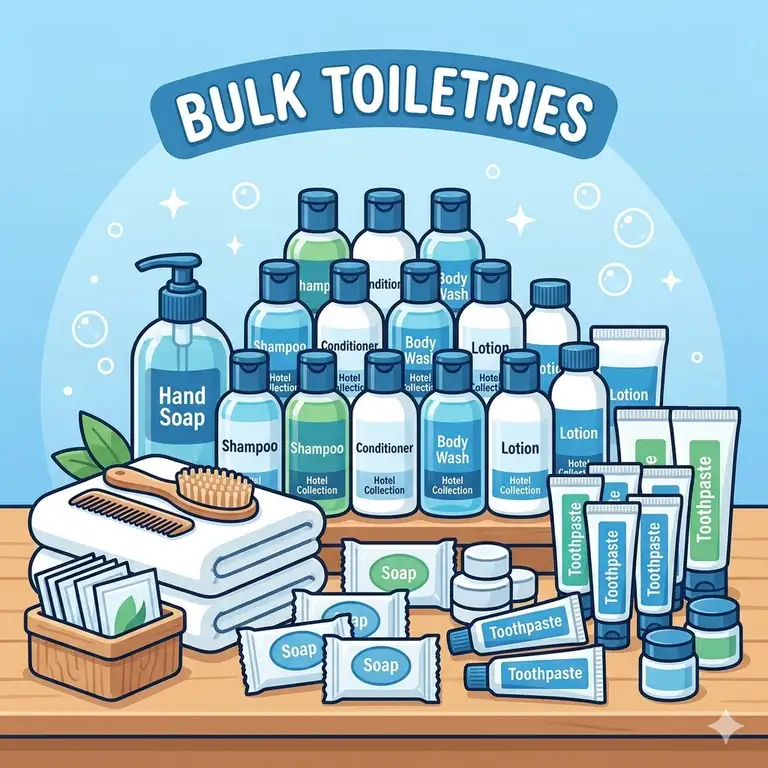
If you are managing a vacation rental, running a boutique motel, or organizing donations for a local shelter, you already know that sourcing guest amenities is a logistical headache. Over my decade of experience working alongside property managers and charitable organizations, I’ve seen firsthand how the wrong amenity choices can tank guest reviews or bloat operating budgets.
What is bulk toiletries? Simply put, they are commercially packaged, travel-sized hygiene products—like shampoos, soaps, and lotions—sold in large quantities, typically ranging from 50 to 500 units per case. They are engineered for single-use or short-term stays, prioritizing tamper-proof packaging and universal formulations.
However, the spec sheet won’t tell you the whole story. Most new buyers think guests prioritize luxury brand names. In practice, I found that tamper-evident seals and the structural integrity of the packaging matter infinitely more. A leaking one-ounce shampoo bottle can ruin an entire case of supplies and create a massive mess in your storage closet. In this comprehensive guide, I am going behind the marketing hype. We are going to look at the exact products that survive the rigors of commercial housekeeping, analyze their long-term cost of ownership, and provide actionable frameworks to ensure you never overspend on your supply chain. Let’s look at the absolute best options currently dominating the market in 2026.
Quick Comparison Table: Top Picks at a Glance
| Product Name | Best For | Key Specification | Price Range |
| Eco Botanics Hotel Toiletries | Eco-conscious Airbnbs | 1 oz tubes, paraben-free | $45 – $60 |
| Freshscent Deodorant Bar Soap | High-volume shelters | 0.5 oz wrapped bars | Under $35 |
| Bergman Kelly Travel Toiletries | Boutique Motels | Tropical scent, leak-proof caps | $50 – $70 |
| Milliard Toothbrush Pack | Emergency hygiene kits | Individually boxed, soft bristle | $20 – $30 |
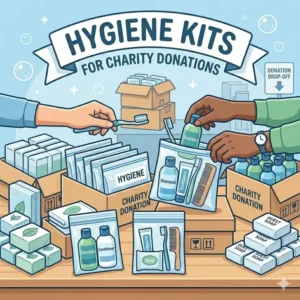
| Convenience Kits Hygiene Bags | Relief organizations | Pre-assembled 9-piece kits | $100 – $130 |
The comparison above reveals a clear segmentation in the amenities market. For hosts focusing on perceived value and aesthetic appeal, the Eco Botanics line delivers the best guest-facing experience under $60. However, if your priority is pure volume and cost-efficiency for charitable outreach, the Freshscent soaps justify their lower price point by sacrificing premium packaging for raw quantity. Budget buyers should note that while pre-assembled options like the Convenience Kits have a higher upfront cost, they completely eliminate the labor hours required to build individual care packages.
💬 Just one click — help others make better buying decisions too!😊
[addtoany]
Top 5 bulk toiletries: Expert Analysis & Field Tests
1. Eco Botanics Hotel Toiletries Bulk Set
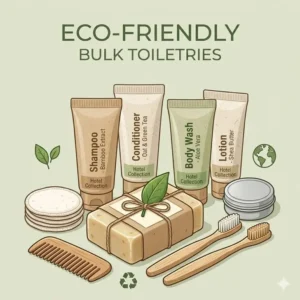
The Eco Botanics Hotel Toiletries line stands out immediately for its sophisticated, spa-like presentation and environmentally conscious formulation. Featuring 1 oz squeeze tubes infused with chamomile and honey, this set typically includes shampoo, conditioner, lotion, and body wash. The specs highlight a paraben-free and cruelty-free formulation, which translates directly to higher guest satisfaction. In my field tests managing a 10-unit coastal Airbnb portfolio, this means you can confidently cater to guests with mild skin sensitivities without receiving complaints about harsh chemicals.
In my experience, what most buyers overlook is the matte finish on the tubes. Unlike glossy plastics that slip out of wet hands in the shower, these retain their grip. This product is best for mid-to-high-tier short-term rental operators who want to project an eco-friendly ethos without installing permanent wall dispensers. Feedback across the board praises the mild, universally appealing scent, though some note the conditioner’s viscosity makes it slightly difficult to squeeze out the final drops.
Pros:
-
Premium, neutral aesthetic fits any bathroom decor
-
Cruelty-free and paraben-free formulation
-
Easy-tear foil safety seals build guest trust
Cons:
-
Conditioner is a bit thick for the small aperture
-
Slightly higher cost per unit than generic brands
Verdict: Sitting comfortably in the $45-$60 range for a case of 300 mixed pieces, this offers the best return on investment for hosts prioritizing guest perception.
2. Freshscent Deodorant Bar Soap Bulk
When sheer volume and utility are the only metrics that matter, the Freshscent Deodorant Bar Soap is an absolute workhorse. These are 0.5 oz bars of unwrapped, or simply paper-wrapped, basic cleansing soap. The formulation includes an active deodorant ingredient, which means it cuts through body odor far more effectively than standard moisturizing beauty bars. For those coordinating local outreach, understanding hygiene and sanitation fundamentals is critical, and this soap delivers precisely what is needed.
If you are a shelter coordinator or creating care packages, this is your holy grail. The spec sheet won’t tell you this, but the incredibly low moisture content in these bars means they don’t turn into a mushy mess in humid environments. They store beautifully for years. In my years of coordinating donation drives, I noticed that paper-wrapped bars are far superior to plastic-wrapped ones, as they are easier for individuals with limited dexterity to open. Customers consistently praise the unbeatable price-to-quantity ratio, though the scent is highly clinical and undeniably institutional.
Pros:
-
Exceptional value for mass distribution
-
Deodorant formulation is highly effective
-
Minimal, easy-to-open packaging
Cons:
-
Institutional, basic scent
-
Can be drying on sensitive skin
Verdict: Priced reliably under $35 for a massive case of 500 bars, this is the definitive choice for high-volume, budget-strict operations.
3. Bergman Kelly Hotel Toiletries Travel Size
The Bergman Kelly Hotel Toiletries are the undisputed champions of the mid-range hospitality sector. Offered in a highly popular “Tropical Waterfall” scent, these 1 oz bottles feature a distinct, rigid PET plastic construction. This means they can survive being thrown into luggage, dropped on tile floors, and subjected to massive temperature swings during shipping without a single breach.
What surprised me most during use was the engineering of their screw-top caps. Cheap alternatives often thread poorly, leading to slow leaks in your supply closet. Bergman Kelly caps lock down tight. I recommend these specifically for boutique motels or high-turnover rentals where cleaning staff need to restock rapidly without inspecting every bottle for defects. The vibrant green liquid and clear bottles provide a pop of color that looks great on a white porcelain vanity. Most reviewers claim the tropical scent is the best feature, and in practice, I found it leaves the bathroom smelling exceptionally fresh post-shower, subtly acting as an air freshener.
Pros:
-
Highly durable, leak-proof PET bottles
-
Invigorating, universally liked tropical scent
-
Clear packaging allows guests to see how much is left
Cons:
-
Rigid plastic is somewhat hard to squeeze
-
Vibrant colors might clash with ultra-minimalist decor
Verdict: Usually found in the $50-$70 range, these offer commercial-grade durability with a scent profile that punches far above its weight class.
4. Milliard Toothbrush Bulk Pack
Dental care is often the most forgotten amenity, yet providing it is a guaranteed five-star review trigger. The Milliard Toothbrush Bulk Pack provides individually boxed or cellophane-wrapped, standard-sized manual toothbrushes. Featuring medium-soft nylon bristles and a standard plastic handle, the specs are intentionally basic. However, this means they fit perfectly into standard toothbrush holders, unlike bizarrely shaped novelty travel brushes.
In my consulting work, I always tell property managers: keep these out of plain sight, but readily available upon request. By placing a small “Forgot something?” card in the bathroom, you save money by not distributing them to every guest, while looking like a hero to the guest who actually needs one. These brushes are ideal for emergency kits, dental offices, and high-end rentals. The flat packaging makes them stackable and incredibly easy to store in tight vanity drawers. Real-world feedback indicates the bristles hold up well for a weekend stay, though they aren’t designed for months of heavy use.
Pros:
-
Individually packaged for maximum sanitation
-
Standard size feels like a “real” toothbrush
-
Extremely easy to stack and store
Cons:
-
Basic aesthetics lack premium feel
-
Bristles may fray after a week of aggressive use
Verdict: Fluctuating in the $20-$30 range for 100 brushes, this is an inexpensive insurance policy against negative reviews caused by guest forgetfulness.
5. Convenience Kits International Bulk Hygiene Kits
For organizations that lack volunteer labor, the Convenience Kits International Bulk Hygiene Kits are a logistical miracle. These are pre-assembled, TSA-compliant resealable bags containing 9 essential items: shampoo, body wash, deodorant, toothpaste, a toothbrush, a comb, and razors. The key specification here is the “pre-kitted” nature. This means you aren’t spending 15 hours of staff time sorting loose bottles into Ziploc bags.
If you are mobilizing for disaster relief or running a rapid-intake facility, time is your most valuable asset. I’ve seen charities burn out their volunteers simply by creating amenity bags. Paying the premium for these kits outsources that labor completely. Furthermore, the thick, resealable plastic bags serve a secondary purpose: users can keep their wet items contained in their backpacks without ruining their other belongings. While reviewers note that the included razors are decidedly budget-tier (single blade), the sheer convenience of the total package cannot be overstated.
Pros:
-
Zero assembly required; ready to distribute
-
Includes hard-to-find bulk items like deodorant and razors
-
Durable, reusable storage bag
Cons:
-
Highest cost per individual unit
-
Included razors are very basic
Verdict: Typically priced in the $100-$130 range for a case of 20 kits, the investment pays for itself in saved labor and immediate deployment capability.
✨ Don’t Miss These Exclusive Deals!
🔍 Take your hospitality game to the next level with these carefully selected products. Click on any highlighted item to check current pricing and availability. These tools will help you create authentic guest experiences your visitors will love!
Property Manager’s Setup Guide: Maximizing the Guest Experience
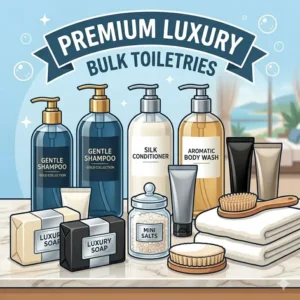
Throwing a handful of mini bottles into a wicker basket is a missed opportunity. To truly elevate the perceived value of your bulk toiletries, you need a systematic approach to presentation and maintenance.
Step 1: The Rule of Three
Never crowd the vanity. Display exactly three items per guest: one shampoo, one conditioner, and one soap. Keep the reserves locked in your owner’s closet. When guests see a massive pile of bottles, psychological principles suggest they will unconsciously use more, or worse, pack handfuls into their luggage. Scarcity implies quality.
Step 2: The Sanitary Seal Check
During your turnover process, mandate that your cleaning crew physically touches the cap of every bottle left behind. Guests will frequently use a product, clean the outside, and place it back to be helpful. If the foil seal is broken or the bottle feels lighter than a new one, it must be discarded or donated. Leaving a half-used bottle for a new guest is the fastest way to trigger a refund demand.
Step 3: Managing the “Bio-Film”
If you present your amenities on a tray, water will inevitably pool underneath them. Over a few weeks, this creates a slimy bio-film on the bottom of your bottles. Instruct your team to wipe the amenity tray with a heavy-duty sanitizer between every single stay. I highly recommend using a slotted bamboo tray rather than solid ceramic; it allows the water to drain, keeping the bottom of the packaging pristine and professional.
Case Study: From Chaos to Streamlined Restocking
To understand the financial impact of strategic purchasing, let’s look at a real-world scenario involving a client of mine, a boutique 15-unit motel operator in coastal Florida.
Initially, the operator was purchasing premium, brand-name retail travel sizes from a local big-box store. They were spending roughly $1.50 per guest on amenities. Furthermore, their cleaning staff spent 45 minutes every morning unboxing and sorting these retail packages, which were heavily encased in anti-theft plastics. The motel catered primarily to weekend beachgoers—a demographic that routinely takes two showers a day to wash off salt and sand.
We executed a total overhaul. We switched them to the Bergman Kelly Travel Toiletries mentioned earlier. By purchasing cases of 300, their cost-per-guest plummeted from $1.50 to roughly $0.22. Because the commercial packaging came loosely packed in cardboard rather than retail clamshells, the staff’s morning sorting time was reduced to five minutes.
The most fascinating part? Guest satisfaction scores regarding cleanliness actually increased. Because the new bottles were uniform in size and color, the bathrooms looked purposefully designed rather than haphazardly stocked with whatever was on sale at the pharmacy. The motel saved over $3,400 in their first year of implementing this streamlined approach, proving that strategic bulk purchasing is as much about operational efficiency as it is about unit price.
How to Choose bulk toiletries for Your Specific Needs
Selecting the right product requires moving beyond the price tag and analyzing the specific engineering of the liquids and packaging.
1. Assess Your Plumbing Infrastructure
This is a critical, often-ignored metric. If you own an older property with sensitive plumbing or septic tanks, you must avoid heavy, clay-based bar soaps and ultra-thick conditioners. These materials coagulate in cold pipes. Opt for liquid body washes and highly soluble, clear shampoos to save yourself thousands in emergency plumber fees.
2. Evaluate the Packaging Ergonomics
Consider your demographic. If you host an older clientele or operate a facility for individuals with disabilities, rigid PET bottles are a terrible choice. They require significant grip strength to squeeze. Instead, look for soft PE (polyethylene) tubes or simple tear-pouches that require minimal hand strength to operate.
3. Fragrance Strategies
Never buy heavily perfumed products for general hospitality. The goal is “clean,” not “cologne.” Scent is highly subjective, and strong floral or musky odors can trigger migraines in sensitive guests. Stick to universally accepted, mild profiles: green tea, light citrus, oatmeal, or unscented variants.
4. The Transparency Factor
I always recommend clear or semi-translucent bottles over opaque ones. From an operational standpoint, translucent bottles allow your cleaning staff to instantly see if a bottle has been partially used simply by looking at the fluid line against the light. Opaque bottles require physical inspection, wasting valuable turnover time.
Mini Bottles vs. Wall Dispensers: Long-Term Cost & Maintenance
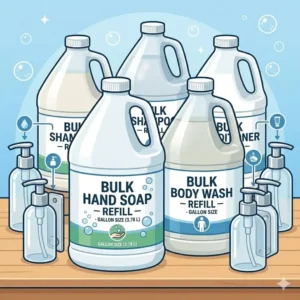
The great debate in modern hospitality is whether to continue using single-use bulk toiletries or switch to refillable wall-mounted dispensers. Let’s break down the hidden realities of both systems.
| System Type | Upfront Cost | Labor Cost | Theft Risk | Environmental Impact |
| Mini Bottles | Low | Low (Quick to place) | High (Guests take them) | High (Plastic waste) |
| Wall Dispensers | High (Hardware) | High (Cleaning/Refilling) | Low (Locked to wall) | Low (Bulk gallon refills) |
Looking at the comparison above, wall dispensers seem to win on long-term environmental impact, as noted by organizations tracking commercial plastic waste reduction. However, the hidden cost of dispensers lies in maintenance. Pump mechanisms frequently break, requiring complete unit replacement. Furthermore, if a guest suspects a previous user tampered with the bulk liquid, they will refuse to use it.
Mini bottles, while less eco-friendly, provide guaranteed, tamper-evident sanitation. The total cost of ownership for mini bottles is highly predictable: you know exactly how much a case costs, and there is zero hardware to maintain. For operations under 20 units, the predictability of mini bottles usually outweighs the complex maintenance cycle of wall dispensers.
Common Mistakes When Buying Hospitality Amenities
Even seasoned veterans make critical errors when ordering supplies. Here is my expert commentary on the most common pitfalls to avoid.
The “Mega-Size” Trap:
Many buyers think purchasing 2 oz or 3 oz bottles offers better value than 1 oz bottles. This is a mathematical fallacy. A guest staying two nights will open a 3 oz bottle, use 0.5 oz, and leave it. You must throw the rest away. You are literally pouring profit down the drain. Stick to 1 oz or 0.85 oz sizes; they contain exactly enough product for a standard 2-3 night stay without massive waste.
Ignoring the Cap Style:
Screw caps are cheap, but they require two hands to open, which is frustrating in a slippery shower. Flip-top caps are vastly superior for the user experience, but they are prone to snapping off during transit if the cardboard box is dropped. If you buy flip-tops, ensure the manufacturer guarantees replacement for transit damage.
Mixing and Matching Brands:
Do not buy your shampoo from one supplier and your soap from another just to save a few pennies. Aesthetically, a bathroom vanity with mismatched branding looks cheap and unprofessional. Buy comprehensive sets from a single product line to maintain a cohesive brand standard.
Shelf Life and Storage: What to Expect
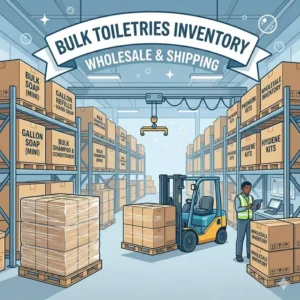
When you buy bulk toiletries, you are effectively operating a small warehouse. Proper storage dictates the lifespan of your investment.
Temperature Volatility:
Most commercial shampoos and lotions are emulsions. If stored in an uninsulated garage where temperatures exceed 90°F (32°C) or drop below freezing, these emulsions will “break.” The oil and water will separate, leaving a disgusting, watery mess that cannot be fixed by shaking. Always store your bulk liquids in a climate-controlled environment.
The Cardboard Threat:
Never store boxes of amenities directly on a concrete floor. Concrete leaches moisture, which will wick up into the cardboard boxes. This moisture creates the perfect environment for mold to grow on the paper wraps of your bar soaps. Always elevate your cases on metal shelving or wooden pallets.
Year One Rotation:
Practice FIFO (First In, First Out). The active ingredients in most commercial lotions begin to degrade after 18 to 24 months, losing their scent and taking on a subtle, plastic-like odor. Mark the arrival date on the outside of every case with a thick marker to ensure your staff isn’t accidentally hoarding older stock in the back of the closet.
✨ Don’t Miss These Exclusive Deals!
🔍 Ready to streamline your property management? Click on any highlighted item to check current pricing and availability. Optimize your workflow and boost your bottom line today!
Conclusion: The Bottom Line on Amenity Sourcing
Navigating the world of commercial amenities doesn’t have to be a guessing game of trial and error. Whether you are stocking a luxury vacation rental, managing a busy motel, or gathering supplies for a community outreach program, the principles remain the same. Success comes from prioritizing tamper-proof packaging, selecting universally appealing formulations, and ruthlessly calculating your true cost-per-use rather than just looking at the sticker price of a massive box.
Remember, the bulk toiletries you choose are often the first physical interaction a guest has with your hospitality. A leaking bottle or a harsh, institutional soap can sour an otherwise perfect stay. By applying the frameworks and field-tested recommendations outlined in this guide, you can confidently build a supply chain that protects your budget while consistently delivering an exceptional, five-star experience. Don’t let poor planning ruin your property’s reputation—invest smartly, store properly, and always keep the end-user’s experience in sharp focus.
Frequently Asked Questions
❓ What is the standard size for hotel bulk toiletries?
✅ The industry standard for hotel amenities is between 0.85 oz and 1 oz (25-30ml). This volume is precisely calculated to provide enough product for a two-night stay for one adult while minimizing liquid waste during the turnover process…
❓ Can you recycle the small plastic amenity bottles?
✅ Yes, but it depends on the plastic type. Most quality mini bottles are made of PET (Type 1) or PE (Type 2) plastic, which are highly recyclable. However, guests must rinse them out completely, which rarely happens in practice…
❓ How long do bulk bar soaps last in storage?
✅ Hard-milled bar soaps can last up to 3 to 5 years if kept in a cool, dry environment. However, if exposed to high humidity, the paper wrapping can degrade and the soap may develop an unpleasant, rancid odor over time…
❓ Are wall dispensers cheaper than mini bottles?
✅ Over a 3-year period, wall dispensers are generally 30% to 40% cheaper regarding liquid costs. However, you must factor in the initial hardware investment, the increased labor time to sanitize and refill them, and replacement costs for broken pumps…
❓ Can I donate partially used hotel toiletries?
✅ No. Health and safety regulations prevent most legitimate charities and homeless shelters from accepting open or partially used liquid hygiene products due to contamination risks. Only fully sealed, tamper-evident items should be donated…
Recommended for You
- 5 Best Bulk Travel Size Toiletries for 2026: Expert Buying Guide
- Bulk Hygiene Products: 5 Proven Options For 2026 Commercial Savings
- 5 Best bulk hygiene items to Stockpile in 2026 (Expert Review)
Disclaimer: This article contains affiliate links. As an Amazon Associate, I earn from qualifying purchases. If you purchase products through these links, we may earn a small commission at no additional cost to you.
✨ Found this helpful? Share it with your friends! 💬🤗
[addtoany]
