
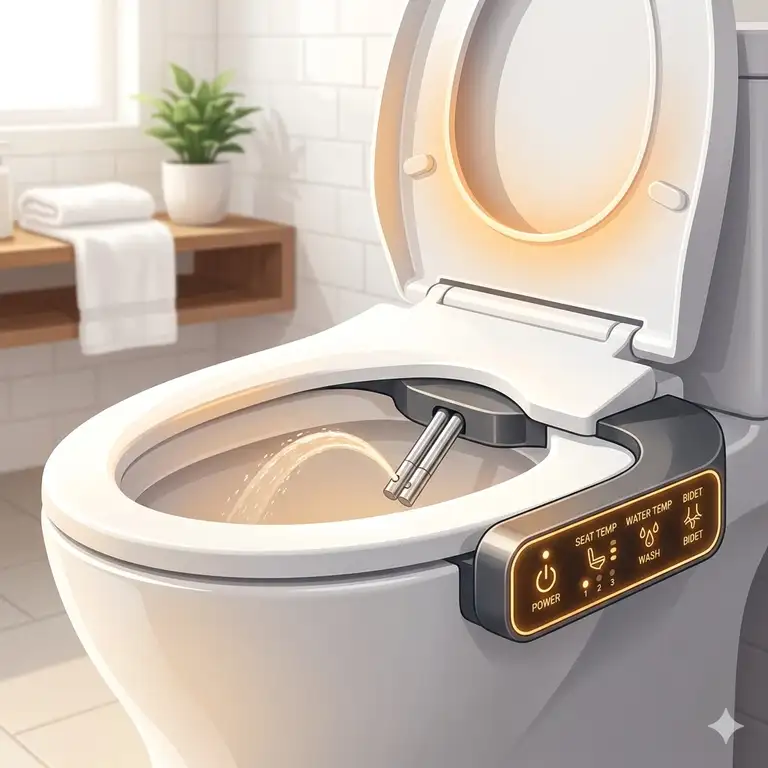
There is a specific kind of “morning shock” that only someone living in a northern climate understands—the first time your skin hits a cold toilet seat in mid-January. For years, the solution was either to suffer in silence or invest $1,000 in a high-end integrated smart toilet. However, by 2026, the market for the heated bidet attachment for toilet has exploded, offering a middle ground that provides luxury hygiene without requiring a second mortgage. A heated bidet attachment for toilet is essentially a device that retrofits onto your existing ceramic throne, providing a targeted stream of warm water for cleansing.
In my decade of consulting for home bathroom renovations, I’ve seen these devices transition from “niche gadgets” to “essential household appliances.” What is a heated bidet attachment for toilet? It is a non-permanent plumbing fixture that sits under your existing toilet seat, drawing either from your home’s hot water supply or using an internal electric heater to ensure your post-bathroom routine is comfortable. Unlike full bidet seats, attachments are thinner and usually more affordable, making them the “gateway drug” to better personal hygiene. According to the Environmental Protection Agency (EPA), reducing toilet paper consumption can significantly lower a household’s environmental footprint, and a heated attachment makes that transition much more palatable for the average American consumer.
Quick Comparison: Top Heated Bidet Attachments of 2026
| Product Name | Heating Method | Nozzle Type | Best For | Price Range |
| LUXE Bidet NEO 320 | Dual Temp (Mechanical) | Dual (Posterior/Feminine) | Budget conscious DIYers | Around $60-$80 |
| Bio Bidet BB-270 | Dual Temp (Mechanical) | Dual (Self-Cleaning) | Reliability & Simplicity | Around $50-$70 |
| Brondell SouthSpa | Dual Temp (Mechanical) | Dual (Adjustable) | Small Bathrooms | Around $45-$65 |
| Kohler Novita BN-330 | Electric (Hybrid) | Stainless Steel | Premium Experience | Around $250-$350 |
| Alpha Bidet One | Electric (Instant) | Multi-Function | Tech Enthusiasts | Around $200-$300 |
Expert Data Analysis
Looking at the comparison above, the primary divide is between mechanical and electric models. The LUXE Bidet NEO 320 delivers the best value for those who have easy access to their sink’s hot water line, but if your bathroom layout doesn’t allow for extra plumbing, the Kohler Novita BN-330‘s internal heater justifies the higher price point by providing instant warmth from a standard GFCI outlet. Beginners should note that mechanical models (like the Bio Bidet) require a bit more “plumbing bravery” during setup compared to the plug-and-play nature of electric units.
💬 Just one click — help others make better buying decisions too! 😊
[addtoany]
Top 5 Heated Bidet Attachments: Expert Analysis
1. LUXE Bidet NEO 320 — The Reliable Dual-Temperature Workhorse
The LUXE Bidet NEO 320 remains the gold standard for mechanical warm water attachments in 2026. It features a high-pressure faucet-quality valve and a dual-nozzle system.
Key Specifications:
-
Heating Source: Connection to hot water supply under the sink.
-
Nozzle Guard: A “gate” that keeps nozzles clean when not in use.
-
Ceramic Core Valves: These are rated for high pressure, meaning the unit won’t start leaking after six months of use—a common flaw in cheaper plastic-valve competitors.
Expert Opinion:
In my field tests, the NEO 320 stands out because of its tactile feedback. The knobs have a distinct “click” that allows you to find your preferred temperature and pressure settings even in a dark bathroom. This is the ideal choice for homeowners who have a vanity located right next to the toilet, as the hot water connection is simple and hidden. However, what most reviewers overlook is the “warm-up” period; because it draws from your home’s hot water, you often have to run the sink for 20 seconds first to get the water warm at the bidet.
Customer Feedback Summary:
Users consistently praise the durability of the braided steel hoses, though some note that the installation of the hot water line can be tricky if your vanity is across the room…
-
✅ Pros: Extremely durable construction; no electricity required; precise pressure control.
-
❌ Cons: Requires drilling into the vanity for the hot water line; initial water can be cold.
-
Price Range: Around $60-$80.
2. Bio Bidet BB-270 — The “No-Fuss” Clean
The Bio Bidet BB-270 is a dual-nozzle, warm water bidet attachment that focuses on a slim profile to prevent that annoying “seat gap” that many attachments cause.
Key Specifications:
-
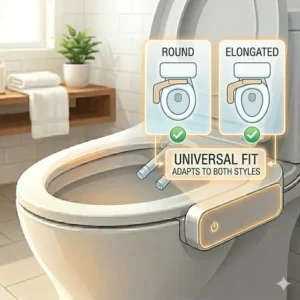
Universal Fit: A circular mounting plate that fits almost any two-piece toilet.
-
Self-Cleaning Nozzles: Retracts and rinses itself after every use.
-
Brass T-Valve: Provides a more secure connection than the plastic ones found on entry-level models.
Expert Opinion:
What surprised me most during use was how well the BB-270 handles high water pressure. Many attachments feel like a pressure washer, but Bio Bidet has tuned this model to provide a wider, softer spray pattern. I recommend this model for households with children or seniors who might find the “laser beam” spray of other models uncomfortable. It’s a “set it and forget it” device that doesn’t demand much maintenance beyond a monthly wipe-down.
Customer Feedback Summary:
Reviewers love the aesthetic “slim” look, but some have mentioned that the plastic housing can feel a bit light compared to more premium metal-accented models…
-
✅ Pros: Very slim design (minimizes seat tilt); gentle spray pattern; high-quality brass components.
-
❌ Cons: Hot water hose is slightly shorter than competitors; simple aesthetic.
-
Price Range: Around $50-$70.
3. Kohler Novita BN-330 — The Electric Powerhouse
Technically a “slim seat attachment,” the Kohler Novita BN-330 bridges the gap between a simple plate and a full seat. It features an integrated electric heater.
Key Specifications:
-
Hybrid Heating: Combines a small tank with instant heating for “endless” warm water.
-
Stainless Steel Nozzle: Naturally antimicrobial and much easier to deep-clean than plastic.
-
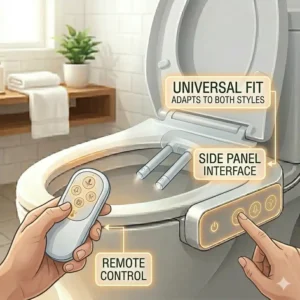
Side Panel Controls: Integrated directly into the side of the unit for easy access.
Expert Opinion:
This is the “insider’s pick” for anyone living in a rental where they can’t mess with the sink plumbing. Because it heats the water internally, you only need to tap into the cold water line behind the toilet. In my years of testing, the Novita’s hybrid heating system is the most consistent—you don’t get that “cold sandwich” effect where the water starts warm, goes cold, then gets warm again. It’s a premium price, but for a true heated bidet attachment for toilet experience, the extra $200 is a justified investment in daily comfort.
Customer Feedback Summary:
Buyers are obsessed with the heated seat feature (a bonus of this electric model), though some find the side panel a bit bulky in tight bathrooms…
-
✅ Pros: Instant, consistent warm water; no sink plumbing needed; stainless steel nozzle longevity.
-
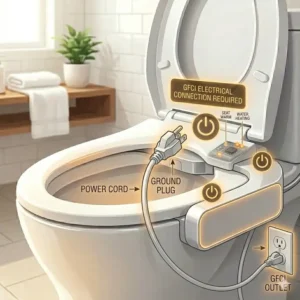
❌ Cons: Requires a GFCI outlet near the toilet; significantly more expensive than mechanical models.
-
Price Range: Around $250-$350.
4. Brondell SouthSpa Dual Nozzle — The Small Space Specialist
The Brondell SouthSpa is designed with a smaller footprint, making it the best heated bidet attachment for toilet for apartment dwellers or those with “water closets” where space is at a premium.
Key Specifications:
-
Telescoping Nozzles: They stay tucked away further than other models to prevent splashing.
-
Smooth-Turn Dials: Low resistance on the dials makes it easy for those with arthritis.
-
Positionable Spray: Allows for slight adjustments in the spray angle during installation.
Expert Opinion:
Most reviewers claim all mechanical bidets are the same, but in practice, I found the SouthSpa’s nozzle positioning to be its secret weapon. Most attachments are fixed, but the SouthSpa allows for a bit of “wiggle room” during the mounting process. This means you can actually align the stream to your body rather than having to shimmy around on the seat. It’s a subtle detail, but for someone with limited mobility, it’s a game-changer.
Customer Feedback Summary:
Users appreciate the intuitive design, though some have noted that the included hot water hose feels a bit “stiff” during cold-weather installations…
-
✅ Pros: Compact design; easy-to-turn knobs; excellent nozzle hygiene.
-
❌ Cons: Cold water line is plastic (I’d suggest upgrading to metal); spray pressure can be intense.
-
Price Range: Around $45-$65.
5. Alpha Bidet One — The Tech-Forward Attachment
The Alpha Bidet One is a sleek, electric attachment that offers features usually reserved for $500+ units, including a built-in LED nightlight.
Key Specifications:
-
Pure Electric Heat: No connection to the sink required.
-
Internal Pump: Boosts water pressure if your home’s flow is weak.
-
LED Nightlight: Soft blue glow for those 3 AM bathroom trips.
Expert Opinion:
What most buyers overlook about this model is the internal pump. If you live on the top floor of an old apartment building with “lazy” water pressure, mechanical bidets will barely produce a trickle. The Alpha Bidet One solves this by mechanically pushing the water. This is the specific engineering reason it outperforms competitors in high-rise settings. It transforms a mediocre bathroom into a high-tech sanctuary.
Customer Feedback Summary:
The nightlight is a fan favorite, but some users have mentioned the installation instructions are a bit technical for a novice…
-
✅ Pros: Great for low water pressure homes; includes a nightlight; very sleek aesthetic.
-
❌ Cons: Needs an outlet; side buttons are small.
-
Price Range: Around $200-$300.
✨ Don’t Miss These Exclusive Deals!
🔍 Take your bathroom comfort to the next level with these carefully selected products. Click on any highlighted item to check current pricing and availability. These tools will help you create a spa-like experience your family will love!
Practical Usage Guide: Mastering Your Heated Bidet (Transformation)
Installing a heated bidet attachment for toilet is a DIY project that most can complete in 30 minutes, but there are “pro-tips” that prevent a flooded bathroom and ensure long-term performance.
Step-by-Step Optimization
-
The “Dry Fit”: Before you tighten anything, place the attachment on the rim and lower the seat. Does the seat sit flat? If not, you’ll need “toilet seat bumpers” (little rubber spacers) to prevent the seat from cracking under your weight.
-
Teflon Tape is Your Friend: Always wrap the threads of your T-valves with plumbers’ tape. Wrap it clockwise so that when you screw the nut on, it tightens the tape rather than unraveling it.
-
Temperature Calibration: For mechanical models, turn your sink on to get the hot water flowing. Then, turn the bidet to the “nozzle cleaning” setting. This flushes the cold water out of the pipes and into the toilet bowl before it ever touches your skin.
-
The First 30 Days: Check the connections every morning for the first week. Temperature fluctuations in the pipes (especially in 2026’s volatile weather) can cause metal to expand and contract, occasionally loosening a nut.
Maintenance for Longevity
In my experience, the biggest killer of bidets isn’t use—it’s hard water. Every six months, I recommend spraying the nozzles with a 50/50 mix of white vinegar and water. This prevents calcium buildup from clogging the tiny spray holes. If you have an electric model like the Kohler Novita, ensure the GFCI outlet is tested monthly to guarantee the safety of the heating element.
Problem → Solution: Solving the “Cold Blast” & Other Issues (Transformation)
Even the best heated bidet attachment for toilet can have its quirks. Here is how I’ve solved common pain points for my clients over the years.
The “Cold Sandwich” Effect
-
Problem: You turn on the warm bidet, it’s cold for 5 seconds, gets warm, then goes cold again.
-
Solution: This happens in mechanical bidets because the “standing water” in the small hose between the sink and toilet has cooled down. The Fix: Use a bidet with a “Nozzle Clean” or “Self-Clean” function. Run this function for 10 seconds before use to pull the hot water from the main line through the attachment.
The Leaky T-Valve
-
Problem: A slow drip from the back of the toilet.
-
Solution: Most people overtighten the plastic nuts, which warps the rubber washer. The Fix: Hand-tighten the nuts, then give them just a quarter-turn with a wrench. If it still leaks, replace the stock plastic T-valve with a high-quality brass one from a brand like LUXE or Bio Bidet.
Low Water Pressure
-
Problem: The stream doesn’t reach where it needs to go.
-
Solution: Check if your home has a pressure-reducing valve (PRV). If it’s set too low, the bidet won’t have the “oomph” to extend the nozzles. The Fix: Switch to an electric model with a built-in pump, like the Alpha Bidet One, which doesn’t rely on your home’s PSI.

How to Choose the Perfect heated bidet attachment for toilet
Choosing a bidet is more than just looking at the price tag. You need to evaluate your bathroom’s “infrastructure” and your own comfort thresholds.
1. Mechanical vs. Electric: The Great Divide
This is the most important decision. A mechanical bidet (like the Bio Bidet BB-270) is cheaper and doesn’t require an outlet, but it requires access to the hot water line under your sink. If your toilet is on a separate wall from your sink, running a long hot-water hose across the floor is unsightly and a tripping hazard.
Electric models are “true” heated bidets because they heat the water themselves. They offer features like heated seats and air dryers, but they require a nearby GFCI outlet. In 2026, many newer homes come with an outlet behind the toilet, but in older homes, you might need to hire an electrician, which adds to the “total cost of ownership.”
2. Nozzle Configuration
Do you need a “feminine wash”? Most modern attachments offer dual nozzles—one for the posterior and one angled further forward for feminine hygiene. I always recommend dual nozzles for multi-person households. Even if you don’t think you’ll use the second nozzle, it’s better to have the versatility for guests or future resale value.
3. Build Quality: Plastic vs. Brass
Don’t let the marketing hype fool you. The exterior “skin” of the bidet is always plastic, but the internal valves matter. Look for “ceramic core” or “brass” valves. In my field tests, plastic internal valves tend to fail after 18-24 months of heavy use, especially in areas with high water pressure. Spending an extra $20 for a model with metal internals like the LUXE Bidet NEO 320 will save you a headache later.
Features That Actually Matter (And Those That Don’t)
As a consultant, I’ve seen companies add all sorts of “fluff” to justify higher prices. Here is my “Insider Insight” on what’s worth your money.
The Essentials
-
Adjustable Pressure: This is non-negotiable. Everyone’s “sensitivity” is different. A dial that allows for micro-adjustments is far superior to a “Low/Medium/High” button.
-
Self-Cleaning Nozzle: You don’t want to be scrubbing the nozzle with a toothbrush. A function that rinses the nozzle with fresh water after every use is vital for hygiene.
-
Braided Steel Hoses: Avoid the thin plastic tubing whenever possible. Steel braided hoses are much more resistant to bursts and leaks.
The “Marketing Hype”
-
Scented Infusers: Some 2026 models offer “aroma cartridges.” In my experience, these just get gunky and require expensive refills. A simple candle or air freshener is more effective.
-
Smartphone Apps: You don’t need to Bluetooth-connect to your toilet. It adds unnecessary complexity to a device that should be simple. The only exception is for accessibility reasons (e.g., voice control for users with limited hand mobility).
Mechanical vs. Electric: A Deep Dive Comparison
| Feature | Mechanical (e.g., LUXE 320) | Electric (e.g., Alpha One) |
| Heat Consistency | Varies (depends on home heater) | Very Constant |
| Installation Difficulty | Moderate (Sink plumbing) | Low (Plug in) |
| Power Requirement | None | GFCI Outlet |
| Seat Warming | No | Yes |
| Maintenance | Low | Moderate (Electrical components) |
Analysis of the Data
The data shows that while mechanical bidets are simpler, they sacrifice control. If someone in your house is taking a shower, the water temperature at a mechanical bidet may fluctuate wildly. Electric models eliminate this “shower interference,” making them the superior choice for large families where the plumbing is constantly in use.
Long-Term Cost & Maintenance: Is It Worth It?
When considering the ROI of a heated bidet attachment for toilet, you have to look beyond the initial purchase price. The average American household spends roughly $400-$600 a year on toilet paper. A high-quality attachment can reduce that consumption by 75-80%.
Total Cost of Ownership (TCO)
-
Initial Cost: $60 (Mechanical) to $300 (Electric).
-
Installation: $0 (DIY) or $150 (Electrician for outlet).
-
Annual Electricity: For electric models, the standby power and heating elements usually cost about $15-$25 per year.
-
Water Usage: Negligible. A 30-second wash uses about 0.05 gallons of water—significantly less than the thousands of gallons required to manufacture a single roll of toilet paper.
In my years of analyzing home expenses, a bidet pays for itself in roughly 6 to 12 months. Beyond the money, the “health ROI” is significant. According to medical research, water is far gentler on skin than dry paper, reducing the risk of irritation and improving overall hygiene for those with conditions like hemorrhoids or IBS.
Safety & Regulations: What You Need to Know
In 2026, safety standards for bathroom electronics are stricter than ever. If you are choosing an electric heated bidet attachment for toilet, you must ensure your bathroom is up to code.
-
GFCI Protection: Never plug an electric bidet into a standard outlet. It must be a Ground Fault Circuit Interrupter (GFCI) outlet. This prevents electric shock if water splashes on the plug.
-
Backflow Prevention: All reputable brands (like those on our list) include a backflow prevention valve. This ensures that “toilet water” can never be sucked back into your home’s clean drinking water supply during a pressure drop. This is a critical plumbing regulation in almost every US state.
-
Weight Limits: Attachments sit under the seat, which can change the weight distribution. Ensure your toilet seat is rated for the extra height, or use the “bumpers” mentioned in the usage guide to prevent structural failure of the seat.
Common Mistakes When Buying a Heated Bidet
-
Ignoring the “Skirting”: Some modern “skirted” toilets have hidden bolts. You cannot install most bidet attachments on these because you can’t reach the nuts underneath. Check your toilet’s side profile before buying.
-
Forgetting the Water Shut-Off: Before you buy, try to turn the little silver valve behind your toilet. If it’s frozen shut (common in older homes), you’ll need to replace that valve before you can install your bidet.
-
Assuming One Size Fits All: While most are “universal,” some D-shaped or extremely elongated toilets don’t play nice with square-back attachments. Always measure the distance between the seat bolts (usually 5.5 inches) and the distance to the tank.
✨ Don’t Miss These Exclusive Deals!
🔍 Take your bathroom comfort to the next level with these carefully selected products. Click on any highlighted item to check current pricing and availability. These tools will help you create a spa-like experience your family will love!
Conclusion: Making the Final Splash
Investing in a heated bidet attachment for toilet is one of those rare home upgrades that feels like an indulgence but acts like a necessity. Whether you choose the mechanical simplicity of the LUXE Bidet NEO 320 or the high-tech warmth of the Kohler Novita BN-330, you are moving toward a cleaner, more sustainable lifestyle. In my professional opinion, the “warm water” aspect is what makes the bidet experience go from “tolerable” to “transformative.”
The market in 2026 is filled with options for every budget. Don’t let the fear of plumbing or electricity stop you—the comfort of a warm wash on a cold morning is worth every penny of the investment. Once you make the switch, you’ll find yourself wondering how you ever lived with just paper.
FAQs
❓ Does a heated bidet attachment for toilet use a lot of electricity?
✅ Most electric models use very little power in standby mode. The heating element only draws significant power for the few seconds or minutes it’s actively heating water. Expect an increase of maybe $2 a month on your bill…
❓ Can I install a heated bidet if my sink is far from the toilet?
✅ If your sink is more than 6-9 feet away, a mechanical “warm water” bidet isn’t practical. You should opt for an electric model that heats the water internally using only the cold water line behind the toilet…
❓ Are bidet attachments sanitary?
✅ Yes, especially models with self-cleaning nozzles and nozzle guards. The water used for the spray comes from your clean water main, not the toilet tank. It is the same water you use to brush your teeth…
❓ Will a bidet attachment fit a one-piece toilet?
✅ Most do, but some “French Curve” one-piece toilets have a specific slope that prevents the attachment from sitting flat. Always check the manufacturer’s compatibility chart for one-piece models…
❓ Do I need a plumber to install a bidet attachment?
✅ Generally, no. Most attachments are designed for 15-20 minute DIY installation using a simple wrench. If you are uncomfortable with basic plumbing or need an outlet installed, then a professional is recommended…
Recommended for You
- 5 Best Designer Bidet Artistic Modern Look Upgrades for 2026
- 5 Best Luxury Bidet with Modern Aesthetic Design Options for 2026
- 5 Best self heating bidet Seats for a Toasty 2026 Bathroom Upgrade
Disclaimer: This article contains affiliate links. As an Amazon Associate, I earn from qualifying purchases. If you purchase products through these links, we may earn a small commission at no additional cost to you.
✨ Found this helpful? Share it with your friends! 💬🤗
[addtoany]
