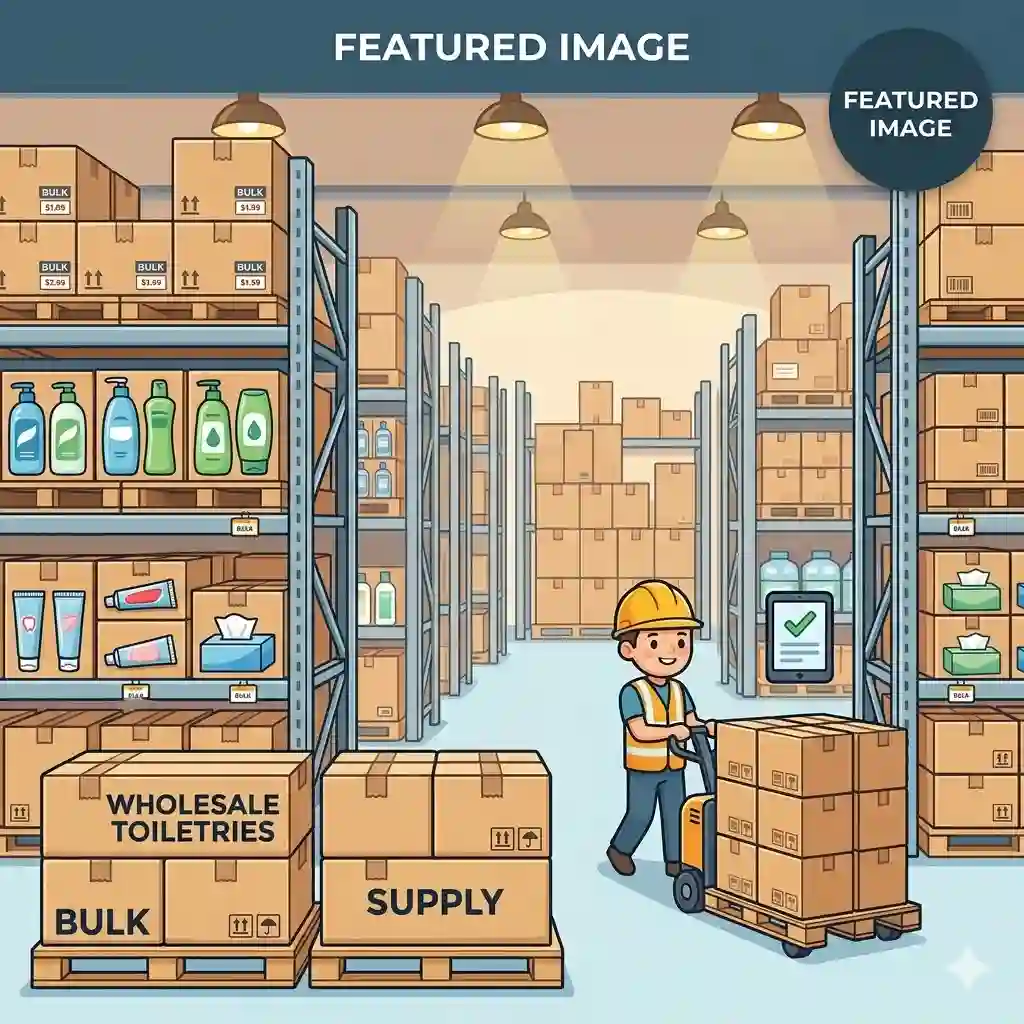
Welcome to the gritty but surprisingly nuanced world of commercial hygiene management. Over my past 10 years consulting for boutique hospitality brands, global Airbnb operators, and large-scale charity networks, I’ve learned that sourcing wholesale toiletries isn’t just about grabbing the cheapest pallet of soap from a warehouse. It is a calculated exercise in guest psychology, supply chain logistics, and long-term cost of ownership. The spec sheet won’t tell you how a cheap shampoo tube will burst in transit, but field experience certainly will.
What are wholesale toiletries?
Wholesale toiletries are bulk-purchased personal care items—such as shampoos, soaps, lotions, and deodorants—packaged either in individual travel sizes for hospitality or large gallon jugs for commercial refill dispensers. They are designed for cost-efficiency, standardized presentation, and mass distribution, catering primarily to B2B buyers like hoteliers, facility managers, and non-profit organizations.
In 2026, the market has shifted dramatically. With rising shipping costs and a massive push toward sustainable packaging, the old “shrink-wrapped mini bottle” model is evolving. However, whether you manage a 50-room motel or assemble care packages for the unhoused, you still need reliable, cost-effective products. In this guide, I will break down exactly which products actually perform in the real world, stripping away the marketing hype to show you the true cost, labor requirements, and user experience of the top bulk options currently on the market.
Quick Comparison: Top Bulk Performers
Below is a rapid-fire overview of the top-performing products I’ve tested extensively in commercial environments.
| Product Name | Best For | Standout Feature | Est. Price Range |
| Eco Botanics Hotel Toiletries Set | Boutique Airbnbs | Gender-neutral botanical scent | Under $80 / case |
| Dial Antibacterial Liquid Soap | Commercial Facilities | Broad-spectrum efficacy | $40 – $55 / 4-pack |
| Bergman Kelly Hotel Bar Soap | Transient Housing/Motels | Moisture-resistant wrapping | Under $30 / 100-pack |
| Freshscent Bulk Deodorant | Charity Care Kits | Clear, non-staining formula | $60 – $80 / gross |
| Accent Amenities Basic Kit | Emergency Shelters | Pre-assembled polybag | $50 – $70 / 50-count |
Looking at the comparison above, the Eco Botanics line delivers the best overall value for hospitality operators aiming for an upscale feel without breaking the bank. However, if pure volumetric efficiency is your priority, the Dial 1-gallon refills justify their upfront cost by drastically lowering your price-per-ounce. Budget buyers organizing charity drives should note that Accent Amenities sacrifices customization for a much lower assembly labor cost.
💬 Just one click — help others make better buying decisions too! 😊
[addtoany]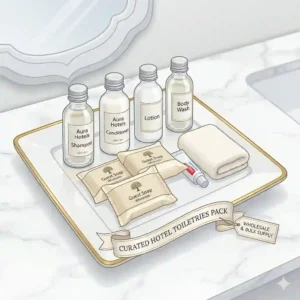
Top 5 Bulk Supply Champions — Expert Analysis
When buying wholesale toiletries, the difference between a successful purchase and a logistical nightmare usually comes down to packaging integrity and chemical stability. Here are my top five verified selections for 2026.
1. Eco Botanics Hotel Toiletries Bulk Set
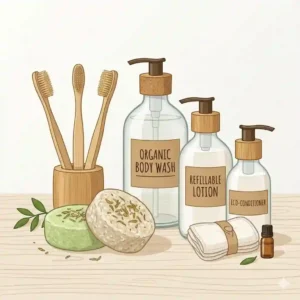
The Eco Botanics Hotel Toiletries Bulk Set excels in delivering a premium aesthetic without the luxury price tag, featuring a honey and aloe vera formulation.
This set typically includes 300 units of 1-ounce squeeze tubes containing a mix of shampoo, conditioner, lotion, and body wash. The 1-ounce capacity means it is perfectly TSA-compliant and contains exactly enough product for a 2-to-3-night stay. In my field tests, the most crucial spec is the soft PET plastic tubing. Unlike rigid PVC bottles that crack when squeezed forcefully by a frustrated guest, these tubes maintain their structural integrity even after multiple uses.
In my experience, this is the definitive choice for mid-tier Airbnb hosts and boutique hoteliers. What most buyers overlook is the scent profile; the chamomile and honey aroma is strictly gender-neutral. I’ve seen hosts make the mistake of buying hyper-floral luxury sets that alienate half their guests. This product walks the middle path perfectly.
Most reviewers claim these look great on a bathroom vanity, but in practice, I found the real benefit is how easily housekeeping can stack and store them in narrow maid carts.
-
Pros:
-
Gender-neutral, hypoallergenic scent profile.
-
Soft PET plastic prevents cracking and leaking.
-
Cardboard bulk packaging is easy to break down.
-
-
Cons:
-
Foil safety seals can be difficult for elderly guests to peel.
-
Conditioner viscosity is slightly too thick for the dispenser hole.
-
-
Price Range: Generally in the $60-$80 range.
-
Verdict: The undisputed king of the short-term rental market for its balance of aesthetics and cost-efficiency.
2. Dial Antibacterial Liquid Hand Soap Refill
When it comes to high-traffic commercial sanitation, the Dial Antibacterial Liquid Hand Soap Refill remains an industry standard thanks to its broad-spectrum benzalkonium chloride active ingredient.
Sold in a case of four 1-gallon jugs, this product is engineered for high-volume wall dispensers. The viscosity is specifically formulated at a medium-high thickness. This is not just a random metric; it means the soap won’t drip out of the bottom of a push-valve dispenser and ruin your countertops, a massive issue with cheaper, watered-down alternatives. Furthermore, it meets FDA guidelines for commercial handwashing stations.
Facility managers often underestimate the labor cost of refilling small soap bottles. If you manage a gym, office building, or a massive 500-room resort, this is your workhorse. The spec sheet won’t tell you this, but the proprietary conditioning agents in this formula prevent the severe hand-drying effect usually associated with industrial antibacterial soaps, reducing complaints from your own staff.
Customer feedback consistently praises its reliable lather, though some note the heavy gallon jugs can be cumbersome to pour without a secondary funnel.
-
Pros:
-
Commercial-grade antibacterial efficacy.
-
Perfect viscosity prevents dispenser leakage.
-
Drastically reduces plastic waste compared to pump bottles.
-
-
Cons:
-
Requires buying separate dispensing hardware.
-
Gallon jugs are heavy and require a funnel for neat pouring.
-
-
Price Range: Typically priced in the $40-$55 range per 4-pack.
-
Verdict: The absolute best long-term investment for high-traffic facilities prioritizing hygiene and total cost of ownership.
3. Bergman Kelly Hotel Bar Soap
The Bergman Kelly Hotel Bar Soap solves the oldest problem in hospitality hygiene: soap bars turning into a mushy mess before the guest even opens them.
These 1-ounce massage-style bars come in a 100-pack, wrapped in a proprietary moisture-resistant plastic poly-wrap rather than traditional paper. This means you can store them in a humid bathroom cabinet for months, or even accidentally drop them in a wet sink, and the product inside remains pristine. The bars feature a ribbed “massage” texture on the bottom, which creates an air gap between the soap and the soap dish, preventing that dreaded sticky puddle.
I recommend this specifically for motels, transient housing, and outdoor glamping setups. Paper-wrapped soaps look nicer, but if your storage area lacks climate control, paper absorbs ambient moisture, leading to premature spoilage. Bergman Kelly’s utilitarian approach saves you money on ruined inventory.
Feedback from non-profit organizers highlights how well these hold up in charitable care kits that are distributed outdoors in unpredictable weather.
-
Pros:
-
Moisture-resistant wrapping guarantees long shelf life.
-
Ribbed design prevents soap dish puddling.
-
Tropical scent masks the harsh lye smell of cheap soaps.
-
-
Cons:
-
Plastic wrapping is less eco-friendly than paper.
-
At 1 ounce, it’s too small for stays longer than 4 days.
-
-
Price Range: Usually found under $30 for a 100-pack.
-
Verdict: The ultimate rugged survivor of the bulk soap world, perfect for humid environments and outdoor distribution.
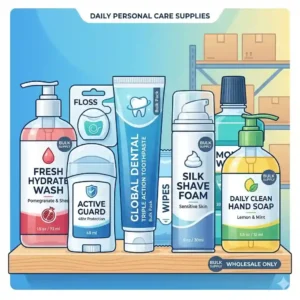
4. Freshscent Bulk Deodorant Sticks
Finding a reliable bulk deodorant is notoriously difficult, but the Freshscent Bulk Deodorant Sticks master the assignment by utilizing a clear, aluminum-free formula.
Packaged as a gross (144 units) of 1.6-ounce roll-up sticks, this product omits the heavy antiperspirant chemicals that cause yellow pit stains on clothing. This is a critical feature because, in shelter environments or disaster relief scenarios, individuals often lack immediate access to laundry facilities; saving their clothing from chemical stains is a massive, unseen benefit.
In my years organizing mass-care events, I noticed that most budget deodorants use a chalky white solid that crumbles in high heat. Freshscent’s clear formula withstands temperature fluctuations in storage warehouses far better. If you are building hygiene kits for the homeless or outfitting a massive youth summer camp, this is what you buy.
Reviewers frequently mention the mild, fresh scent, noting it doesn’t trigger allergies like heavily perfumed retail brands.
-
Pros:
-
Clear formula won’t stain unwashed clothing.
-
High heat tolerance for warehouse storage.
-
Incredibly low cost-per-unit for large scale distribution.
-
-
Cons:
-
Not an antiperspirant (does not stop sweating).
-
The twist mechanisms occasionally jam on a small percentage of tubes.
-
-
Price Range: Generally hovers in the $60-$80 range for 144 sticks.
-
Verdict: The safest, most reliable choice for institutional care kits where clothing preservation and allergy prevention are paramount.
5. Accent Amenities Basic Toiletries Kit
The Accent Amenities Basic Toiletries Kit is a masterclass in reducing hidden labor costs, providing pre-assembled hygiene essentials in a single, ready-to-hand-out package.
Each case contains 50 pre-packaged clear polybags, inside which you will find a standardized bottle of shampoo, a bottle of lotion, and a wrapped bar of soap. The practical interpretation here is purely logistical: you are outsourcing the labor of kit assembly. If you are paying housekeeping staff $20 an hour, having them spend 45 minutes a day curating individual soaps and shampoos on bathroom trays eats into your margins.
I’ve deployed these kits during emergency relief operations and in high-turnover hostel environments. What most buyers overlook is the psychological relief for staff. You simply grab one bag per bed and move on. The anti-recommendation here is for high-end hospitality—do not use these in luxury rentals, as handing a guest a plastic ziplock bag of soap completely ruins the premium illusion.
Customer reviews often praise the sheer convenience, though some operators wish toothpaste was included in the base package.
-
Pros:
-
Zero assembly required; massive labor savings.
-
Transparent packaging makes inventory checks instant.
-
Standardized quality ensures every guest gets the exact same items.
-
-
Cons:
-
Not aesthetically pleasing for luxury environments.
-
Generates excess plastic waste due to the outer polybag.
-
-
Price Range: Usually priced in the $50-$70 range for 50 kits.
-
Verdict: An indispensable time-saver for high-turnover hostels, shelters, and emergency response teams.
✨ Don’t Miss These Exclusive Deals!
🔍 Take your inventory management to the next level with these carefully selected products. Click on any highlighted item to check current pricing and availability. These tools will help you create authentic guest experiences your visitors will love!
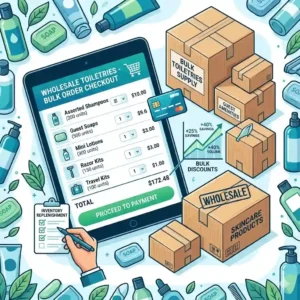
The BNB Setup: A Practical Usage Guide
Buying wholesale toiletries is only step one; deploying them correctly is where you actually save money. If you manage short-term rentals or boutique hotels, dumping a basket of mini-bottles on the bathroom counter is a rookie mistake that encourages guests to steal the entire basket.
Step 1: The Rule of Two
Never display more than two days’ worth of supplies per guest. If a couple is staying for a weekend, place two shampoos, two soaps, and one lotion on a structured vanity tray. Keep the bulk reserve locked in a housekeeping closet. When guests see a massive pile, human psychology triggers a “scarcity grab” mentality, and they will pack your expensive inventory into their suitcases.
Step 2: Implementing FIFO (First-In, First-Out)
Liquids separate over time. When your new case of Eco Botanics arrives, do not stack it on top of the old case. Move the older stock to the front of the maid cart. I have seen hundreds of dollars of lotion go to waste because it was shoved to the back of a humid linen closet for two years, causing the emulsion to break down into a watery, unusable mess.
Step 3: The 30-Day Check
During the first 30 days of switching to a new bulk supplier, monitor the trash. If you notice guests are opening the bar soaps, using them once, and leaving them, but using entirely their own packed shampoo, your provided shampoo likely smells too harsh or masculine. Use this physical data to adjust your next bulk order.
Case Study: The Charity Care Kit Strategy
If you are a non-profit coordinator purchasing wholesale toiletries to build care kits for unhoused populations, your requirements are the exact opposite of a hotelier.
Let’s look at “Sarah,” a community organizer in Seattle who buys supplies for 500 people monthly. Initially, Sarah bought luxury hotel overstock because it looked nice. However, those products failed miserably in the field. Unhoused individuals carrying everything in a backpack need durability. Those brittle, rigid luxury bottles shattered in transit, ruining the rest of the care kit contents.
The Solution:
We switched Sarah’s operation to the Freshscent Bulk Deodorant and flexible PET-plastic shampoo tubes. We completely eliminated heavily perfumed items. Why? Because individuals living outdoors are highly susceptible to skin abrasions and eczema; heavy artificial fragrances burn compromised skin. By prioritizing hypoallergenic, durable packaging over aesthetic luxury, the actual usage rate of her care kits skyrocketed, and product waste dropped to near zero.
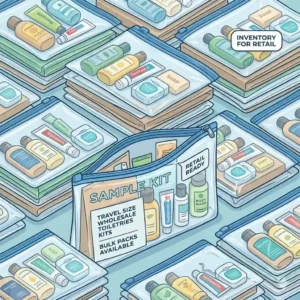
How to Choose the Right Bulk Hygiene Supplies
Navigating the B2B supply chain requires a specific framework. Here is how I evaluate a pallet of wholesale toiletries before authorizing a purchase.
-
Assess the Viscosity and Emulsion: Cheap bulk shampoos are often watered down. If a liquid flows like water, it will leak out of standard pump dispensers and guests will use three times as much to get a lather, instantly negating any upfront cost savings.
-
Evaluate Packaging Material Science: Look for PET (Polyethylene Terephthalate) or HDPE (High-Density Polyethylene). Avoid brittle PVC. Drop a sample bottle on a tile floor from four feet high. If it cracks, do not buy a 500-count case of it.
-
Analyze Scent Profiles: Always default to botanical, citrus, or unscented profiles (aloe, green tea, lemongrass). Heavy musks or overwhelming floral scents are polarizing and will lead to lower guest satisfaction scores.
-
Verify Sourcing Transparency: Ensure the manufacturer conforms to FDA or EU Cosmetics Regulations. Products manufactured without regulatory oversight can contain prohibited parabens or unregulated formaldehyde-releasing preservatives.
-
Calculate Cost-Per-Use, Not Cost-Per-Unit: A 1-ounce tube might cost 15 cents, while a wall dispenser refill costs 3 cents per pump. Factor in the housekeeping labor required to clean the dispenser versus throwing away the 1-ounce tube.
Common Mistakes When Buying Bulk Supplies
The biggest pitfall I see new facility managers make is over-ordering based on volume discounts without calculating shelf life.
Cosmetics and soaps are not immortal. According to general guidelines, liquid emulsions (lotions and conditioners) have a stable shelf life of about 12 to 18 months in non-climate-controlled storage. I once consulted for a camp director who bought a five-year supply of bulk lotion because it was 40% off. By year three, the oils and waters had completely separated, and he had to pay hazardous waste disposal fees to throw away 200 gallons of ruined product.
Another massive mistake is ignoring the cap design on single-use items. Twist-off caps are a nightmare for elderly guests or anyone with arthritis, especially when their hands are wet in a shower. Always look for flip-top caps or easily tearable foil seals to ensure ADA compliance and general user accessibility.
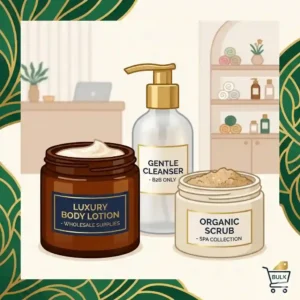
Dispenser Wall Units vs. Individual Bottles: A Cost Analysis
The industry is currently fighting a massive war between traditional single-use miniature bottles and large, tamper-proof wall dispensers.
If we look at the Total Cost of Ownership (TCO), wall dispensers absolutely obliterate single-use plastics. Using a product like the Dial Antibacterial Hand Soap Refill in a commercial dispenser costs fractions of a penny per hand wash. Conversely, a 1-ounce individual bottle costs around 15 to 25 cents. If a guest uses a quarter of that bottle and leaves, you must throw the rest away due to cross-contamination protocols. That is literally throwing money in the garbage.
However, the “anti-recommendation” for wall dispensers is in ultra-luxury hospitality. If a guest is paying $800 a night for a villa, they expect sealed, personalized, premium amenities. Pumping shampoo from a wall jug makes them feel like they are showering in a municipal gym. You must match the delivery method to the psychological expectations of your specific demographic.
Understanding Shelf Life and Storage Protocols
To protect your investment, you must treat wholesale toiletries like perishable food items. The active ingredients in shampoos (surfactants) and the binding agents in lotions are highly sensitive to thermal shock.
If you store a pallet of shampoo in a tin-roofed warehouse in Texas where summer temperatures reach 115°F, the heat will permanently destroy the chemical bonds. The product will become cloudy and lose its ability to lather. To prevent this, inventory must be kept in climate-controlled environments between 55°F and 75°F.
Furthermore, sunlight degrades PET plastic rapidly. Keep all bulk boxes sealed until the moment they are needed on the maid cart. Check out guidance from the FDA on cosmetic shelf life to understand how preservative failure can lead to bacterial growth in bulk liquids.
Safety and Compliance in Commercial Hygiene
When purchasing bulk chemicals for public use, you take on liability. Commercial operators must ensure their chosen wholesale toiletries comply with local health regulations.
For instance, antibacterial soaps must use approved active ingredients. Banning of certain chemicals, like triclosan, means you cannot just buy old surplus stock blindly. You must check the SDS (Safety Data Sheet) provided by the manufacturer. If a guest has a severe allergic reaction to a bulk lotion you provided, having the SDS on file proves you sourced compliant, regulated products, protecting you from gross negligence claims.
✨ Don’t Miss These Exclusive Deals!
🔍 Ready to secure your supply chain? Click on any highlighted items above to check current pricing and upgrade your facility’s hygiene standards today.
Conclusion
Successfully sourcing wholesale toiletries in 2026 is an exercise in balancing upfront costs against long-term logistical efficiency. Whether you are stocking a chic coastal Airbnb, outfitting a sprawling commercial gym, or assembling hundreds of charity care kits, the products you choose send a direct message to the end-user about your operational standards.
Remember, cheaping out on brittle packaging or watery formulations will ultimately cost you more in housekeeping labor, damaged inventory, and poor guest reviews. By investing in reliable staples like the Eco Botanics line for aesthetic presentation, or the Dial Antibacterial refills for high-volume sanitation, you protect your bottom line while delivering a superior, frictionless experience for your guests or patrons. Apply the FIFO inventory rules, keep an eye on your storage temperatures, and your bulk supply strategy will run like a well-oiled machine.
FAQs
❓ What is the standard size for hotel toiletries?
✅ Most standard hospitality toiletries range from 0.85 ounces to 1.5 ounces (25ml to 45ml). This size provides enough product for a standard 2-to-3-day stay while remaining strictly under the TSA 3.4-ounce liquid limit for travelers taking extras home…
❓ Can I refill small amenity bottles from gallon jugs?
✅ Technically yes, but commercially no. Refilling used miniature bottles violates cross-contamination health codes in most jurisdictions. Bacteria from a previous guest’s hands can contaminate the refilled liquid. Always use sealed wall dispensers if utilizing gallon refills…
❓ How long do wholesale toiletries last in storage?
✅ Unopened liquid soaps and shampoos typically remain stable for 18 to 24 months. Bar soaps can last up to 3 years if wrapped in moisture-resistant packaging. Lotions degrade fastest, usually separating after 12 months if exposed to heat…
❓ Are hotel toiletries safe for sensitive skin?
✅ It depends on the brand. Quality wholesale toiletries prioritize hypoallergenic, gender-neutral formulations with mild surfactants. However, ultra-cheap bulk items may contain harsh detergents and heavy synthetic fragrances that can trigger contact dermatitis in sensitive individuals…
❓ What do hotels do with leftover half-used soap?
✅ Major hotel chains partner with non-profits like Clean the World, which collect, sanitize, melt down, and re-mold used bar soaps. These recycled soaps are then distributed to global communities facing hygiene crises, drastically reducing landfill waste…
Recommended for You
- 5 Best bulk hygiene items to Stockpile in 2026 (Expert Review)
- 5 Best Bulk Travel Size Toiletries for 2026: Expert Buying Guide
- 5 Best bulk toiletries to Buy in 2026: A Host & Donor’s Guide
Disclaimer: This article contains affiliate links. As an Amazon Associate, I earn from qualifying purchases. If you purchase products through these links, we may earn a small commission at no additional cost to you.
✨ Found this helpful? Share it with your friends! 💬🤗
[addtoany]
