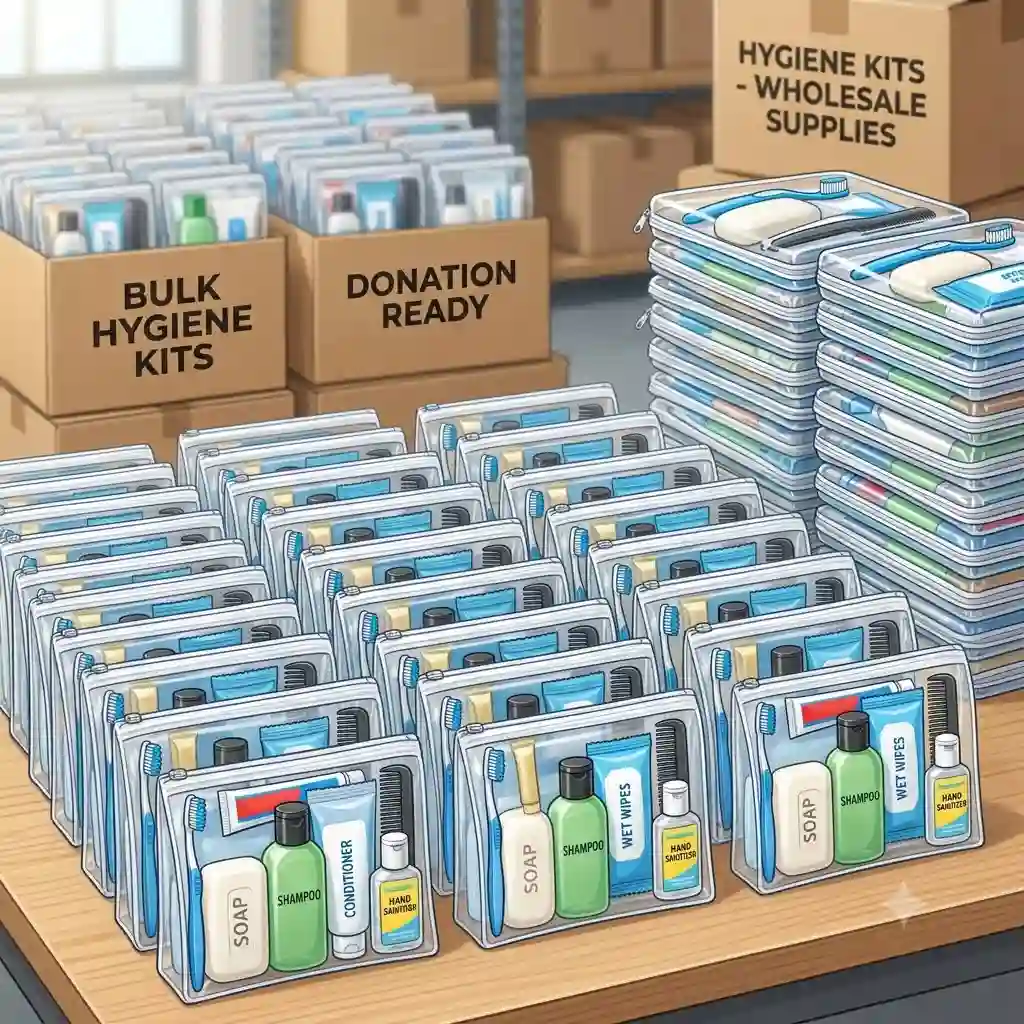
In my 10+ years of coordinating disaster relief logistics and shelter supply chains, I’ve seen thousands of care packages handed out. When you decide to source hygiene kits bulk, you aren’t just buying mini shampoos and generic toothbrushes; you are investing in dignity, health, and immediate psychological relief for people in vulnerable situations.
Whether you are a corporate sponsor putting together a charity drive, a local shelter manager looking to stretch your Q3 budget, or a church group organizing blessing bags, the stakes are surprisingly high. What is hygiene kits bulk? At its core, it refers to pre-packaged, standardized sets of essential personal care items—typically containing a toothbrush, toothpaste, soap, shampoo, and deodorant—purchased in high volumes (usually 50 to 500 units per case) to drive down the cost-per-unit.
However, the spec sheet won’t tell you the whole story. Most buyers make the critical mistake of chasing the absolute lowest price per kit, completely ignoring the fact that low-quality, heavily diluted soap or bristles that fall out of a toothbrush can actually do more harm than good. A $0.99 kit seems like a win until you realize the deodorant melts at room temperature and the toothpaste tube bursts during transit. In this guide, I’ll walk you through the absolute best options available in 2026, breaking down what these specifications actually mean when they hit the real world.
Quick Comparison Table
| Product | Best For | Key Standout Feature | Est. Price Range (Per Kit) |
| Convenience Kits International Premium | Long-Term Shelters | Name-brand items (TSA approved) | $4.00 – $6.00 |
| Ever Ready First Aid Blessing Bags | Street Outreach | High item count (15+ pieces) | $2.50 – $3.50 |
| Freshmint Institutional Kits | Prisons / High-Volume | Extremely durable packaging | $1.50 – $2.00 |
| Colgate-Palmolive Bulk Travel | Corporate Charity Events | Highly recognizable trust factor | $3.50 – $5.00 |
| Mountain Falls 15-Piece Kit | Disaster Relief | Excellent climate stability | $3.00 – $4.50 |
Looking at the comparison above, the Convenience Kits International Premium delivers the best psychological value due to its recognizable brands, but if sheer volume is your priority for daily street outreach, the Ever Ready First Aid Blessing Bags justifies its lower price point with an impressive item count. Budget buyers should note that the Freshmint Institutional Kits sacrifice brand recognition for their highly durable, puncture-resistant packaging, making them ideal for rough transit.
💬 Just one click — help others make better buying decisions too! 😊

Top 5 hygiene kits bulk: Expert Analysis
1. Convenience Kits International Premium 20-Piece Kit
The Convenience Kits International Premium 20-Piece Kit stands out because it relies heavily on recognizable, name-brand items rather than generic white-label products.
Key Specs & Real-World Meaning:
It features TSA-compliant 2 oz liquids and comes packaged in a heavy-duty, reusable zippered toiletry bag. In the field, a reusable zippered bag is often just as valuable as the contents inside. It means a transient individual has a waterproof container for their personal documents and cash long after the shampoo is gone. The 2 oz sizing is crucial—it provides about two weeks of use, which is exactly the average transition time for short-term shelter residents.
Expert Opinion:
In my experience, handing someone a brand they recognize (like Crest or Dove) provides a massive psychological boost. It says, “You are worth quality.” I strongly recommend this for women’s shelters and transitional housing where restoring dignity is a primary operational goal. What most buyers overlook is the zipper quality; cheap bags split on day two, but these hold up for months.
Customer Feedback Summary:
Most reviewers praise the brand-name inclusions, though a few shelter directors note the boxes they ship in can be quite bulky to store in small inventory closets.
Pros & Cons:
✅ Trusted, name-brand products
✅ Extremely durable, reusable bag
✅ Excellent psychological impact on recipients
❌ Bulkier shipping dimensions
❌ Higher cost-per-unit compared to generic kits
Price & Value Verdict:
Falling in the $4.00 to $6.00 range per kit, it represents a premium investment, but the total cost of ownership is justified by the secondary utility of the waterproof bag.
2. Ever Ready First Aid Blessing Bags
If you are running a street-level outreach program, the Ever Ready First Aid Blessing Bags are engineered for exactly that harsh environment.
Key Specs & Real-World Meaning:
These kits include 15 pieces, notably focusing on high-utility items like a full-sized comb, nail clippers, and individually wrapped antibacterial bar soaps, all sealed in a resealable polybag. The inclusion of nail clippers is a massive differentiator; foot hygiene is a critical crisis among the unhoused population, and a simple pair of clippers prevents serious mobility-inhibiting infections. The polybag is lightweight, meaning volunteers can carry 20-30 of these in a standard backpack without physical fatigue.
Expert Opinion:
The spec sheet won’t tell you this, but the individually wrapped soap is vital. Unwrapped or poorly wrapped soap in a hot car will melt and ruin the toothbrushes. I’ve used these extensively during summer outreach, and the stable packaging prevents cross-contamination. This is the absolute best kit for church groups or local coalitions doing weekend street distributions.
Customer Feedback Summary:
Buyers consistently highlight how easy these are to distribute from a vehicle, though some point out the generic toothpaste flavor is occasionally unpopular with younger recipients.
Pros & Cons:
✅ Highly portable for foot patrols
✅ Includes rare essentials like nail clippers
✅ Excellent price-to-item ratio
❌ Flimsy polybag tears eventually
❌ Generic, sometimes polarizing toothpaste flavor
Price & Value Verdict:
Sitting comfortably in the $2.50 to $3.50 range, this kit is the undisputed champion of volume-based street outreach.
3. Freshmint Institutional Kits
Designed for the harshest environments, the Freshmint Institutional Kits are the no-nonsense workhorses of the bulk hygiene world.
Key Specs & Real-World Meaning:
These kits prioritize security and safety, featuring clear, flexible toothbrushes (often 3-4 inches long) and clear tube, fluoride-free toothpaste. The clear, flexible toothbrush is an institutional standard; it means the item cannot be easily modified into a weapon or used to conceal contraband. While you might think this only applies to prisons, many high-security psychiatric facilities and emergency overnight warming centers mandate these exact specifications to ensure staff safety.
Expert Opinion:
I cannot stress enough how important compliance is when donating to government-run facilities. If you buy standard kits for a high-security shelter, they will literally be thrown in the dumpster by the intake staff. The Freshmint kits solve this entirely. Yes, they are bare-bones, but they pass intake inspections 100% of the time.
Customer Feedback Summary:
Institutional buyers appreciate the strict compliance with safety regulations, though volunteer groups often find them too spartan and clinical for charity hand-outs.
Pros & Cons:
✅ Passes all strict institutional security checks
✅ Extremely low cost per unit
✅ Compact packaging saves massive warehouse space
❌ Very clinical, zero “dignity” aesthetic
❌ Smaller volume of liquids (usually 1 oz)
Price & Value Verdict:
Hovering in the $1.50 to $2.00 range, this is a highly specialized product that offers unbeatable value if you are constrained by institutional safety regulations.
4. Colgate-Palmolive Bulk Travel Kits
When corporate sponsors want to run a “build-a-kit” event, the Colgate-Palmolive Bulk Travel Kits offer the perfect balance of quality and presentation.
Key Specs & Real-World Meaning:
This package usually includes a full-sized Colgate toothbrush, a 1.5 oz cavity protection toothpaste, and Palmolive-branded soap, packed in a mid-weight vinyl pouch. The inclusion of fluoride cavity protection toothpaste is clinically significant; many generic kits skip fluoride to cut costs, which is disastrous for populations lacking access to regular dental care. The vinyl pouch is transparent, which speeds up security checks at public event distributions.
Expert Opinion:
If your company is doing a PR event or a team-building charity day, this is what you buy. The brand recognition makes volunteers feel good about what they are giving, and the recipients get clinically effective dental care. What most people miss is the shelf life; Colgate’s toothpaste formulations remain stable for up to two years in climate-controlled storage, whereas generic pastes often separate into a watery mess after six months.
Customer Feedback Summary:
Corporate event organizers love the premium feel, but frequent complaints mention that the soap bars are sometimes too small for extended use.
Pros & Cons:
✅ High brand trust and clinical efficacy
✅ Transparent pouch for easy security screening
✅ Long shelf life for inventory stockpiling
❌ Soap bars are smaller than expected
❌ Vinyl can crack in freezing temperatures
Price & Value Verdict:
At a $3.50 to $5.00 range, you are paying a slight premium for the logo, but the guaranteed chemical stability of the products makes it a safe, long-term buy.
5. Mountain Falls 15-Piece Kit
The Mountain Falls 15-Piece Kit is the unsung hero of disaster relief scenarios, specifically engineered to withstand chaotic environments.
Key Specs & Real-World Meaning:
It boasts a robust, water-resistant drawstring bag and includes heavy-duty items like a full-sized stick deodorant (not roll-on) and a high-GSM cotton washcloth. The inclusion of a real, physical washcloth changes the game entirely. In disaster zones where running water is scarce, a recipient can use a single bottle of water and this washcloth to execute a full-body wipe down. Furthermore, stick deodorant doesn’t leak under pressure changes like roll-ons do if these kits are air-dropped or flown in cargo holds.
Expert Opinion:
During hurricane response efforts, I’ve watched thousands of cheap kits fail because the humidity turned cardboard packaging to mush. The Mountain Falls kits use a synthetic drawstring bag that breathes just enough to prevent mildew while repelling direct rain. If you are staging supplies for hurricane or wildfire season, this is the only kit I trust to sit in a hot warehouse for nine months and still be perfectly usable.
Customer Feedback Summary:
Relief workers praise the inclusion of the washcloth and durable bag, but some note the drawstring mechanisms occasionally fray after heavy use.
Pros & Cons:
✅ Real washcloth drastically improves hygiene in water-scarce areas
✅ Stick deodorant won’t leak during transit
✅ Withstands high heat and humidity
❌ Drawstrings can be prone to fraying
❌ Bag offers no organizational pockets
Price & Value Verdict:
Usually found in the $3.00 to $4.50 range, this kit provides exceptional tactical value for natural disaster deployments where environmental resilience is required.
✨ Don’t Miss These Exclusive Deals!
🔍 Take your outreach program to the next level with these carefully selected products. Click on any highlighted item to check current pricing and availability. These tools will help you create authentic comfort and dignity that your recipients will genuinely appreciate!
The ‘First 48 Hours’ Distribution Guide
Buying hygiene kits bulk is only 20% of the battle; the remaining 80% is distribution logistics. The moment a pallet arrives at your facility, the clock starts.
If you are a shelter manager, your first step is breaking down the pallets. Never leave these kits wrapped in industrial shrink wrap in a non-climate-controlled space. The internal temperature of a black-wrapped pallet left in the summer sun can exceed 130°F. This will instantly melt every stick of deodorant and cause toothpaste tubes to swell and pop.
My recommended setup protocol:
-
Unpack and Inspect: Randomly pull 5 kits from different boxes. Check the seals on the liquids. If one has popped due to air pressure during transit, others likely have too.
-
The “Plus One” Strategy: Amazon product listings won’t tell you this, but you should always set up a “hydration station” right next to your distribution point. Handing someone a hygiene kit without a bottle of water significantly limits their ability to actually use the soap and toothpaste immediately.
-
Pacing Inventory: Don’t put all your kits out on day one. Calculate your average daily intake and only keep a three-day supply in the main intake room to prevent staff from over-distributing.
Profiling the Recipients: A Case Study in Matching Kits
I once consulted for a massive West Coast coalition that made a $50,000 mistake. They bought high-end, heavy kits for an outreach program targeting highly mobile, transient youth. The result? The kids took the toothpaste and threw the heavy bottles and bags away because they couldn’t carry them on their skateboards or in their small backpacks.
Scenario A: The Daily Commuter / Transient Unhoused
-
Profile: Moves locations daily, carries everything on their back, lacks access to secure storage.
-
The Match: Ever Ready First Aid Blessing Bags. They are ultra-lightweight. The recipient needs immediate, single-use relief, not a heavy 16 oz bottle of shampoo that will weigh them down.
Scenario B: The Transitional Family
-
Profile: A family of four moving into a temporary FEMA trailer or a domestic violence safe house. They have a roof and a bathroom, but no supplies.
-
The Match: Convenience Kits International Premium. They have a shelf to place the items on. The high-quality, brand-name items provide a sense of normalcy and comfort during a terrifying transition.
For every demographic, identify at least one scenario where the top-rated product is actually a BAD fit. A heavy, beautiful kit is a curse to someone walking 10 miles a day.
How to Choose hygiene kits bulk Without Wasting Budget
When evaluating options, you must look past the marketing photos and dissect the utility of the items. According to standards published by the National Alliance to End Homelessness, practical utility trumps quantity every single time.
First, evaluate the liquid containment strategy. Are the bottles snap-cap or screw-cap? Snap-caps pop open when compressed in a backpack. Always prioritize screw-cap bottles if the kit is meant for mobile individuals.
Second, assess the tooth hygiene reality. Many cheap kits include toothbrushes with notoriously stiff bristles. For populations with poor dental care, stiff bristles cause severe gum bleeding and discourage use. Look for “soft” or “medium” bristle designations.
Lastly, consider the cultural appropriateness of the products. Are the shampoos formulated only for specific hair types? If you are serving a diverse demographic, look for universally formulated moisturizing body washes rather than harsh, stripping clarifying shampoos.
Cost-Per-Unit vs. Actual Utility (The TCO Analysis)
Calculate the ‘Total Cost of Ownership’ or what I call the ‘Efficiency Gap’. Go beyond the purchase price to discuss long-term value.
Let’s say you buy 1,000 units of a generic kit at $1.10 each. Your total outlay is $1,100. However, if the razors in those kits are single-blade, low-quality metal that cause razor burn, the shelter clinic will spend an extra $500 treating skin infections and dispensing antibiotic ointments over the next month.
Conversely, spending $2.50 per kit on a mid-range option with a twin-blade razor and soothing shave cream means an upfront cost of $2,500, but zero hidden medical costs and vastly higher user satisfaction. When you buy hygiene kits bulk, you are pre-paying for health outcomes. Cheap out on the front end, and you will pay for it in secondary support services on the back end.
The Hidden Expiration Dates in Bulk Purchasing
One of the most dangerous myths in the non-profit sector is that hygiene products don’t expire. The spec sheet won’t explicitly list an expiration date for a bar of soap, but the chemistry tells a different story.
If you are buying hygiene kits bulk to stockpile for future disaster seasons, you must understand a concept called “emulsion breakdown.” After about 12 to 18 months, especially in fluctuating warehouse temperatures, the water and oils in cheap lotions and shampoos will separate. The product turns into a watery, foul-smelling liquid.
The Year One Roadmap:
-
0-3 Months: Optimal use. Products retain full fragrance and viscosity.
-
6 Months: Inspect toothpaste tubes. Generic pastes may begin to harden at the cap.
-
12 Months: Deodorant sticks may begin to shrink or dry out. Lotions must be shaken vigorously before use to re-emulsify.
-
18+ Months: Discard and replace. The preservatives have likely degraded, making the products a breeding ground for bacteria.
Features That Actually Matter (And Those That Don’t)
Marketing hype in the bulk supply industry is rampant. Let’s filter out the noise.
What DOESN’T Matter:
-
Scent Profiles: “Ocean Breeze” vs. “Mountain Pine.” It doesn’t matter. In fact, heavy artificial fragrances often trigger allergies. Unscented or mildly scented is always better.
-
High Item Counts (Fluff): A 30-piece kit sounds amazing until you realize 15 of those pieces are individual Q-tips and a tiny sewing kit nobody uses.
What DOES Matter:
-
Deodorant Format: Stick is vastly superior to roll-on or spray. Sprays can be inhaled as a cheap intoxicant in severe addiction scenarios, and roll-ons leak.
-
Bag Material: A 3-mil thick polybag or woven nylon bag is essential. Thin cellophane rips the second someone tries to pull a toothbrush out, spilling the rest of the contents onto the dirty ground.
-
Fluoride Inclusion: Verified by resources like the CDC’s Oral Health guidelines, non-fluoride toothpaste is practically useless for high-risk populations. Always check the active ingredients.
✨ Don’t Miss These Exclusive Deals!
🔍 Ready to make an impact? Take your program to the next level with these carefully selected products. Click on any highlighted item to check current pricing and availability. Equip your team with the best supplies today!
Conclusion
Sourcing hygiene kits bulk is a heavy responsibility wrapped in a seemingly simple task. It requires you to look beyond the marketing jargon to understand how a specific bar of soap or the thickness of a plastic zipper will impact a person experiencing one of the hardest days of their life.
Whether you opt for the premium comfort of the Convenience Kits International for a transitional shelter, or the rugged efficiency of the Mountain Falls 15-Piece Kit for hurricane relief, your primary focus should always be on the recipient’s dignity and actual use-case. Avoid the trap of the lowest cost-per-unit if it sacrifices basic safety and usability. Make smart, informed purchasing decisions, manage your warehouse temperatures, and you will maximize the impact of every single dollar your organization spends.
FAQs
❓ What is the average shelf life when I buy hygiene kits bulk?
✅ Most standard kits have a functional shelf life of 12 to 18 months in climate-controlled environments. Extreme heat or freezing temperatures will cause liquids to separate and degrade the active preservatives much faster, ruining the products…
❓ Are these kits tax-deductible for my business?
✅ Yes, if purchased and donated to a registered 501(c)(3) charity. Keep all invoices showing the cost-per-unit. Always consult with your CPA, but generally, bulk supplies donated for public good qualify as a charitable deduction…
❓ Why do some bulk kits exclude razors and mouthwash?
✅ Safety regulations dictate this. Mouthwash often contains alcohol, which is restricted in many shelters due to substance abuse policies. Razors are frequently removed from institutional kits to prevent them from being weaponized or used for self-harm…
❓ Can I fly commercially with these bulk kits?
✅ Only if the specific kit explicitly states it is TSA-compliant. This means all liquids must be under 3.4 ounces (100ml) and fit within a quart-sized clear bag. Kits with 4 oz shampoos will be confiscated at security checkpoints…
❓ Is it cheaper to assemble my own kits or buy them pre-packaged?
✅ Buying pre-packaged hygiene kits bulk is almost always 20-30% cheaper. The hidden costs of self-assembly—freight shipping from multiple vendors, volunteer labor, and packaging materials—quickly outpace the bulk discount of buying raw individual items…
Recommended for You
- 5 Best bulk hygiene items to Stockpile in 2026 (Expert Review)
- 7 Best Stainless Steel Bidet Spray Kits for a Cleaner 2026 Bathroom
- 5 Best bulk hygiene items to Stockpile in 2026 (Expert Review)
Disclaimer: This article contains affiliate links. As an Amazon Associate, I earn from qualifying purchases. If you purchase products through these links, we may earn a small commission at no additional cost to you.
✨ Found this helpful? Share it with your friends! 💬🤗